Quick answer
For finely detailed workpieces with tight contours, choose the smallest radius that still gives the edge you want: 1/16″ for subtle easing, 1/8″ for a standard soft edge, and 3/8″ for a noticeably larger rounded profile.
Why the pilot size matters
All three Whiteside small pilot roundover bits share an extra small 5/32″ brass pilot. That tiny pilot is what lets you follow intricate contours, tight confines, and narrow openings that a standard-size pilot would not fit into. If you are working on decorative moldings, model parts, or jewelry boxes, this is the feature that makes the bit usable at all.
The trade-off: a smaller pilot means less surface area riding along the edge, so the bit can be less stable on long straight runs. For those jobs, a larger pilot bit is often easier to control. Keep this in mind when choosing between a small pilot bit and a standard roundover.
Fixed brass pilot: lighter passes required
All three bits have a brass bushing that is fixed and does not spin. That means the pilot can generate friction heat if you push it too hard. The manufacturer recommends several lighter passes rather than a heavy single pass. This is not a flaw; it is a design that gives you precise control on delicate work, but it does slow down material removal.
If you are used to ball-bearing pilots that spin freely, expect to adjust your technique. Plan for multiple passes and let the bit do the cutting rather than forcing it.
Decision rules for choosing your radius
- Edge condition: If the edge is only slightly sharp and you want to break it without changing the look, choose the 1/16″ radius. If you want a visible soft edge, go with the 1/8″ radius. For a substantial rounded profile, pick the 3/8″ radius. Match the radius to the visual result you want, not to the bit you already own.
- Workpiece thickness: On stock thinner than 1/2″, the 3/8″ radius will likely cut too deep and may leave a weak edge. Use the 1/16″ or 1/8″ for thin material. Reserve the 3/8″ for stock at least 3/4″ thick. Check the workpiece thickness before choosing a radius; bigger is not always better.
- Complexity of the contour: For tight curves, narrow openings, or intricate profiles, the extra small pilot (5/32″ dia.) on any of these bits is a must. If your work is mostly straight edges, a standard pilot bit may be easier to control. The small pilot is the key feature for detailed work—do not trade it away for a larger radius.
- Pass strategy: Because the brass pilot is fixed and does not spin, plan on making several lighter passes rather than one heavy cut. This reduces friction and gives a cleaner result, especially on hardwood. Set your router speed to 16,000 RPM as recommended and take your time.
Product facts
-
1/16″ Small Pilot Roundover Router Bits – Whiteside 1978: 1/16″ radius, 7/16″ cut length, 1/4″ shank, extra small 5/32″ brass pilot. This is the lightest touch you can get—ideal for barely easing an edge on delicate work where a larger radius would remove too much material.
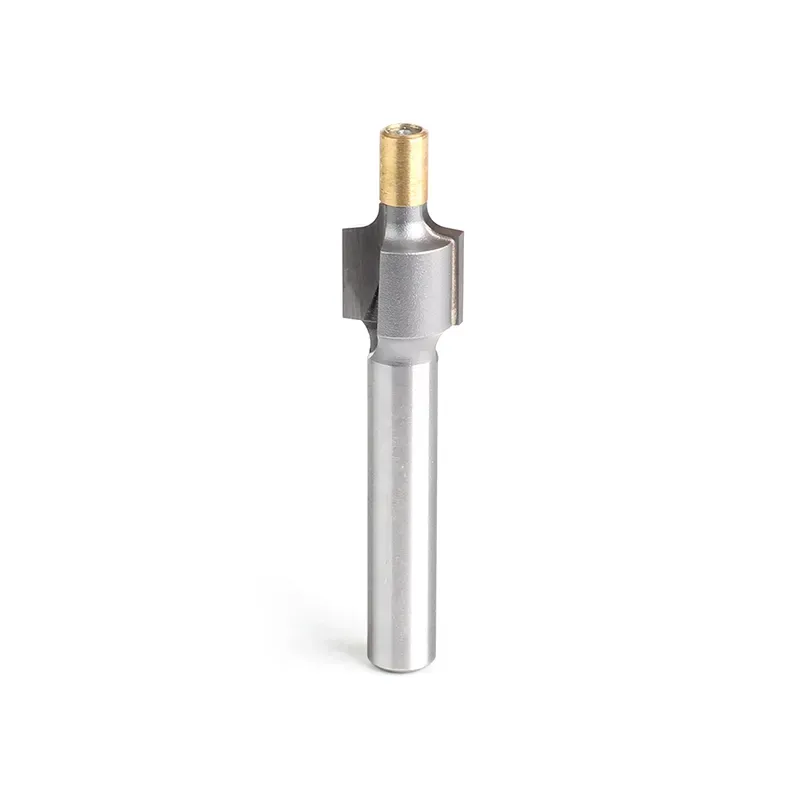
1/16″ Small Pilot Roundover Router Bits – Whiteside 1978
-
1/8″ Small Pilot Roundover Router Bits – Whiteside 1980: 1/8″ radius, 7/16″ cut length, 1/4″ shank, extra small 5/32″ brass pilot. A versatile middle ground that softens edges noticeably while still fitting tight spots; a go-to for general detailed cabinet and furniture work.
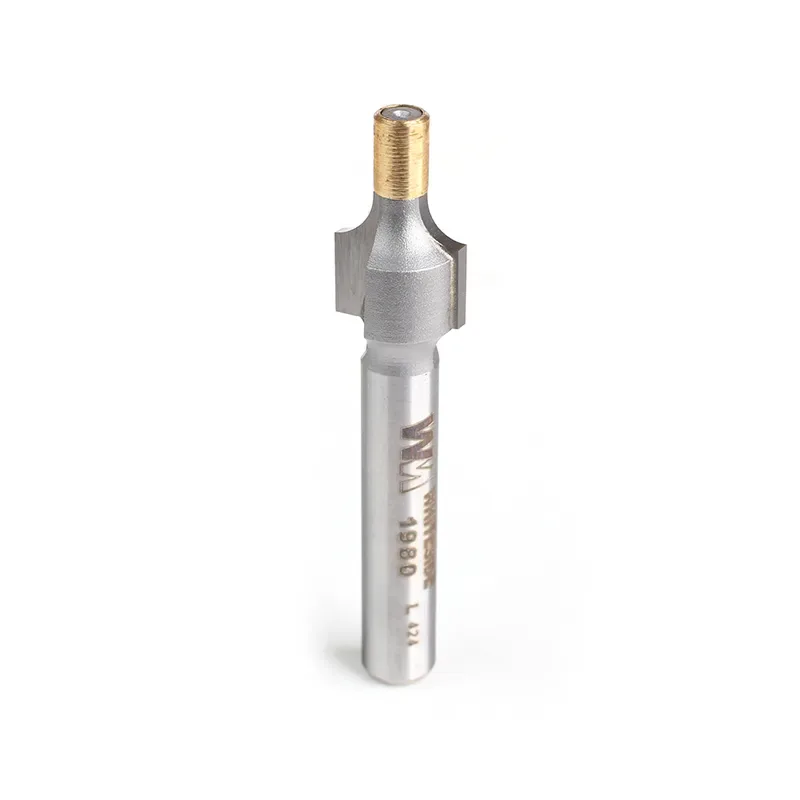
1/8″ Small Pilot Roundover Router Bits – Whiteside 1980
-
3/8″ Small Pilot Roundover Router Bits – Whiteside 1984: 3/8″ radius, 5/8″ cut length, 7/8″ large diameter, 1/4″ shank, extra small 5/32″ brass pilot. The largest small-pilot option gives a pronounced rounded profile on thicker stock, but the bigger cutter demands more careful pass planning.
Who should buy these bits?
Best for
- Woodworkers who frequently shape edges on small, detailed pieces like model parts, jewelry boxes, or decorative moldings
- Anyone working in tight confines or narrow openings where a standard pilot bit cannot reach
Not for
- High-volume production work on long straight edges, where a larger ball-bearing pilot bit would be faster and more stable
