Quick answer
Treat the Smart Storage Bundle as two connected stations: a fridge station for today's milk and a freezer station for the backlog. Scan each bag with SmartStash as you fill it, flatten bags before freezing, and move the oldest bag forward every time you add a new one. That single rotation habit does more for breast milk storage organization than any bin, label, or app on its own.
Set up a two-zone system before you pump again
Most home milk storage problems are not storage problems at all. They are traffic problems. Fresh milk, chilled milk, and frozen milk all compete for the same shelf, so bags get shuffled, buried, and forgotten. Splitting your setup into a fridge zone and a freezer zone removes that competition. The fridge zone holds what you will use in the next day or two, and the freezer zone holds everything behind it. When the two zones are physically separate, you stop digging through frozen bags to find a fresh one.
- Fridge zone: front shelf, one layer deep, oldest bag at the front edge.
- Freezer zone: flat, upright, and organized by fill date.
- A small bowl or tray for the ice pack so it does not sit loose on a shelf.
Decide what each container is for and stop swapping
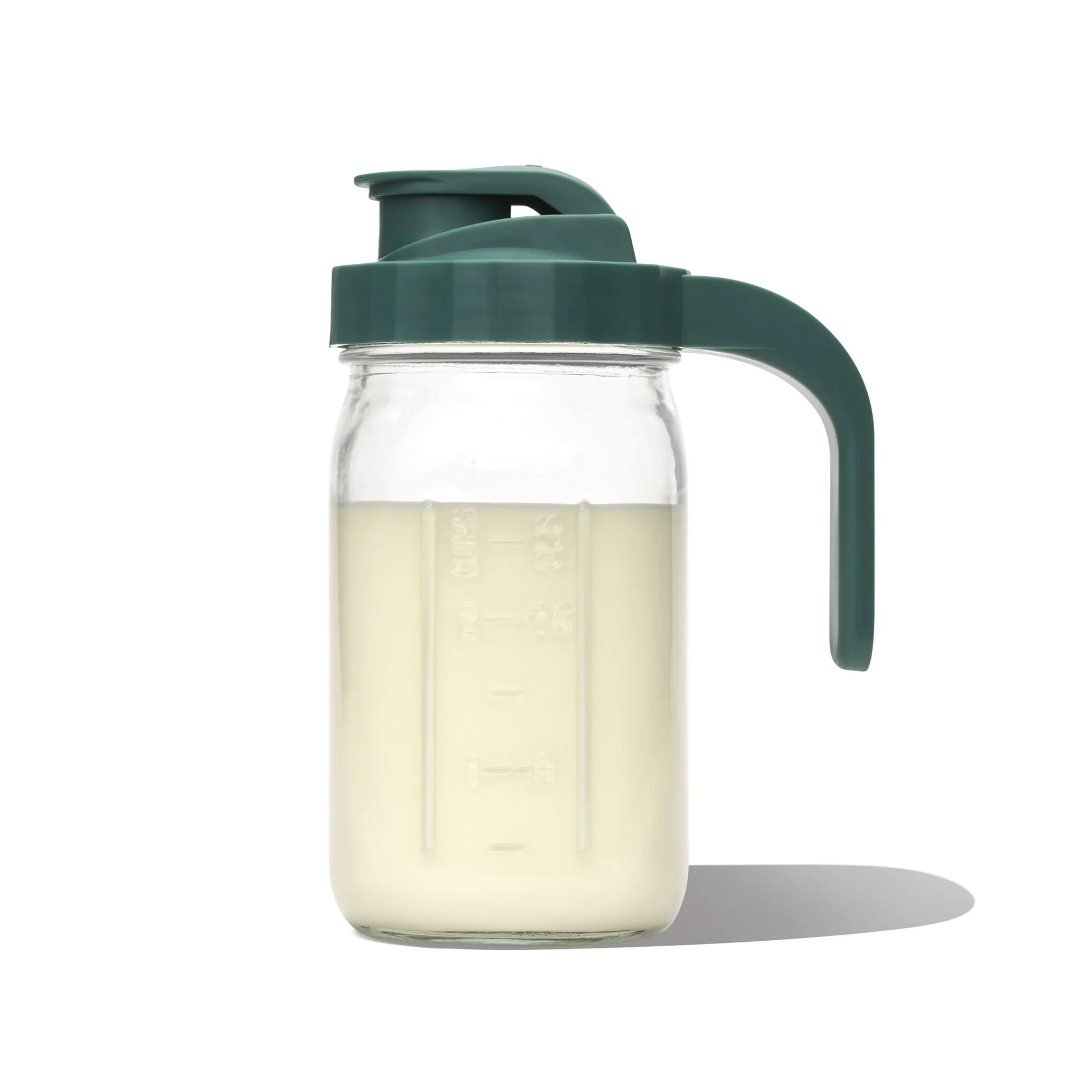
Mixed containers create mixed habits. If the same pitcher holds fresh milk one day and thawed milk the next, you lose track of what is oldest. Assign one job per container and keep it that way. A glass pitcher works well as the day's collection and pouring vessel because you can see the volume at a glance, and a clear pitcher makes it obvious when it is nearly full. Bags are the freezer unit. The ice pack belongs to the cooler, not the fridge, so it stays cold and ready rather than thawing on a shelf.
Build the scan-and-flatten routine
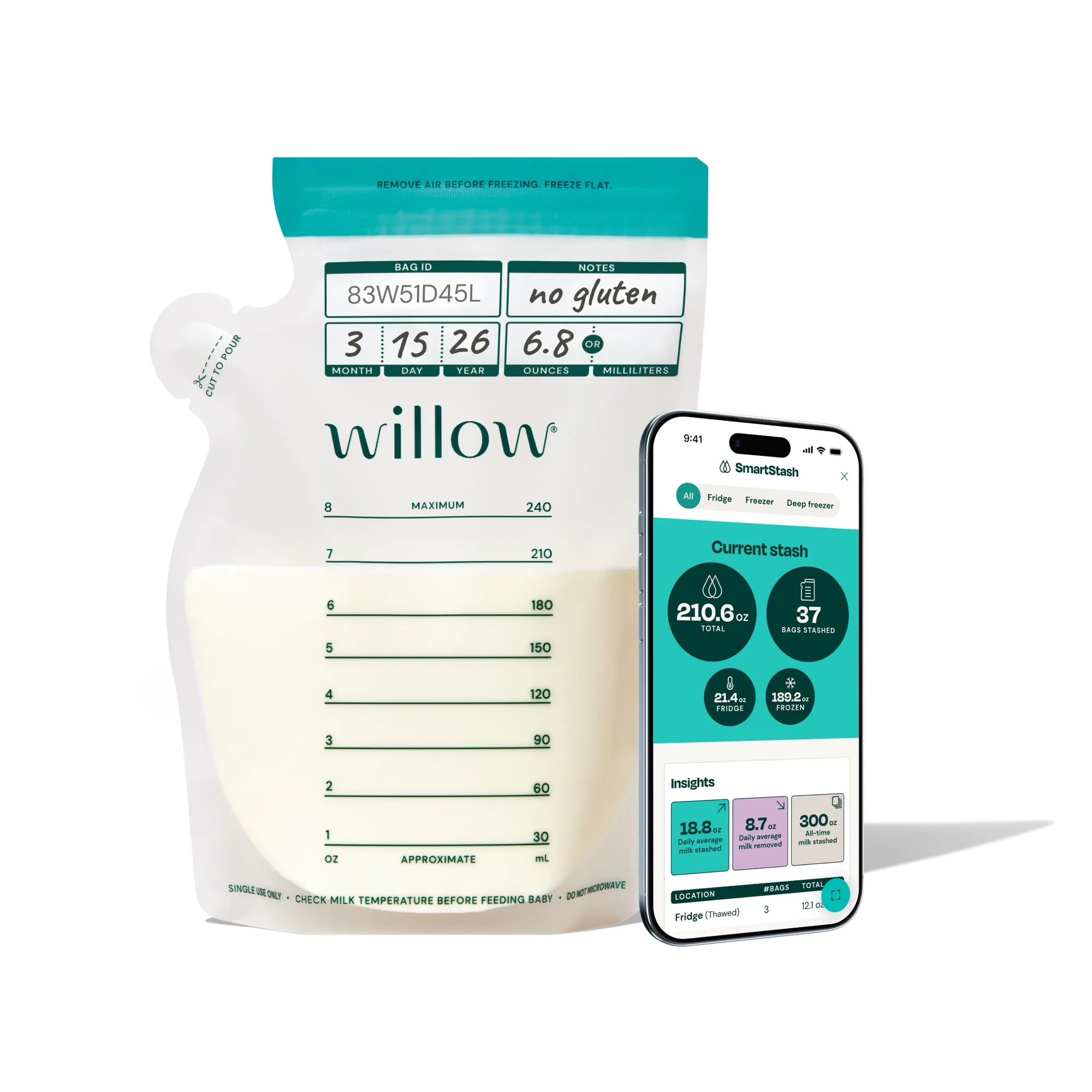
The Smart Storage Bundle is built around two physical actions: scanning and flattening. Scanning is what turns a stack of bags into a trackable digital stash, and flattening is what turns that stash into something you can actually store. Do them in the same order every time, right after a pumping session, while the milk is still cold. If you scan first and flatten second, you never end up with a bag that is tracked but still bulky, or flattened but unrecorded.
Where the rotation habit usually breaks
Rotation fails in one of two places: the freezer gets full and new bags get pushed to the back, or the fridge zone fills up and old milk gets skipped because it is behind newer milk. Both are solved by the same rule. New milk always goes behind old milk, never in front of it. If you cannot fit a new bag behind the old ones, that is the signal to use or freeze what is already there before adding more.
Home milk storage setup, step by step
- Clear and label two zones: Empty one fridge shelf and one freezer area. Label them so anyone in the house knows which is which. Keep the fridge zone one layer deep so nothing hides behind anything else. Checkpoint: if you cannot see every bag in the fridge zone without moving another bag, the zone is too crowded.
- Assign one container per job: Use the Glass Breast Milk Pitcher as the day's collection and pouring vessel, bags as the freezer unit, and the ice pack as cooler-only equipment. Do not rotate containers between jobs. Mistake to avoid: pouring thawed milk into the same pitcher you use for fresh milk, which blurs which milk is oldest.
- Scan and flatten each bag right away: After pumping, scan the SmartStash code to log the bag, then flatten it before it goes into the freezer. Flattened bags stack evenly and thaw faster than bulky ones. Checkpoint: a bag that is scanned but not flattened will not sit level in the freezer, and a bag that is flattened but not scanned disappears from your digital stash.
- Freeze flat, then file upright: Lay flattened bags flat until solid, then stand them upright in the freezer zone in date order. Upright filing is what makes the rotation visible at a glance. Mistake to avoid: stacking soft bags on top of each other before they freeze, which makes them freeze into an unstackable lump.
- Rotate forward with every new bag: New milk goes behind old milk, every single time. Before adding a bag, pull the oldest one to the front edge of the fridge zone or the front of the freezer row. This is the step that makes the whole system work. Skip it and the bundle becomes a very organized pile of forgotten milk.
- Keep the cooler packed and ready: Store the Breast Milk Cooler Ice Pack frozen inside its cooler so it is ready to go. Replace it with a fresh frozen pack after each use rather than refreezing a partially thawed one. Next step: once the rotation runs smoothly for a week, adjust the size of your fridge zone up or down to match your actual daily output.
What is in the bundle and why it matters
- Smart Storage Bundle: The Smart Storage Bundle pairs Breast Milk Storage bags with SmartStash capability, a scannable code that lets you auto-input and track bags in your digital stash, plus Flatteners to evenly organize and freeze your physical stash. The scanning side handles the record keeping and the Flatteners handle the physical stacking, so the bundle covers both halves of a home storage system instead of just one.
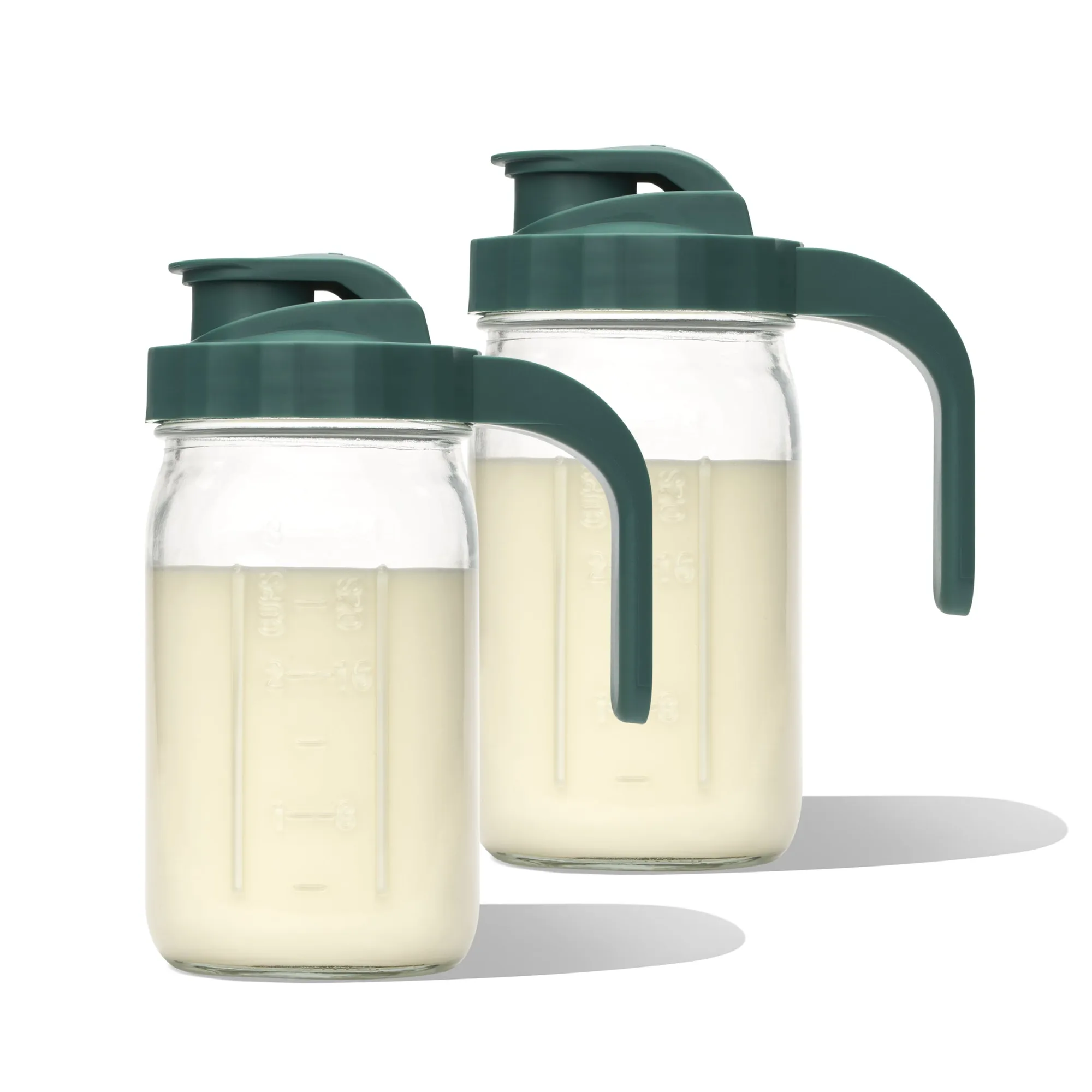
- Glass Breast Milk Pitcher (32 oz): The Glass Breast Milk Pitcher holds 32 oz, is made of clear glass for a clean, reusable option, and is compatible with Willow Pump for seamless transfer. A clear 32 oz pitcher gives you a single visible collection point for a full day of pumping sessions, which makes it easier to see when the fridge zone needs to be cleared.
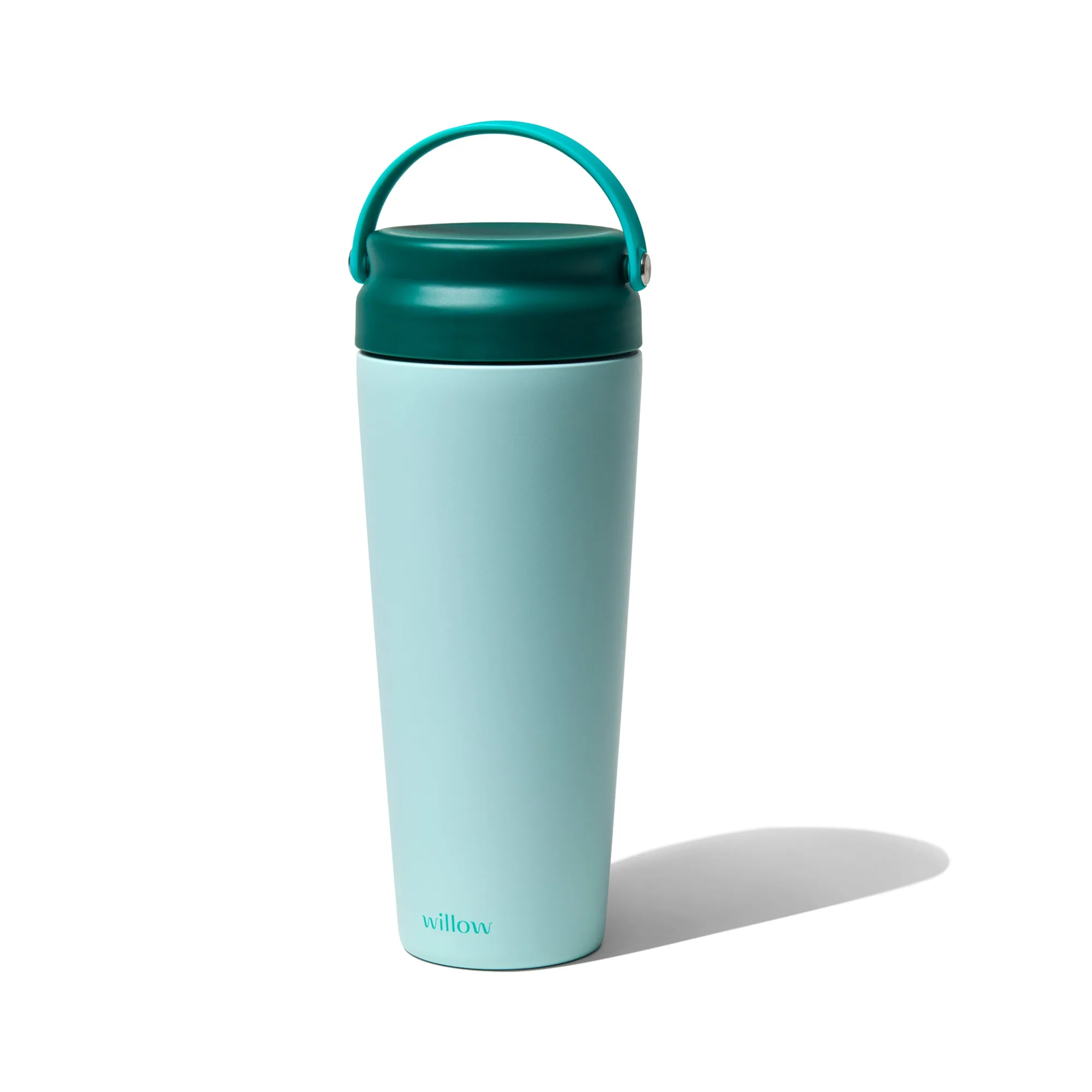
- Breast Milk Cooler Ice Pack: The Breast Milk Cooler Ice Pack fits inside both the 16 oz. and 25 oz. Coolers and keeps breast milk safely chilled for up to 24 hours. Keeping a frozen pack on deck means the cooler is ready for a commute or an outing without a last-minute scramble for ice.
If you only change one thing today, change where new bags go. Put them behind the old ones, and the rest of the system follows.