Start with the pin's actual size and finish
The Snake + Dagger pin is a small soft enamel piece: approximately 1.25” x 0.63”, black and red on polished gold metal with a butterfly clutch. That size is the main constraint on placement. It is small enough for a lapel, a hat panel or a bag strap, but the black-and-red artwork needs a surface that will not swallow it visually.
Soft enamel means the color sits slightly recessed below the gold metal lines, so the gold edges do the work of defining the snake and dagger. On a busy patterned fabric, those edges can get lost. On a solid dark or neutral surface, the pin reads more clearly.
What the listing confirms
-
Snake + Dagger - Soft Gold Enamel Pin With Backing Card: Approximately 1.25” x 0.63”, soft enamel, black and red on polished gold metal with a butterfly clutch. These are the dimensions and finish that determine which surfaces and placements suit the pin.
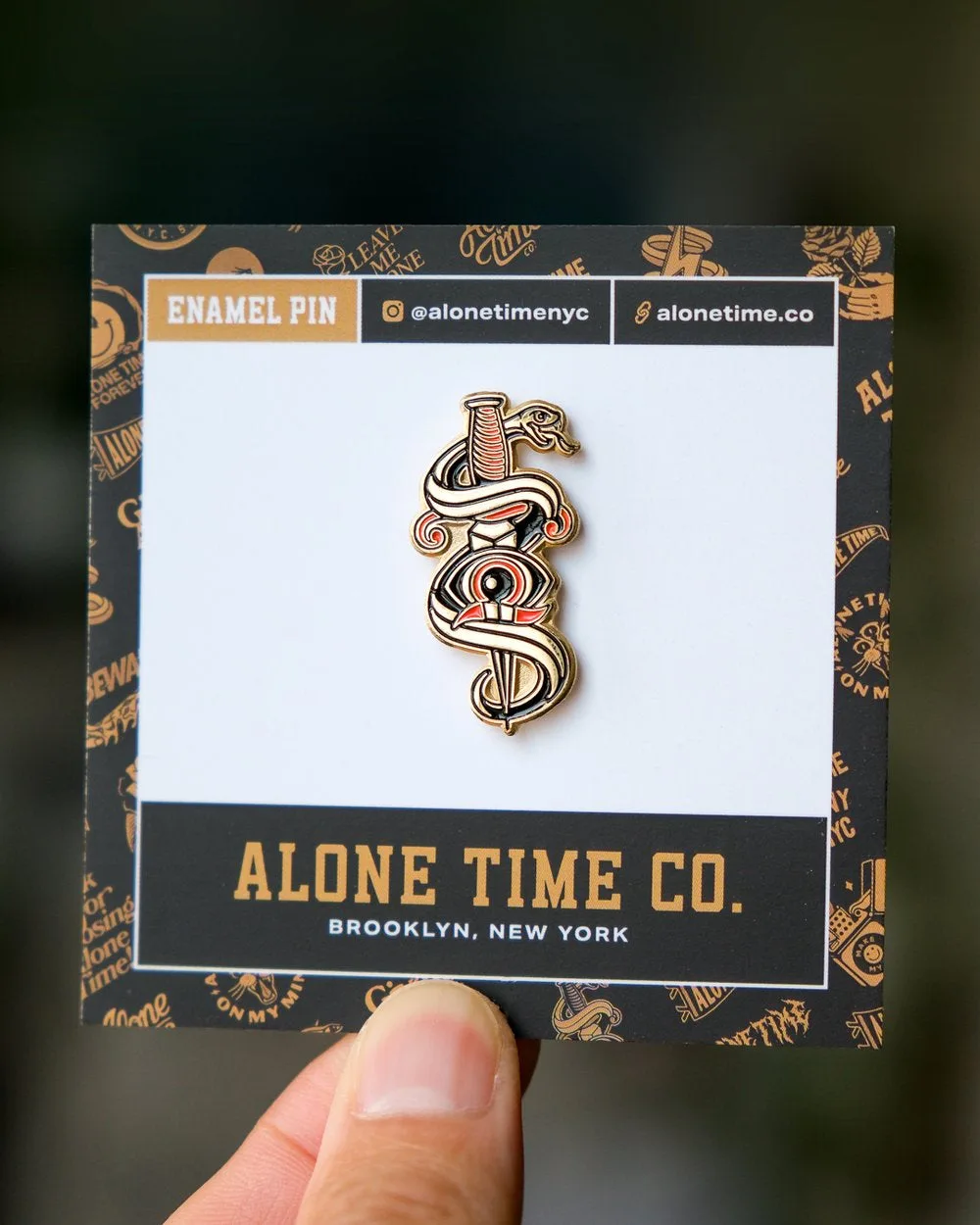
Snake + Dagger - Soft Gold Enamel Pin With Backing Card
-
Snake + Dagger - Soft Gold Enamel Pin With Backing Card: Comes with a custom backing card. The card is part of the product, so it is worth keeping for storage or gifting rather than discarding.
-
Snake + Dagger - Soft Gold Enamel Pin With Backing Card: Buy 3 or more enamel pins and the discount applies automatically at checkout. If you want to pin the same design in more than one place, buying multiples is the supported way to do it.
Jacket placement: choose the lapel or a solid panel
A jacket lapel is the most natural home for a small pin like this. The pin's narrow 0.63” height fits within a standard lapel width, and the butterfly clutch holds it in place without extra hardware. Keep the pin near the lapel notch or slightly below it so the snake-and-dagger shape stays visible when the jacket is worn open.
Fabric matters more than exact position. On a smooth wool or cotton lapel, the polished gold edge stands out. On a heavy tweed or a strongly patterned fabric, the black-and-red design competes with the weave. If you want the pin to be the focal point, choose a solid jacket. If you want it as a subtle detail, a patterned jacket can work, but expect the design to read less clearly.
- Solid dark jacket: Best contrast for the gold metal and red accents; the pin reads as a deliberate detail.
- Light neutral jacket: The black lines stand out, but the gold may blend into cream or beige tones.
- Patterned or textured jacket: The pin can get lost visually; place it on a plain panel such as a pocket or cuff area instead of the lapel.
Hat placement: keep it on a structured panel
A hat gives the pin a higher, more visible position. The butterfly clutch works on most structured hat fabrics, but soft or loosely woven materials may not hold the pin securely. Choose a hat with a firm front panel or a defined band so the clutch has something to grip.
Place the pin off-center on the front panel or on the side of the crown. Centering a small pin on a wide hat panel can make it look undersized; off-center placement uses the pin's size rather than fighting it. On a cap, the side of the crown is a practical spot because it stays visible without interfering with the brim.
- Structured cap or hat: Firm fabric holds the clutch and keeps the pin upright.
- Knit or soft hat: The pin may sag or pull the fabric; check that the clutch sits flat before wearing it out.
- Off-center front or side placement: Uses the small size as a detail rather than a centerpiece.
Bag placement: strap, panel or pocket
A backpack or tote gives you more surface area, but also more opportunities for the pin to catch on things or get knocked. The safest spot is a flat, reinforced panel or a wide strap where the clutch can sit flush against the fabric. Avoid thin straps, mesh and loose weave, which can let the pin shift or pull.
If you want the pin to be seen, place it on the front panel or near the top of the bag. If you want it protected, place it on a side panel or a pocket flap where it is less likely to brush against walls, seats or other people. The custom backing card is useful here: keep it in the bag's inner pocket so you can reattach the pin when you take it off.
- Front panel: Most visible; check that the fabric is firm enough to hold the clutch.
- Wide strap: Keeps the pin close to the body and less exposed to knocks.
- Pocket flap or side panel: Lower visibility but better protection for the polished gold finish.
Soft gold styling: let the metal do the work
The polished gold metal is the brightest element of this pin, so it pairs most easily with outfits that already include warm metals or dark neutrals. Black, charcoal, navy and deep green give the gold and red something to sit against. Pale pastels and bright primary colors can make the pin look washed out or busy.
If you wear the pin on a jacket, keep other lapel accessories minimal so the snake-and-dagger shape stays readable. On a bag, the pin can be one of several details, but grouping it with too many other pins of similar size can flatten the design. The listing supports buying three or more pins with an automatic checkout discount, which is useful if you want to repeat the design on a jacket, a hat and a bag rather than clustering several on one surface.
Backing card storage and pin care
The custom backing card is the simplest storage solution: when the pin is not being worn, clip it back onto the card and keep it flat in a drawer or bag pocket. The supplied information does not include specific cleaning or care instructions, so avoid guessing at polishes or abrasive cloths. A dry, soft cloth and careful handling are reasonable habits, but they are general practice rather than a manufacturer instruction.
Check the butterfly clutch periodically. The listing confirms the clutch type but does not specify its tension or lifespan, so treat a loose clutch as a sign to reposition the pin rather than a product fault. If you plan to move the pin between jacket, hat and bag, keep the backing card with the pin so the clutch has a safe place to sit when not in use.
- Store on the backing card: Keeps the clutch from snagging other items and protects the pin's surface.
- Keep it flat and dry: General handling habit; the listing does not specify storage conditions.
- Check the clutch before wearing: A simple habit that reduces the chance of the pin working loose.
What the listing leaves open
The supplied information confirms the pin's size, finish, clutch type, backing card and the multi-buy discount, but it does not include care instructions, fabric compatibility guidance or a recommended placement position. That means the advice above is about matching the pin's confirmed size and finish to sensible surfaces, not a set of manufacturer rules. If you are unsure about a particular fabric, test the clutch on an inside seam or a hidden area first.
For a small soft enamel pin, the practical decision is simple: choose a firm, plain surface where the gold edge can be seen, keep the backing card for storage, and move the pin rather than forcing it onto a fabric that cannot hold the clutch. That approach suits the Snake + Dagger pin's size and finish without asking it to do more than the listing supports.