Quick Answer
The Snowy Owl puppet is ideal for animal-assisted therapy sessions because its movable wings and 360° rotating head let children mimic real owl behaviors, encouraging emotional expression and imaginative play.
Why the Snowy Owl Works in Therapy
Unlike generic hand puppets, the Snowy Owl puppet offers specific physical features that match real animal behaviors. Children can rotate the head fully or flap the wings, which helps them act out owl-like movements—such as turning to look at something or spreading wings wide. This realism supports animal-assisted play by giving kids a concrete way to project feelings onto the puppet.
The puppet’s neutral white color also makes it less distracting than brightly colored characters, allowing the child’s own story to take center stage. It works well for shy children who may find a realistic animal less intimidating than a human-like puppet.
When to Choose a Different Puppet
If your therapy goal focuses on family dynamics or social roles, a human hand puppet (like a Feelings Family set) may be more appropriate. The Snowy Owl is best for nature-themed narratives or when a child needs a non-judgmental, animal character to speak through.
How to Use the Snowy Owl Puppet in Animal-Assisted Therapy
- Introduce the Owl as a Helper: Show the puppet slowly. Let the child touch the soft fabric and try moving the wings and head. Say something like, 'This owl sees everything and can help us talk about how you feel.' Avoid forcing interaction; let the child set the pace.
- Encourage the Child to Make the Owl Move: Ask the child to make the owl turn its head or flap its wings. For example, 'Can the owl look around the room? What does it see?' This builds motor control and emotional safety. If the child hesitates, model the movement yourself first.
- Use the Owl to Explore Feelings: Prompt the child to speak through the owl. 'What is the owl feeling today? Is it scared, curious, or brave?' The rotating head lets the owl 'look' at different emotions on a feelings chart or in the room. Do not correct the child's answer; accept whatever emotion they assign.
- Create a Nature Story Together: Invite the child to invent a short story about the owl's day. Use the wings to show flying, hunting, or nesting. This builds narrative skills and allows the child to project personal experiences onto the animal. Keep the story open-ended; avoid steering it toward a 'correct' theme.
- End with a Grounding Ritual: Have the owl 'fly' back to its perch or nest (a box or shelf). Thank the owl for helping. This closure helps the child transition back to the therapy room and signals that the play is over. Let the child place the puppet down themselves to reinforce the ending.
Product Facts
-
Snowy Owl Puppet: Movable wings and head rotates 360°. Children can physically mimic owl behaviors, which helps them express feelings like curiosity, surprise, or protectiveness through movement.
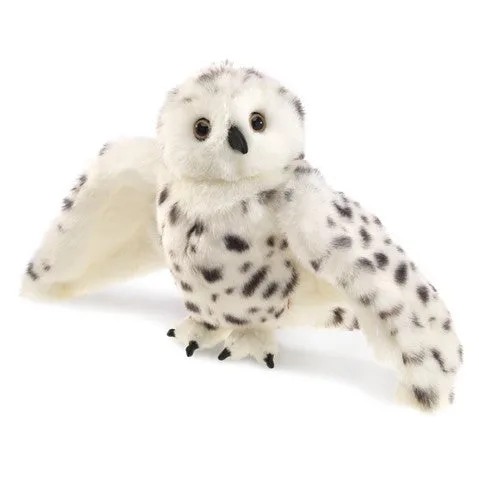
Snowy Owl Puppet