Quick answer
Milan Mauve works best as a blending thread, not a focal one. Pair it with soft neutrals, dusty blues, and muted greens, and keep the value contrast low so the quilting texture leads. If you want a stronger purple statement, step up to a deeper purple instead of forcing Milan Mauve to carry the design.
Milan Mauve sits in a useful middle ground: clearly purple, but soft enough to disappear into many quilt tops. That makes it a strong candidate for allover quilting, stitch-in-the-ditch, and bobbin use where you want texture without a visible thread line.
The catch is that mauve changes character depending on what it sits next to. Put it on cream and it reads pink; put it on gray-blue and it reads purple. This guide gives you decision rules for pairing it, plus concrete So Fine! options for spools and cones.
What Milan Mauve actually does on a quilt
A mauve quilting thread like Milan Mauve behaves like a low-contrast blender. On warm creams, tans, and blush pinks it nearly vanishes, so your quilting shows as shadow and puff rather than as a drawn line. On cool grays and dusty blues it lifts slightly and reads more purple, which can be exactly what you want on a modern or low-volume top.
Because So Fine! #50 is a 50 wt. 3-ply lint-free polyester, it is smooth and blends well, and it is recommended for quilting and sewing. That smoothness matters with mauve: a fuzzy thread in this color family can look dusty or chalky, while a smooth one keeps the color clean on the surface.
- Test Milan Mauve on the lightest and darkest fabrics in your top before committing to a whole quilt.
- If the thread nearly disappears on both, it is a blending choice; if it pops, treat it as a design line.
Pairing rules that keep mauve from going muddy
Rule one: match value, not hue. Milan Mauve is a medium-light shade, so it pairs most reliably with fabrics in that same medium-light range. Pairing it with very dark navy or charcoal turns it into a visible line, which is fine for feature quilting but not for an allover pattern.
Rule two: choose one temperature direction. With warm creams, tans, and peach, mauve reads pink and romantic. With cool grays, silver, and dusty blue, it reads purple and modern. Mixing both temperatures in one quilt is what usually makes mauve look muddy.
Rule three: keep the backing in mind. A busy backing can swallow a soft mauve, so if you want the quilting to show on the back, choose a solid or low-volume backing in a similar value.
- Warm palette: cream, tan, blush, soft brown.
- Cool palette: gray, silver, dusty blue, muted teal.
- Avoid pairing with saturated orange or true red unless you want the mauve to look gray by comparison.
Spool or cone: match the format to the job
So Fine! #50 comes in two formats in this catalog. The 550-yard spools are the practical choice for domestic sewing, piecing, bobbin thread, and small quilting projects where you want several colors without committing to a large cone. The 3,280-yard cones are the better value for longarm quilting and for any project where one color runs edge to edge.
If Milan Mauve is your main quilting color on a bed-size quilt, a cone is the sensible buy. If it is one shade in a palette for piecing and detail work, a spool keeps your thread drawer manageable and lets you spend the difference on a second color.
- Spool: piecing, bobbin thread, small quilts, color sampling.
- Cone: longarm quilting, allover designs, large quilts, one-color projects.
Where mauve fits in a broader So Fine! palette
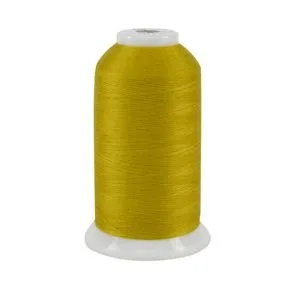
A mauve thread rarely works alone. Build a small palette around it: one neutral that matches your background, one deeper shade for accent quilting, and one bobbin thread. In the So Fine! range, So Fine! Thread #471 Glacier is a cool light option that pairs naturally with mauve on gray and blue quilts, while So Fine! Thread #473 Brooke offers a deeper, warmer counterpoint for quilts where you want the quilting to read as a design element.
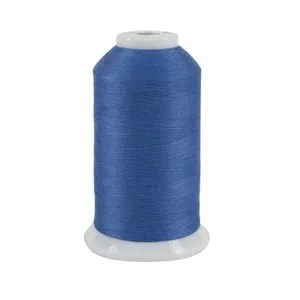
So Fine! Thread #473 Brooke
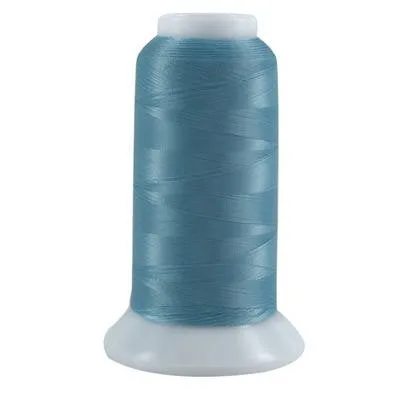
For bobbin work and fine detail, The Bottom Line #633 Light Turquoise is a 60 wt. 2-ply lint-free polyester that is a different weight class entirely. It is not a mauve substitute, but it shows how thread weight changes the look: a 60 wt. thread recedes further than a 50 wt., so choose weight before you choose shade.
- Keep one neutral, one blender, and one accent in your mauve palette.
- Write the color number on the cone or spool so you can reorder the exact shade later.
Decision rules for buying Milan Mauve
- If the quilt top is mostly cream, tan, or blush: Choose Milan Mauve as a blending thread and expect it to read pink. Buy a spool first to confirm it does not disappear entirely. Blending choice; spool is enough.
- If the quilt top is mostly gray, silver, or dusty blue: Milan Mauve will read more purple here. Pair it with a cool light cone such as So Fine! Thread #471 Glacier for a cohesive palette. Cool pairing; consider a cone for large quilts.
- If you want the quilting to be a visible design line: Do not rely on Milan Mauve. Choose a deeper shade with more contrast, such as So Fine! Thread #473 Brooke, and keep the mauve for bobbin or detail work. Contrast is the deciding factor, not color name.
- If you are quilting a bed-size quilt on a longarm: Buy the 3,280-yard cone format rather than multiple spools. Fewer joins, better value, and consistent color across the whole quilt. Cone for coverage; spool for sampling.
- If you are unsure between 50 wt. and a finer thread: A 60 wt. 2-ply like The Bottom Line #633 Light Turquoise recedes more than a 50 wt. Decide weight first, then pick the mauve shade. Weight before shade.
Catalog facts that affect your choice
- So Fine! Thread #471 Glacier: So Fine! #50 is a #50/3 lint-free and extra smooth all purpose polyester thread. Each cone has 3,280 yards. Excellent for sewing, serger, bobbin thread and quilting. A cool light cone at 3,280 yards is a practical pairing partner for mauve on gray and blue quilts, and the large format suits longarm work.
- So Fine! Thread #473 Brooke: So Fine! #50 is a #50/3 lint-free and extra smooth all purpose polyester thread. Each cone has 3,280 yards. Excellent for sewing, serger, bobbin thread and quilting. A deeper cone gives you an accent shade in the same thread family, so tension and behavior stay consistent while the color contrast increases.
- The Bottom Line #633 Light Turquoise: The Bottom Line is a lint-free polyester quilting, embroidery, sewing, binding, bobbin thread. Each cone has 3,000 yards. Features Thread Weight: 60 wt. 2-ply Fiber: Polyester Thread Characteristics: Lint free. At 60 wt. and 2-ply, this thread recedes more than a 50 wt., which is a useful reminder to choose weight before shade when planning a palette.
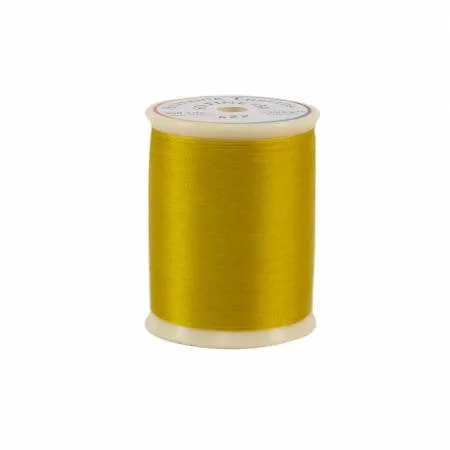
- https://piecenquiltcr.com/products/so-fine-thread-422-mustard-spool-ff9d1b3d3a51711d6611bd81-1385475So Fine! Thread #422 Mustard - Spool: So Fine! #50 is a #50/3 lint-free and extra smooth all purpose polyester thread. Each spool has 550 yards. Excellent for sewing, serger, bobbin thread and quilting. The 550-yard spool format is the low-commitment way to test a warm accent against mauve before buying a cone.
Who Milan Mauve suits, and who should choose differently
Best for
- Quilters who want soft, low-contrast texture on cream, tan, or blush tops
- Longarm quilters running an allover design and wanting a blender that will not fight the piecing
- Sewists who need a smooth 50 wt. polyester for piecing, serger, or bobbin use
- Anyone building a muted, dusty palette of mauve, gray, and dusty blue
Not for
- Quilters who want the thread itself to be the focal design element
- Projects with saturated orange, true red, or bright yellow where mauve will look gray
- Very dark backgrounds, where a soft mauve becomes a high-contrast line you may not want
- Anyone who needs a specific shade match and cannot test a spool first
Milan Mauve is a blending shade, so buy it for texture and softness rather than drama. Test it on your lightest and darkest fabrics, match value before hue, and choose a spool for sampling or a cone for full-quilt coverage. If you want visible quilting, step up to a deeper shade in the same thread family.