Quick Answer
Socket cap screws loosen most often from vibration, under-torquing, or a thread fit that is too loose. Start by checking your torque against the fastener's rating, then consider a locking element like a nylon patch or thread-locking compound.
Vibration Is the Most Common Cause
In machinery, tooling, and precision assemblies, constant vibration can gradually back out even properly tightened socket cap screws. This is especially true for alloy steel screws with a smooth thermal black oxide finish, which offers less friction than a rougher coating.
Torque and Thread Fit Matter
Under-torquing leaves the screw loose from the start, while over-torquing can strip threads or distort the fastener. A thread fit that is too loose—common with worn or oversized tapped holes—reduces the clamping force that keeps the screw in place.
Diagnosis: Why Your Socket Cap Screws Are Loosening
- Symptom: Screw backs out during operation, often after a short period of use.
- Likely Cause: Vibration is the primary suspect. Check if the application involves motors, moving parts, or frequent impacts. Also verify your installation torque matches the fastener's recommended range. If torque was correct and vibration is present, move to the corrective action.
- Corrective Action: For vibration-prone assemblies, switch to a socket cap screw with a nylon patch locking element. The nylon patch deforms during installation and creates a friction lock that resists back-out. Alternatively, apply a removable thread-locking compound to the existing screw.
- When to Stop or Choose Another Option: If the screw still loosens after adding a nylon patch or thread locker, inspect the tapped hole for wear or damage. A stripped or oversized hole may require a thread insert or a larger fastener. Do not force a larger screw into a damaged hole. Stop using the assembly until the hole is repaired. A loose screw in a damaged hole can cause further equipment damage or safety risk.
Product Facts
-
1/4-20 X 1-1/4" Socket Cap Screws | Hex Socket Drive | Nylon Patch | Fully Threaded | Alloy Steel Thermal Black Oxide (100 / Pkg.): These 1/4-20 x 1-1/4" socket cap screws are fully threaded with a hex socket drive and a thermal black oxide finish on alloy steel. The thermal black oxide finish reduces corrosion but does not add locking friction; pairing these screws with a nylon patch or thread locker can solve loosening in vibrating applications.
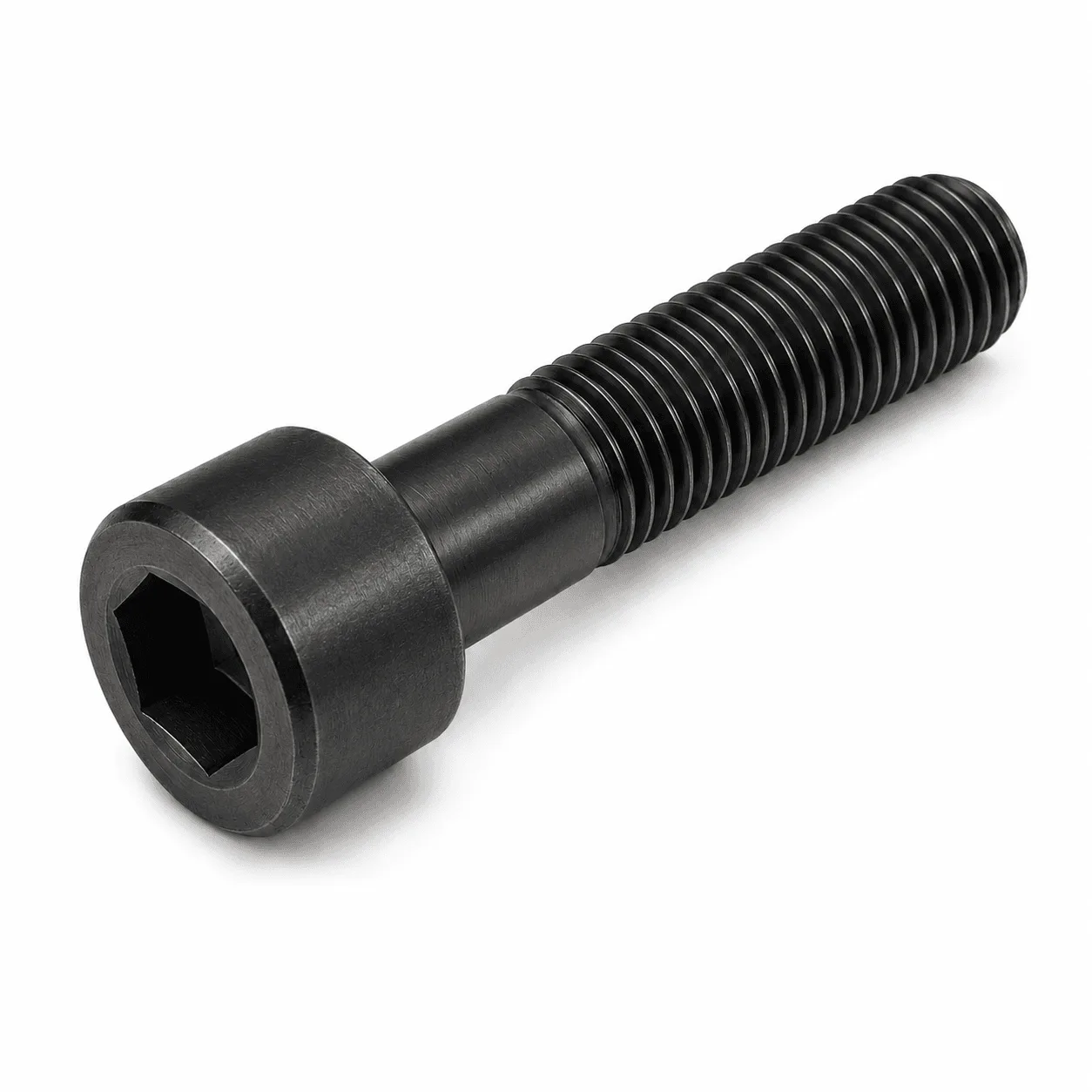
1/4-20 X 1-1/4" Socket Cap Screws | Hex Socket Drive | Nylon Patch | Fully Threaded | Alloy Steel Thermal Black Oxide (100 / Pkg.)