Start with direct sunlight, not the basin
The single most useful setup decision is where the solar panel sits. The supplied product information says the pump starts working within 3 seconds under direct sunlight and runs on sunlight with no electricity or batteries. That makes sun exposure the first thing to check, not the last.
Before you fill anything or choose a nozzle, watch your intended spot through the day. A bird bath or garden pond that looks bright in the morning may fall into shade by afternoon. The pump will only perform as well as the light it receives, so pick a position that stays in direct sun for the part of the day you most want to see the fountain running.
What the fountain set includes
-
Solar Powered Water Fountain: The set includes 1 solar fountain pump and 4 interchangeable spray nozzles. Knowing the parts up front helps you plan the setup and choose a spray pattern before placing the pump in water.
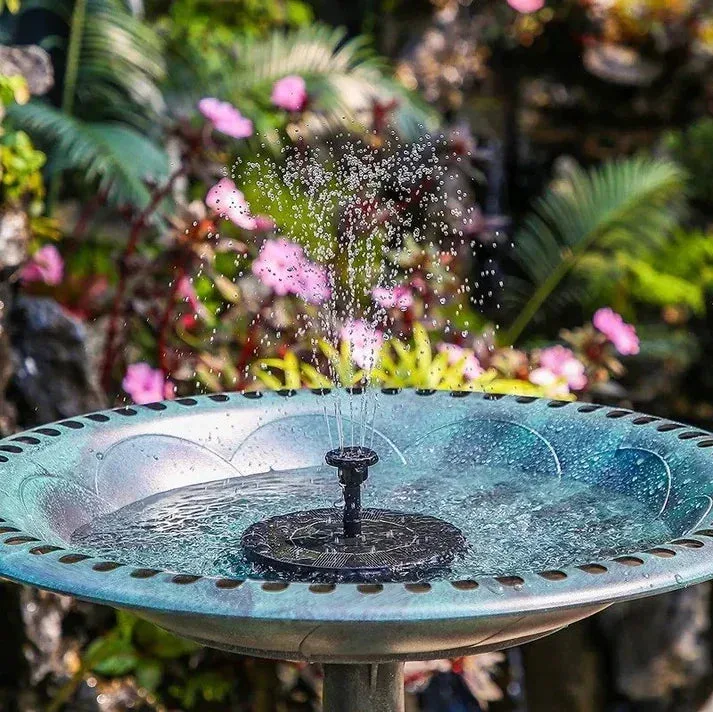
Solar Powered Water Fountain
-
Solar Powered Water Fountain: The fountain starts working within 3 seconds under direct sunlight. This gives you a clear checkpoint: if it does not start quickly in full sun, check placement and water level before assuming a fault.
A simple setup sequence
The supplied information does not include a full assembly manual, so treat these as practical checkpoints built around the confirmed features rather than a manufacturer's step-by-step.
- Choose a sunny spot for the panel: Place the fountain where the solar panel will receive direct sunlight for the period you want it to run. Avoid overhanging branches, walls or shed shadows that block the light.
- Fit the nozzle you want: The set comes with four interchangeable nozzles. Try them in turn to see which spray effect suits your bird bath or pond; each changes the pattern, so choose before you finalize placement.
- Set the pump in water: Place the pump in the bird bath or pond so it sits in water. The supplied information does not specify a minimum water depth, so check that the pump is fully supplied with water and adjust if the spray sputters.
- Use the supplied accessories to keep it stable: The set includes accessories to keep the fountain in place and prevent movement. Fit these so the pump does not drift or tip, which can interrupt the spray.
- Confirm it starts in direct sun: In direct sunlight the pump should begin within about 3 seconds. If it does not, recheck that the panel is unobstructed and the pump is in water before trying another spot.
Placing the fountain in a garden pond or bird bath
For a bird bath, the priority is a stable, shallow position where birds can drink and bathe without the pump shifting. The supplied description says the fountain provides a peaceful spot for birds to drink and bathe, and the included accessories are meant to prevent movement. Use them.
In a garden pond, the same sun rule applies. Place the pump where the panel catches direct light and the pump itself stays in water. The supplied information does not give a recommended depth or distance from plants, so observe the spray and adjust position if water movement or shade interferes.
The fountain is made from sturdy plastic and rust-resistant iron, which the catalog describes as durable and weather-resistant. That supports outdoor use, but it does not remove the need to check the pump and panel after wind or heavy rain moves them.
When the fountain is not spraying water
Use this checklist in order. It stays within what the supplied product information confirms.
- Is the panel in direct sunlight?: The pump runs on sunlight only. Shade, cloud cover or a panel angled away from the sun can stop or slow the spray. Move the fountain or wait for direct sun.
- Is the pump sitting in water?: If the pump is above the water line or the basin has run low, the spray will suffer. Top up the bird bath or reposition the pump in the pond.
- Is the fountain stable?: The supplied accessories are there to prevent movement. If the pump has drifted or tipped, refit the accessories and set it back in position.
- Have you tried a different nozzle?: The four nozzles create different spray effects. If one pattern looks weak, swap nozzles to see whether the effect is simply the nozzle design rather than a fault.
Routine care for a solar water fountain
The supplied information does not include a cleaning schedule or cleaning instructions, so avoid inventing a detailed procedure. What you can do is keep the panel clear and the pump in water, since those are the two conditions the catalog ties to operation.
Check the solar panel for leaves, dirt or bird droppings that block light. Wipe it gently when it looks dull. In the bird bath, refresh the water and remove debris that could clog the pump intake. The catalog does not confirm a specific cleaning method, so use gentle care and avoid harsh chemicals around a bird bath.
The fountain is described as weather-resistant, not indestructible. In freezing conditions or long periods of disuse, the supplied information does not say how to store it. If you plan to leave it out year-round, inspect it after storms and refit the stabilizing accessories as needed.
Fountain details that affect daily use
- Solar Powered Water Fountain: The fountain runs on sunlight with no electricity or batteries needed. There is no cord or battery to manage, so placement is limited mainly by sun exposure and water access.
- Solar Powered Water Fountain: The set includes accessories to keep the fountain in place and prevent movement. Using them is the simplest way to keep the spray steady in a bird bath or pond.
- Solar Powered Water Fountain: The fountain is made from sturdy plastic and rust-resistant iron. This supports outdoor placement, though the supplied information does not specify a lifespan or winter storage method.
What the supplied information leaves open
The catalog does not state a minimum water depth, a recommended distance from plants, a cleaning schedule or winter storage steps. Those gaps are not signs that the fountain cannot do these things; they simply mean you should rely on observation and gentle care rather than a made-up protocol.
For most gardens, the practical approach is to start with direct sun, a stable position in water, and the nozzle you like. Adjust from there based on what you see.