Quick answer
Build the SolarFlower Golden Sunrise in three stages: assemble the flower and gearbox, connect the solar panel to the motor, then test the petal rotation in direct sunlight. The single motor drives all petals through a planetary gear system, so if one petal is out of sync the fix is almost always in the gear alignment, not the solar panel. Expect a short, focused build rather than a long soldering project.
What the kit teaches while you build
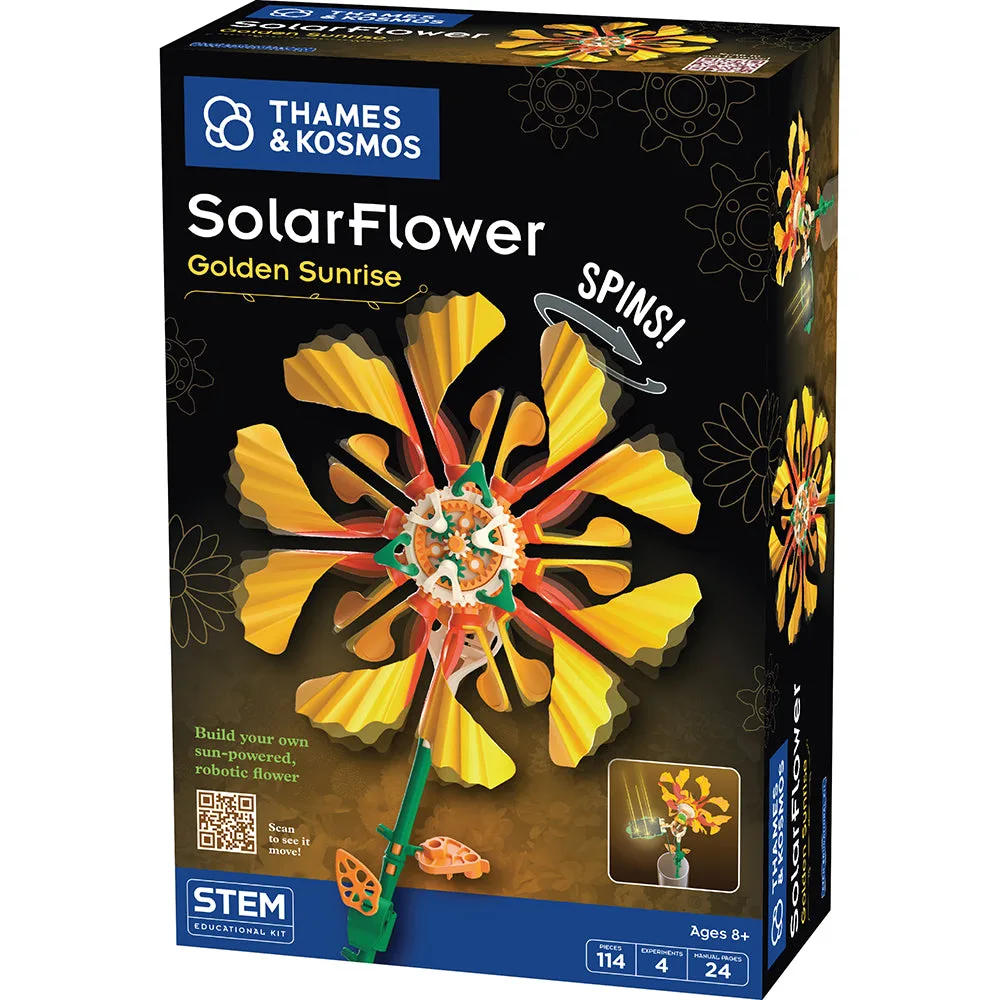
The SolarFlower Golden Sunrise is a motorized kinetic sculpture: a flower model whose petals rotate, powered by a solar panel rather than batteries. The build introduces two separate ideas that meet in one object. The first is mechanical: a motor and planetary gears turn the motor's fast spin into controlled petal movement. The second is electrical: solar cells in the panel convert light into the current that drives that motor. Because both systems are visible, you can test them independently, which makes troubleshooting far easier than in a sealed toy.
Work in daylight, not under a lamp
The solar panel needs real light to produce useful current, and a household lamp often is not enough to spin the motor reliably. Do the final test near a sunny window or outdoors. If you build on a cloudy day, treat the assembly steps as the main event and save the rotation test for the next bright morning. This is also a good moment to explain to a child that the flower is not storing energy; it moves only while light reaches the panel.
Build steps and checkpoints
- Sort the parts before you start: Lay out the flower components, motor, gears, and solar panel on a flat, well-lit tray. Group small gear parts together so they do not roll away mid-build. Checkpoint: if any piece is missing, stop and contact the seller before assembling, because substituting a gear will change how the petals rotate.
- Assemble the flower body first: Build the petal and center structure without the motor or panel attached. Keep the petals loose enough to move freely once the drive is connected. Common mistake: tightening petal parts so firmly that they bind. The petals should rotate with light resistance, not scrape.
- Seat the motor and planetary gears: Fit the motor into its mount, then align the planetary gear set so the motor's output engages the petal drive. Rotate the gears by hand one full turn to feel for catching or skipping. Checkpoint: hand-turn the gear train before adding power. If it jams by hand, it will jam harder under motor torque.
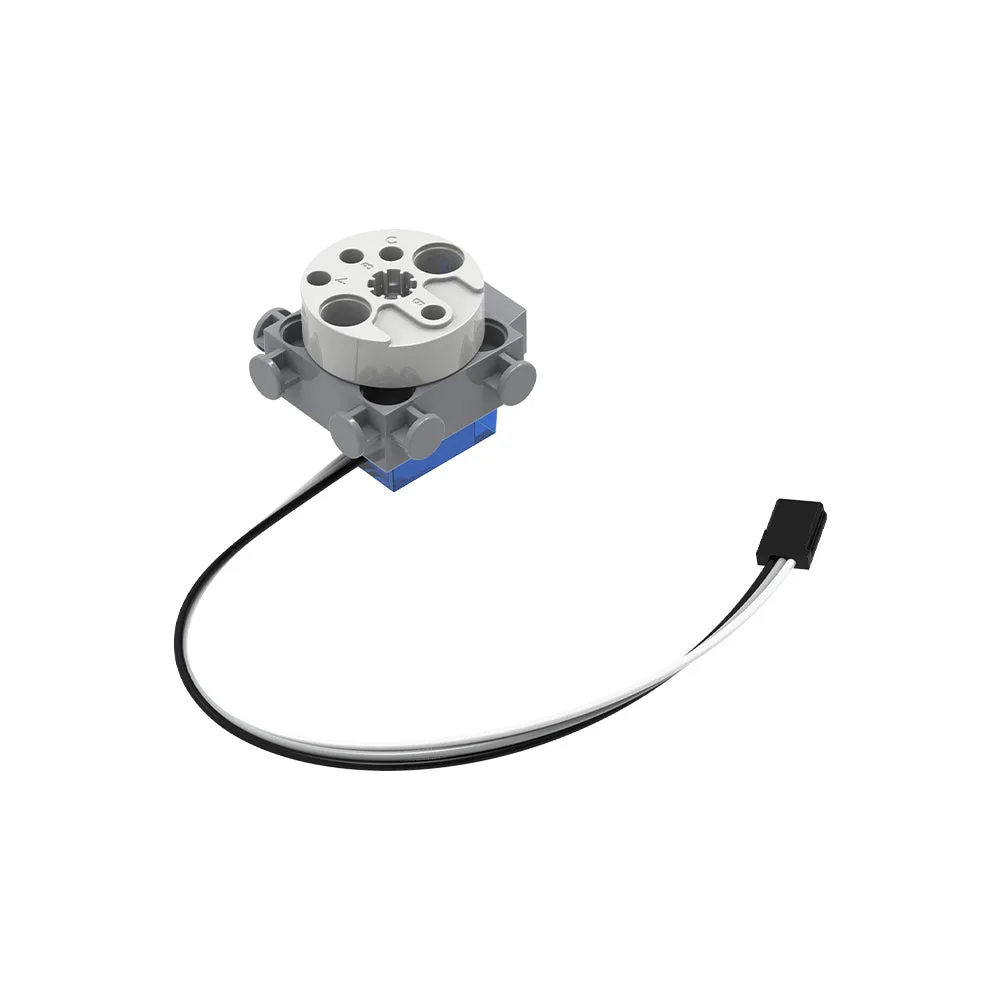
- Connect the solar panel to the motor: Attach the panel leads to the motor terminals as shown in the instructions. Keep the panel facing the light source and check that no wire is pinched between moving parts. Common mistake: reversing the leads or leaving a loose connection, which makes the flower look broken when the real issue is wiring.
- Test in direct sunlight: Take the assembled flower into bright, direct sun and watch the petals. All petals should rotate together, driven by the one motor, producing the intended optical illusion effect. Checkpoint: if petals move unevenly, recheck gear alignment before blaming the panel.
- Adjust and display: Once rotation is smooth, position the flower where light reaches the panel for most of the day. Re-test after moving it, since shade on the panel stops the motor. Next step: use the working model to explain that the flower moves only while light is available, then try shading the panel to show the effect in real time.
SolarFlower Golden Sunrise at a glance
- SolarFlower - Golden Sunrise: Motorized flower model with moving petals, powered by a solar panel. No batteries are needed, so the build doubles as a direct demonstration of how light becomes motion.
- SolarFlower - Golden Sunrise: A single motor drives all petals to rotate synchronously through a planetary gear design. Synchronized movement creates the optical illusion effect, and it also means one misaligned gear affects every petal, so alignment is the key checkpoint.
- SolarFlower - Golden Sunrise: The kit teaches mechanical systems such as motors and planetary gears, and how solar cells generate electricity. You can separate the lesson into a mechanics session and an electricity session instead of treating the build as one task.