Quick Answer
For maximum coverage with a SOLITUDE tarp, pitch it as an A-frame or half-pyramid with the ridgeline aligned to the wind, and use multiple anchor points for stability.
Why Tarp Configuration Matters
The shape you choose determines how much weather protection you get. An A-frame gives you a spacious interior but leaves the ends open, while a half-pyramid or a lean-to configuration blocks wind and rain from one direction, which is often more useful in exposed alpine settings.
Wind direction is the biggest factor. Orient the lowest side of the tarp into the wind to keep rain from blowing in and to prevent uplift. A taut ridgeline is key—sagging fabric flutters and lets moisture through the seams.
Anchor Points and Tension
Every corner and midpoint tie-out should be staked, not just the corners. Adding mid-panel stakes on the windward side reduces fabric vibration and prevents the tarp from acting like a sail.
Use a taut-line hitch on guylines so you can adjust tension without retying. This is especially useful when temperatures change and the Dyneema fabric relaxes or tightens.
Step-by-Step SOLITUDE Tarp Setup
- Choose the Site: Find level ground with good drainage, avoiding low spots where water pools. Orient the tarp so the lowest side faces the prevailing wind. Check for overhead hazards like dead branches before committing.
- Set the Ridgeline: Attach a ridgeline between two trees or use trekking poles at both ends. Make it as high as you need for headroom, but keep the angle steep enough to shed rain. A ridgeline that sags more than 10% will cause water pooling—re-tension before continuing.
- Anchor the Corners: Stake out the four corners in a diamond or rectangle pattern, pulling each taut. Use a taut-line hitch on the guylines for easy adjustment. Ensure the fabric is drum-tight—loose corners will flap in the wind.
- Add Mid-Panel Stakes: On the windward side, stake the mid-panel tie-outs (if available) to reduce vibration and improve stability. This is critical in gusty conditions. Skipping this step can lead to fabric stress and noise.
- Adjust for Maximum Coverage: Lower the windward side to the ground and stake it, or use a half-pyramid configuration to block wind and rain. For a full A-frame, keep both ends open but angle them away from the wind. Test the setup by lying inside and checking for gaps—adjust the stakes to seal them.
Product Facts
-
SOLITUDE TARP [DYNEEMA®]: The SOLITUDE TARP [DYNEEMA®] is built with Dyneema fabric for an exceptional strength-to-weight ratio, providing reliable coverage for glassing, spike camps, and other backcountry hunts. This means you can carry a full-coverage shelter without the weight penalty, making it easier to pack for extended hunts.
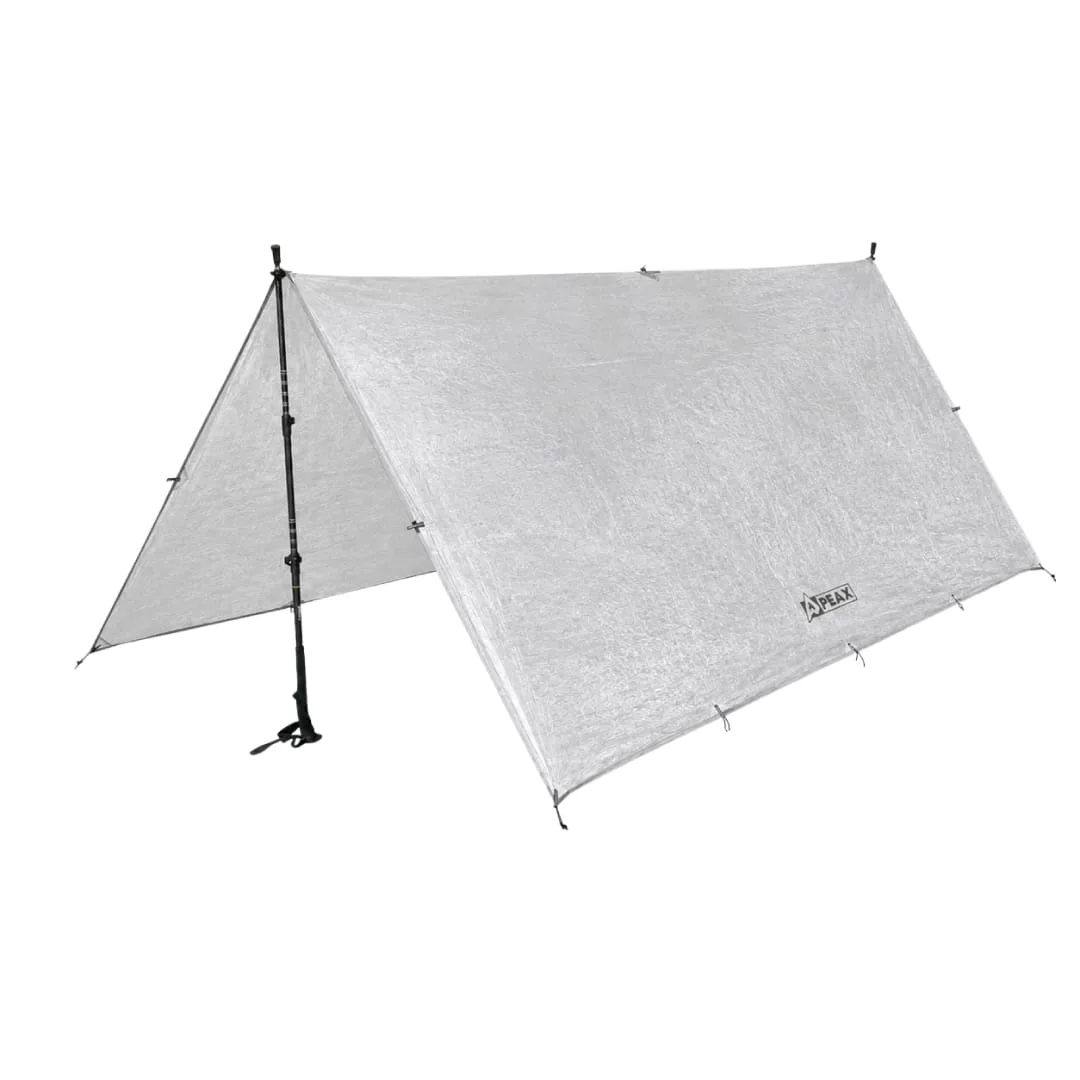
SOLITUDE TARP [DYNEEMA®]
-
SOLITUDE TARP [DYNEEMA®] ONLY: The SOLITUDE TARP [DYNEEMA®] ONLY version offers the same ultralight Dyneema protection for those who already have stakes or prefer to choose their own. If you already own compatible stakes, you can save weight and cost by skipping the bundled kit.
SOLITUDE TARP [DYNEEMA®] ONLY