Why a Fast Lens Swap Matters with the Sony A6100 Kit
The Sony A6100 two-lens kit gives you a versatile range from wide-angle to telephoto, but the real advantage is being able to switch between them quickly when the shot demands it. A slow or fumbling lens change can mean missing a fleeting moment or letting dust onto the sensor. This guide covers a practical, fast method to swap the 16-50mm and 55-210mm lenses on the A6100, based on the camera's design and the supplied lens features.
A Fast, Safe Lens-Swap Routine for the Field
The Sony A6100 uses the E-mount system, which has a simple twist-and-lock mechanism. The following steps are designed to minimize the time the sensor is exposed while keeping the camera secure.
- Prepare the incoming lens before removing the current one: With the camera off, remove the rear cap from the lens you are about to mount. Hold the lens in your dominant hand, rear element facing up, so you can immediately attach it once the current lens is off.
- Remove the current lens in one smooth motion: Press and hold the lens release button on the camera body. Rotate the mounted lens clockwise (toward the shutter button) until it stops, then lift it straight out. Keep the camera body pointing downward during the swap to reduce the chance of dust entering the chamber.
- Attach the new lens immediately: Align the white index mark on the new lens with the white index mark on the camera body. Insert the lens straight in and rotate it counterclockwise until it clicks into place. Do not force it—if it does not align, check that the lens is oriented correctly.
- Confirm the lens is locked: Give the lens a gentle twist to ensure it is fully seated. You should not feel any play. Turn the camera on and check that the aperture and autofocus respond normally.
What the Kit Lenses Confirm About Handling
-
SONY A6100 APS-C Mirrorless Camera with 16-50mm and 55-210mm Lens: The 16-50mm lens is a power zoom (PZ) lens with a 35mm full-frame equivalent of 24-75mm. It retracts when not in use. The power zoom retracts when the camera is off, so the lens extends forward when you power on. This means you should always turn the camera off before swapping to avoid damaging the retracted mechanism.
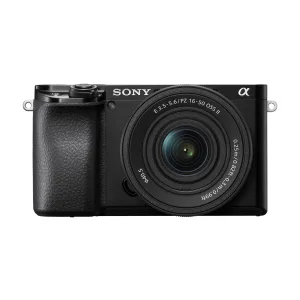
SONY A6100 APS-C Mirrorless Camera with 16-50mm and 55-210mm Lens
-
SONY A6100 APS-C Mirrorless Camera with 16-50mm and 55-210mm Lens: The 55-210mm lens is a manual zoom lens. It does not have a retracting mechanism. When switching from the 55-210mm to the 16-50mm, be aware that the 16-50mm will need to extend on power-up. Make sure the lens is fully mounted and locked before turning the camera on.
Field Technique Tips for the Sony A6100
In the field, you often have to swap lenses while holding the camera with one hand. Practice the routine at home until it feels natural. Keep the rear lens cap in a pocket you can access quickly, and consider using a small camera bag with a dedicated lens compartment so the spare lens is always within reach. The Sony A6100's APS-C sensor is smaller than full-frame, but it is still vulnerable to dust—avoid swapping in windy or dusty conditions if possible.
The supplied information does not specify exact dust-sealing ratings for the A6100 or these lenses, so taking reasonable precautions is wise. If you need to swap in less-than-ideal conditions, do it quickly and keep the camera body pointed down.