Two Zooms, One Mount: What You Need to Know
Both the Sony FE 28-70mm f3.5-5.6 OSS II and the Tamron 25-200mm f2.8-5.6 Di III VXD G2 are full-frame E-mount zooms that work directly on the Sony α7 IV. But they serve different priorities. The Sony is a compact standard zoom with optical stabilization, while the Tamron offers a much wider focal range with a slightly faster aperture at the wide end. This comparison looks at what each lens actually delivers based on the catalog specifications, so you can decide which trade-off fits your shooting style.
Lens Specs at a Glance
-
Sony FE 28-70mm f3.5-5.6 OSS II: 35 mm full-frame zoom with E-mount; 28-70 mm focal length; f3.5-5.6 aperture; includes one ED and three aspherical elements; circular aperture for improved bokeh; optical stabilization (OSS) works with in-body stabilization. This lens is lighter and more compact, ideal for everyday carry and travel. The OSS helps steady shots on bodies without IBIS or as a complement to the α7 IV's stabilizer.
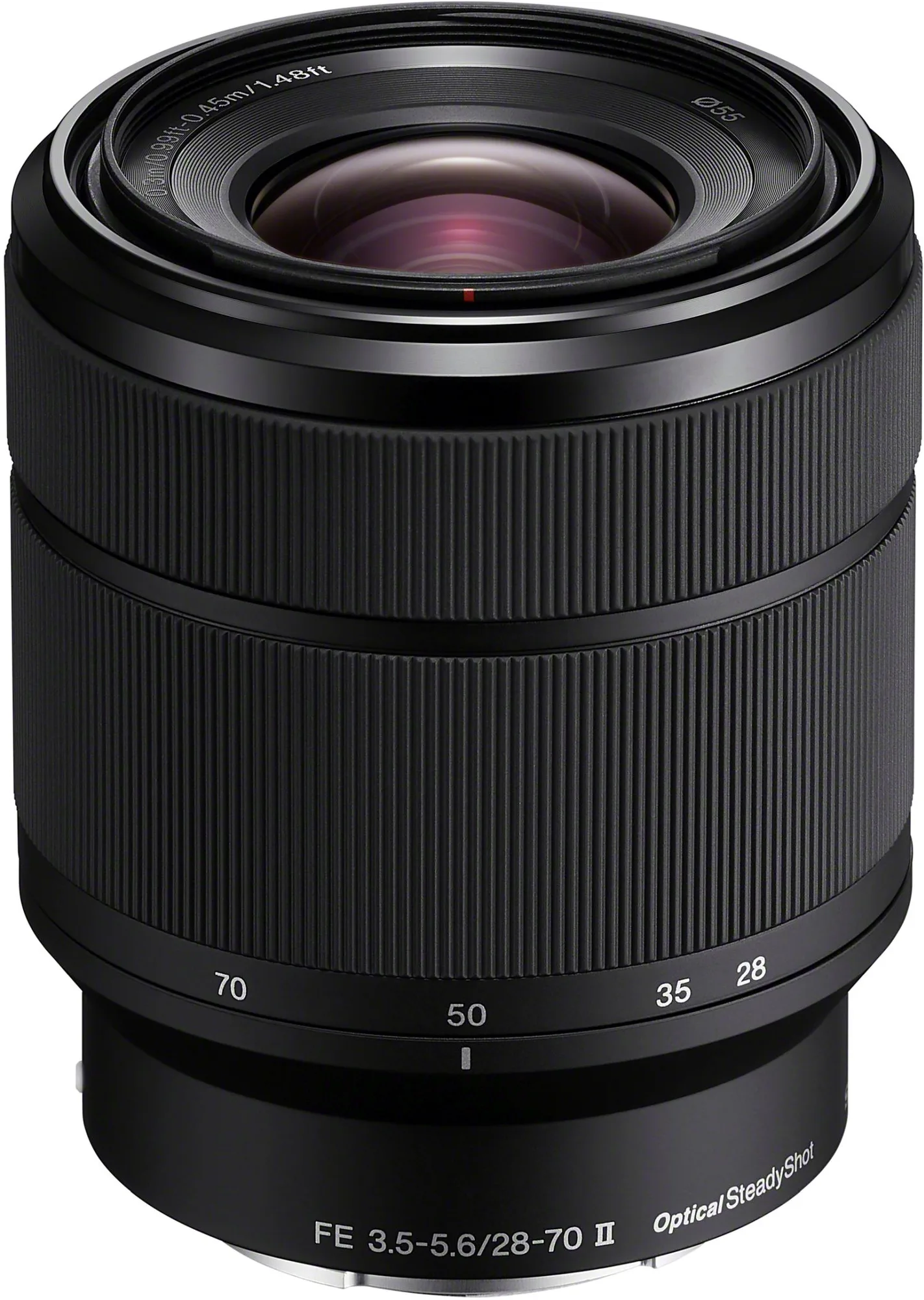
Sony FE 28-70mm f3.5-5.6 OSS II
-
Tamron 25-200mm f2,8-5,6 Di III VXD G2 Sony E-Mount: 25-200 mm focal length; f2.8-5.6 aperture; VXD autofocus motor; 67 mm filter thread; close focus with 1:1.9 magnification ratio (half-macro); compatible with Tamron Lens Utility software. The 25-200 mm covers wide-angle to telephoto in one lens, reducing the need to swap lenses. The wide f2.8 at 25 mm helps in low light, and the close-focus capability adds macro-like shots.
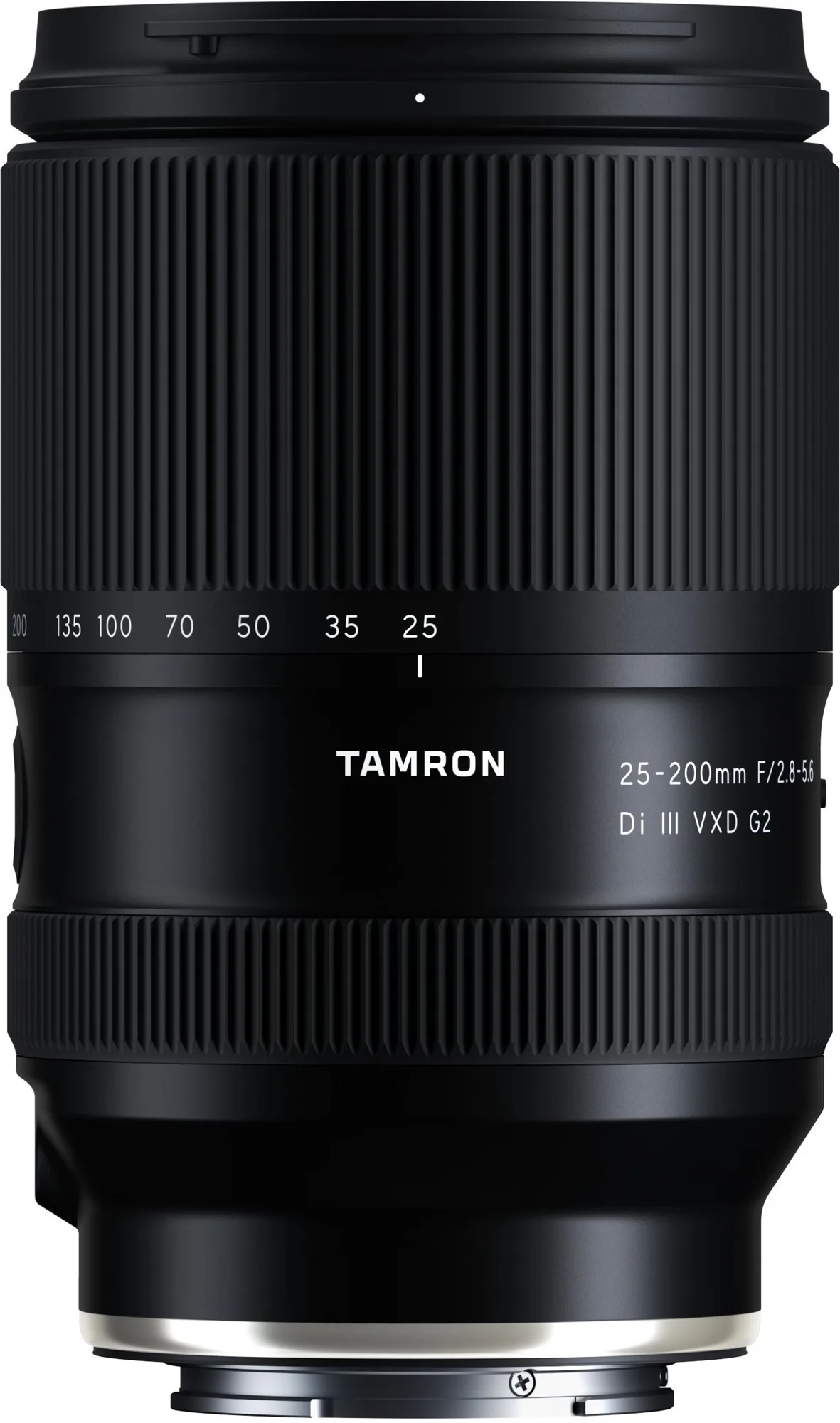
Tamron 25-200mm f2,8-5,6 Di III VXD G2 Sony E-Mount
Key Differences Between the Two Zooms
The most obvious difference is range: 28-70 mm vs 25-200 mm. That extra reach on both ends makes the Tamron a true all-in-one travel zoom. But range comes with size and weight trade-offs, and the Sony's OSS is a specific advantage for handheld video or low-light stills when you want extra stabilization.
- Focal Length Range: Sony covers 28-70 mm (standard zoom). Tamron covers 25-200 mm (wide to telephoto), giving you more flexibility without changing lenses.
- Maximum Aperture: Both are variable-aperture zooms. Tamron starts at f2.8 at 25 mm (brighter than Sony's f3.5 at 28 mm). At the telephoto end, both narrow to f5.6.
- Image Stabilization: Sony includes OSS (optical stabilization) that works with the α7 IV's in-body stabilization. The Tamron relies on the camera's IBIS alone.
- Close-Focus Capability: Tamron offers a 1:1.9 magnification ratio, allowing half-macro shots. Sony does not list a close-focus specification in the catalog.
- Autofocus System: Tamron uses a VXD linear motor, described as fast and precise for action subjects. Sony's AF tracking is supported up to 120 fps, but the motor type is not detailed in the catalog.
Which Lens for Your Sony α7 IV?
If you prioritize a compact, stabilized standard zoom for everyday photography and video, the Sony FE 28-70mm f3.5-5.6 OSS II is a natural fit. Its OSS pairs well with the α7 IV's IBIS, and the lens is lighter for all-day carry.
If you want maximum versatility in a single lens—from 25 mm wide-angle to 200 mm telephoto, plus close-focus capability—the Tamron 25-200mm f2.8-5.6 Di III VXD G2 is the stronger choice. The wider f2.8 at the short end helps in dim conditions, and the VXD autofocus is designed for fast-moving subjects. You give up built-in stabilization and a slightly more compact body, but gain a huge range without swapping glass.