Quick answer
Charge the NP-FZ100 before long shoots, top it up between sessions rather than running it flat, and store it partly charged in a cool, dry place. Runtime depends on your camera, EVF use, stabilisation and shooting style, so carry a spare for full-frame days.
Why your runtime varies so much
The NP-FZ100 is used across several Sony full-frame bodies, but the same battery can deliver very different session lengths depending on how the camera is set up. Continuous autofocus, electronic viewfinder use, in-body stabilisation and high-frame-rate bursts all draw more power than single-shot photography with the rear screen.
Cold weather is the other big variable. Lithium-ion chemistry slows down in low temperatures, so a battery that feels fine indoors can drop quickly on a winter shoot. Keeping a spare warm in an inside pocket is more useful than trying to squeeze every last percent from one cell.
Charging habits that actually help
There is no benefit to draining the NP-FZ100 completely before recharging. Partial top-ups are fine and usually more convenient. The bigger risk is heat: charging in direct sun, on a hot car dashboard or inside a closed bag shortens battery life faster than frequent shallow charges.
Use a charger designed for the NP-FZ100 rather than a generic high-current supply, and avoid leaving the battery on charge for days after it has finished. If you are packing for a trip, charge the night before rather than a week in advance.
When to replace rather than keep caring
A battery that swells, rattles, or no longer holds a useful charge after normal charging is a replacement item, not a care problem. Stop using swollen cells immediately and dispose of them through a proper battery recycling point. If you rely on one body for paid work, a second genuine battery is cheaper than a lost shoot.
NP-FZ100 care questions answered
How long does an NP-FZ100 last per charge?
There is no single number: runtime depends on the camera model, EVF versus screen use, stabilisation, autofocus mode and temperature. Treat published camera ratings as a guide and carry a spare for long days, especially in cold weather. Plan around a spare rather than a fixed hour count.
Can I leave the battery in the camera?
For short gaps it is fine, but for storage of weeks or months, remove the battery from the camera. This avoids slow drain and reduces the chance of leakage or swelling affecting the body. Remove the battery before long-term storage.
What charge level should I store it at?
Store the NP-FZ100 partly charged, roughly half full, rather than completely empty or fully charged. Keep it in a cool, dry place away from direct sun and metal objects that could bridge the contacts. Half charge plus a cool, dry spot is the storage default.
Is it safe to use third-party chargers?
Use a charger that explicitly supports the NP-FZ100 and avoid unknown high-current supplies. If a battery becomes hot, swells or smells unusual during charging, stop and replace it. Heat or swelling means stop using that cell.
How do I get the most from a spare?
Rotate between two batteries rather than always draining the same one, label them so you can track age, and recharge both before a major shoot. A genuine spare such as the Sony NP-FZ100 keeps your full-frame body running without changing your workflow. Rotate and label spares to spot a weakening cell early.
Product facts
-
Sony NP-FZ100 Battery Lithium-Ion: Sony NP-FZ100 lithium-ion battery, brand new stock, in stock with a 1-year warranty and free UK delivery. A genuine spare keeps a full-frame Sony body usable when the first battery runs down, and the warranty covers early faults.
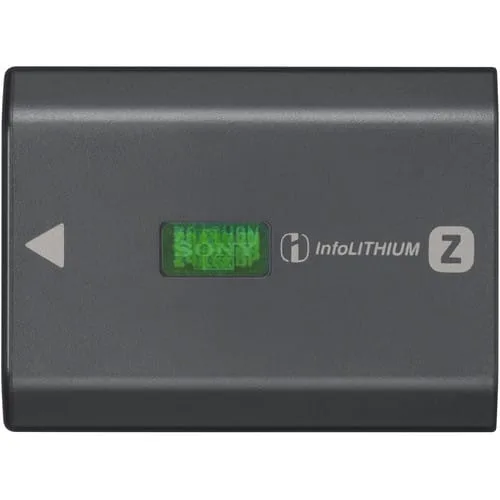
Sony NP-FZ100 Battery Lithium-Ion