Start with the only ratio the label confirms
Soylent Complete Meal Powder Cacao is built around a simple promise: just add water. The supplied product record confirms that the powder is a complete meal with 20g protein, 28 vitamins and minerals, slow burning carbs, and healthy fats, and that it is perfectly portioned for nutritional absorption. That last phrase matters for mixing: the powder is already portioned, so the goal is to hydrate it evenly, not to stretch it with extra liquid.
The product record does not include a specific powder-to-water ratio, scoop size, or shaker instruction. Rather than guess a number, use the portion in your package and adjust liquid gradually until the texture suits you. A thicker shake uses less water; a thinner one uses more. The ratio is a texture dial, not a nutrition dial, because the full portion is what carries the stated protein and micronutrients.
What the Soylent Cacao record confirms
-
Soylent complete meal powder - cacao: Complete meal powder that you mix with water—no blender required according to the product description. Sets the baseline method: water is the intended liquid, and the powder is designed to be drinkable without special equipment.
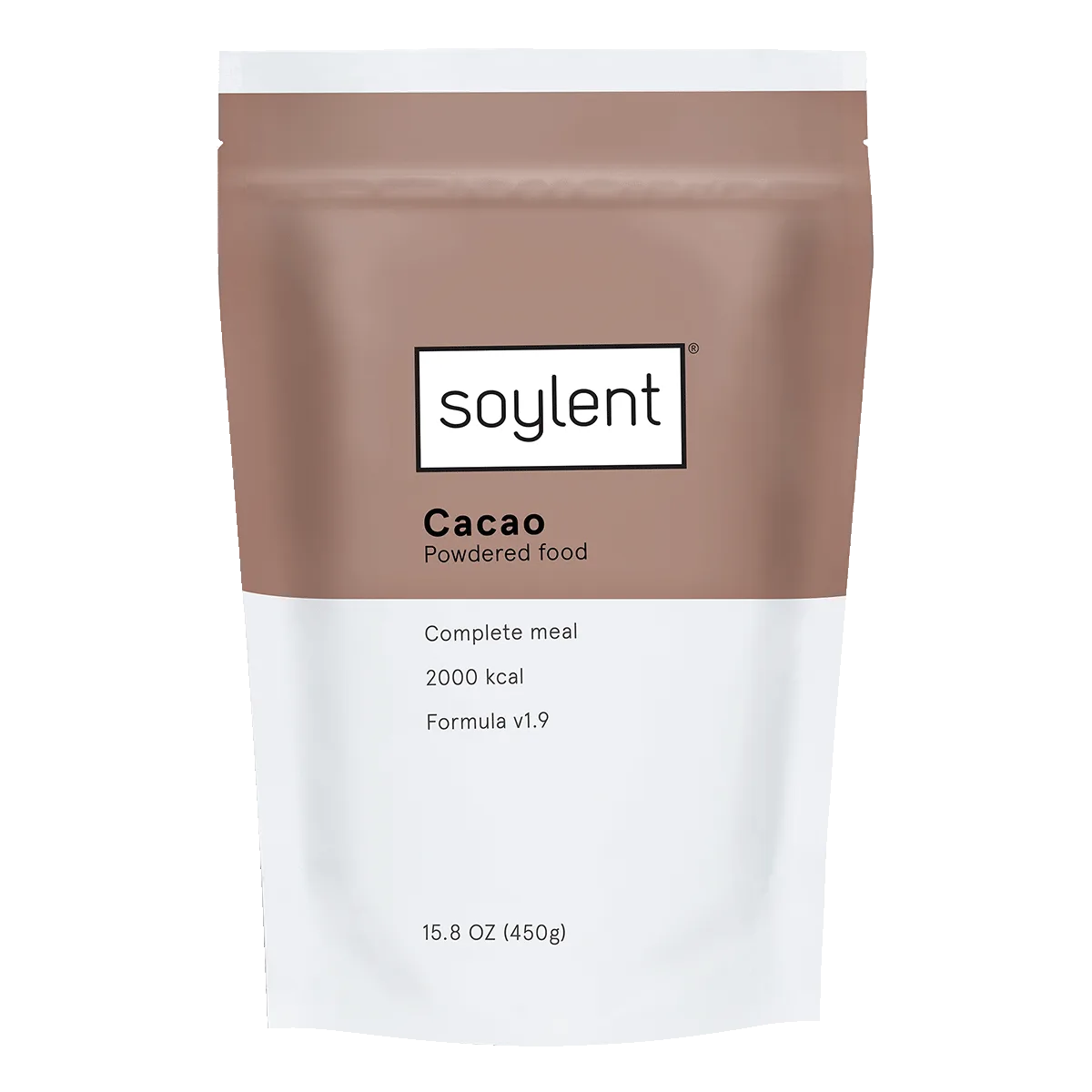
Soylent complete meal powder - cacao
-
Soylent complete meal powder - cacao: 20g protein, 28 vitamins and minerals, slow burning carbs, and healthy fats per complete meal serving. Explains why you should mix the full portion rather than splitting it—those numbers belong to the complete serving.
-
Soylent complete meal powder - cacao: Perfectly portioned for nutritional absorption. Supports even hydration and thorough mixing so the portion is consumed as intended.
A reliable mixing method for a smooth cacao shake
The product record does not supply a shaker sequence, so these steps are practical technique, not manufacturer instructions. Adjust to your equipment and taste.
- Add liquid first, then powder: Putting water in the shaker before the powder helps prevent dry powder from packing at the bottom and forming a hard clump.
- Use the full portion: The complete meal is portioned for nutritional absorption, so mix the entire serving rather than a partial scoop. If the shake is too thick, add water in small splashes rather than reducing the powder.
- Shake in short bursts, then swirl: Vigorous continuous shaking can trap air and leave foam. Short bursts with a swirl between them give the powder time to hydrate.
- Check the bottom corners: Clumps often hide where the shaker wall meets the base. Tip the shaker and look before you drink; if you see dry powder, add a splash of water and shake again.
- Let it sit briefly if needed: A short rest after shaking can help the powder hydrate further. The product record does not specify a rest time, so use your judgment and stir or shake once more before drinking.
Water vs milk: what changes in the glass
The product record only confirms water as the mixing liquid. Milk is a personal choice, not a documented instruction. Here is how the two generally behave with powdered meal shakes, so you can decide what to try.
- Water: The intended mix. It keeps the shake closest to the product's designed texture and lets the cacao flavor come through. Start here if you want the most predictable result.
- Milk: Adds its own flavor and body, which can make the shake thicker and richer. Because the product record does not confirm milk as a mixing liquid, treat it as an experiment: use the same full portion of powder and adjust the milk volume for texture.
- Plant-based milks: Similar to dairy milk in behavior—often thicker than water. If you use one, add it gradually and shake well, since the extra body can mask dry pockets.
Clump fixes that address the usual causes
- Powder packed at the bottom: Add liquid first, then powder, and shake immediately. Letting powder sit on a dry shaker base invites a hard plug.
- Too little liquid for the full portion: A thick mix is harder to hydrate evenly. Add water in small increments until the shake moves freely when you swirl it.
- Shaking too gently: A few lazy shakes leave dry pockets. Use short, firm bursts and check the corners of the shaker.
- A shaker that is too full: Leave headroom so the liquid can move. Overfilling reduces agitation and makes clumps more likely.
Texture is personal—and the record has limits
The supplied product record does not include a target thickness, a recommended water temperature, or a specific shaker type. That is not a flaw in the product; it is simply outside the evidence provided. Use the full portion, start with water, and adjust liquid until the shake is easy to drink. If you prefer a thinner texture, add water; if you prefer it thicker, use less. Keep notes on what worked so you can repeat it.
One honest tradeoff: a very thin shake may taste less rich, while a very thick one can feel heavy and may hide clumps. The sweet spot is usually the point where the shake pours easily but still coats the side of the glass. Since the product is portioned for nutritional absorption, aim for even hydration rather than a specific consistency.