Quick answer
Set aside five to ten minutes, choose five cards from one theme, and work through them one at a time: look at the picture, read the English sentence, then flip to the Spanish side. Keep the pace light and stop while your child is still engaged.
Why short, themed sessions work better than shuffling the whole deck
A full deck of 56 cards can feel like a test if you flip through all of them at once. Grouping cards by theme—animals, colors, things in the home—gives each session a clear focus and makes it easier for kids to connect new words to what they already know.
Short sessions also leave room for repetition across days. Revisiting the same five cards tomorrow is more useful than racing through twenty new ones today, especially for bilingual flash cards that pair a picture with a full sentence.
What to do when your child guesses instead of reading
Guessing is normal, especially when the illustration is bold and memorable. Instead of correcting immediately, ask your child to point to the word in the Spanish sentence that matches the picture. That small pause turns a guess into a looking-and-reading moment.
If guessing continues, slow down and cover the Spanish side while you read the English sentence together. Then reveal the Spanish side and read it aloud as a pair.
A five-step routine for Spanish practice at home
- Pick a theme and five cards: Choose one topic from the deck—such as animals or colors—and pull five cards from it. Common mistake: using the whole deck at once, which turns practice into a marathon. Five cards is enough for one sitting; save the rest for another day.
- Preview the picture before reading: Show the illustrated side and ask what your child sees. Then read the English sentence aloud together. Checkpoint: your child should be able to point to the object in the picture before you move on.
- Flip and read the Spanish side: Turn the card over and read the Spanish sentence slowly. If your child is reading, let them try first. Common mistake: rushing to translation—pause after the Spanish sentence to let the sound settle.
- Build one new sentence together: Use the card as a starting point for storytelling, as the directions suggest. Ask your child to add one detail in English or Spanish—for example, a color or a feeling. Checkpoint: the new sentence should include the target word.
- Shuffle and review the same five cards: Mix the five cards and go through them once more, faster this time. Common mistake: adding new cards before the first five feel familiar. Repeat the same set tomorrow before expanding. End on a successful round; stop while your child still wants more.
Product facts
-
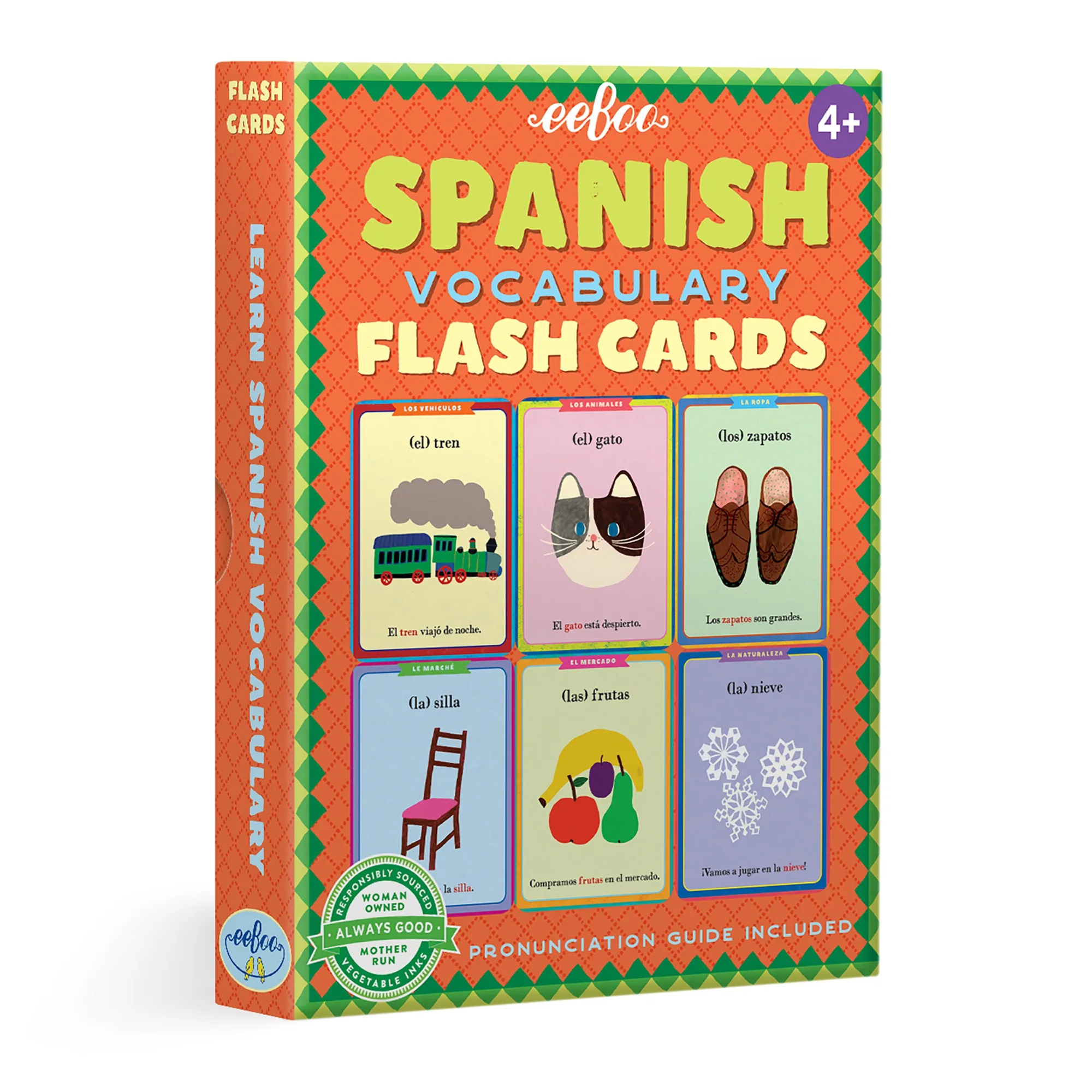
Spanish Vocabulary Flash Cards: Each card shows a boldly illustrated word used in an English sentence on one side and the Spanish sentence on the reverse. The full-sentence format gives your child context for each word, so practice sounds like reading rather than isolated vocabulary drills.
Spanish Vocabulary Flash Cards