Quick Answer
For most turbocharged Hondas running moderate boost, start with a quality iridium plug one heat range colder than stock, gapped to your tuner's recommendation. Upgrade coil packs only when you have a confirmed spark energy problem, not as a first step. Always fix maintenance items like the turbo oil feed filter before chasing ignition upgrades.
Turbocharged engines place unique demands on the ignition system. Higher cylinder pressures make it harder for the spark to jump the gap, and heat soak can push plug temperatures into dangerous territory. If you are searching for the best spark plugs for turbo use, the answer depends on your boost level, fuel, and tuning goals—not on a single universal part number.
This guide gives you concrete decision rules for choosing spark plugs, setting gap, and deciding when an ignition upgrade is actually necessary. We will also cover how to diagnose misfire under boost and when to replace related hardware like the turbo oil feed filter.
Spark Plug Heat Range: The First Decision
Spark plug heat range describes how quickly the plug dissipates heat from the combustion chamber. A colder plug (higher number in NGK's system) transfers heat to the cylinder head faster, reducing the risk of pre-ignition. A hotter plug stays hot enough to burn off deposits during low-load driving. For a turbocharged engine, the correct heat range is a balance: cold enough to avoid detonation under boost, but not so cold that it fouls in traffic.
As a rule of thumb, go one step colder for every 75–100 horsepower above stock, or when you increase boost significantly. If you are running stock boost on a factory turbo engine, the OEM heat range is usually fine. Always confirm with your tuner, because fuel type (pump gas vs. ethanol) and ignition timing also affect the ideal range.
- Check your factory plug's heat range number before ordering. NGK uses higher numbers for colder plugs.
- If you see black, sooty deposits on a cold plug after normal driving, you may have gone too cold.
- If you see blistered or melted electrodes, you are too hot—stop and diagnose immediately.
Gapping for Boost: What Actually Works
Spark plug gap turbo setups often need a smaller gap than naturally aspirated engines. A smaller gap requires less voltage to jump, which reduces the chance of misfire under boost when cylinder pressure is high. Common starting points are 0.022–0.026 inches for moderate boost on pump gas, but the exact number depends on your coil energy and boost level. Too small a gap can cause a weak, inconsistent flame kernel and rough idle.
Do not assume the gap out of the box is correct. Always verify with a wire-type gap gauge and adjust carefully. Iridium plugs have a fine center electrode; bending the ground strap is fine, but never pry against the center electrode or you will crack the insulator.
- Start at 0.025 inches for up to 20 psi, then close the gap in 0.002-inch steps if you still see misfire.
- If you need to gap below 0.018 inches to stop misfire, you likely have a coil or fuel problem, not a plug problem.
- Re-check gap every 10,000–15,000 miles on a turbo car, as erosion can open it up.
Spark Plug Replacement Interval for Turbo Engines
Turbocharged engines typically need more frequent plug changes than naturally aspirated ones. The extra heat and pressure accelerate electrode wear. For a daily-driven turbo Honda on pump gas, a 30,000-mile interval is a safe baseline. If you track the car, run high boost, or use ethanol blends, shorten that to 15,000–20,000 miles. Always replace plugs as a full set, and use a torque wrench—typically 18–22 lb-ft for a 14mm thread, but check your service manual.
Signs you waited too long include rough idle, hesitation under boost, and a sudden drop in fuel economy. A plug that looks normal but has a widened gap can still cause misfire under load, so inspect gap even if the insulator color looks fine.
- Keep a log of install date and mileage; turbo heat cycles vary widely by driving style.
- If one plug looks different from the others, investigate that cylinder for injector or coil issues.
- Never install a used plug from another engine without checking gap and condition.
Coil Pack Upgrade: When It Helps and When It Doesn't
A coil pack upgrade is not a universal fix for misfire under boost. If your factory coils are in good condition, they can support significant power—often well beyond stock. Upgraded coils help when you have increased the gap for a stronger spark, are running high boost with ethanol, or have confirmed weak spark energy through datalogs. They also help if you have eliminated other causes and still get spark blowout.
Before buying coils, replace plugs, check gap, and verify fuel delivery. A lean condition under boost can mimic ignition misfire and will not be fixed by coils. If you do upgrade, look for coils that are direct-fit for your engine and do not require cutting or splicing the harness.
- Misfire at high rpm only? Try a smaller gap first—it is free.
- Misfire at idle and low load? That is usually not a coil energy issue; check plugs and vacuum leaks.
- If you upgrade coils, re-gap plugs to the coil manufacturer's recommendation.
Supporting Mods That Protect Your Ignition
Ignition components live in a harsh environment. On turbo Hondas, a clogged turbo oil feed filter can restrict oil flow to the turbocharger, leading to bearing failure and debris that may damage the engine—and that can take out spark plugs and coils. Replacing this filter is cheap insurance, especially on higher-mileage cars. Similarly, using the correct spark plug part number for your engine ensures the heat range and thread reach match the cylinder head.
If you are upgrading the turbo inlet pipe, note that some kits only pair with a specific intake and do not fit the stock airbox. That kind of fitment detail matters because an improperly installed inlet can cause a boost leak, which then causes a rich condition and misfire that you might mistakenly blame on ignition.
- Replace the turbo oil feed filter every 30,000–50,000 miles or when turbo service is performed.
- Use OEM or equivalent plugs with the correct reach; too long can contact the piston.
- After any intake or inlet install, check for boost leaks before diagnosing misfire.
Decision Rules for Ignition Upgrades
- If you are stock or lightly modified (under 300 hp): Stay with OEM heat range plugs and stock coil packs. Replace plugs at 30,000 miles and verify gap. No ignition upgrade needed. Spend money on maintenance first.
- If you added boost or ethanol and see misfire under load: Install one heat range colder plugs, gap them to 0.024–0.026 inches, and test. If misfire persists, close gap in 0.002-inch steps down to 0.020 inches. Gap adjustment is the cheapest fix; try it before buying coils.
- If you still have misfire after gapping and new plugs: Check fuel delivery (injectors, pump, filter) and look for boost leaks. Only then consider upgraded coil packs if datalogs show weak spark. Do not buy coils as a guess—diagnose first.
- If you track the car or run high boost regularly: Use colder plugs, check gap every 10,000 miles, and replace plugs every 15,000–20,000 miles. Consider upgraded coils only if you have confirmed spark blowout. Shorten maintenance intervals in proportion to abuse.
Product Facts
- Genuine Honda (NGK) Laser Iridium Spark Plug ILZKAR8H8S Heat Range 8: Fits all 2017-2021 Civic Type-R FK8 and 2016-2021 Civic 1.5T (Non-Si). It is an OE direct replacement with NGK part number 95112 and Honda part number 12290-59B-003. Sold as a single plug. This is a factory heat range 8 plug, which is already one step colder than many standard Honda plugs. For a stock or lightly modified 1.5T or Type R, it is a direct-fit starting point. If you increase boost significantly, you may need a colder range—but this plug is a solid baseline for maintenance.
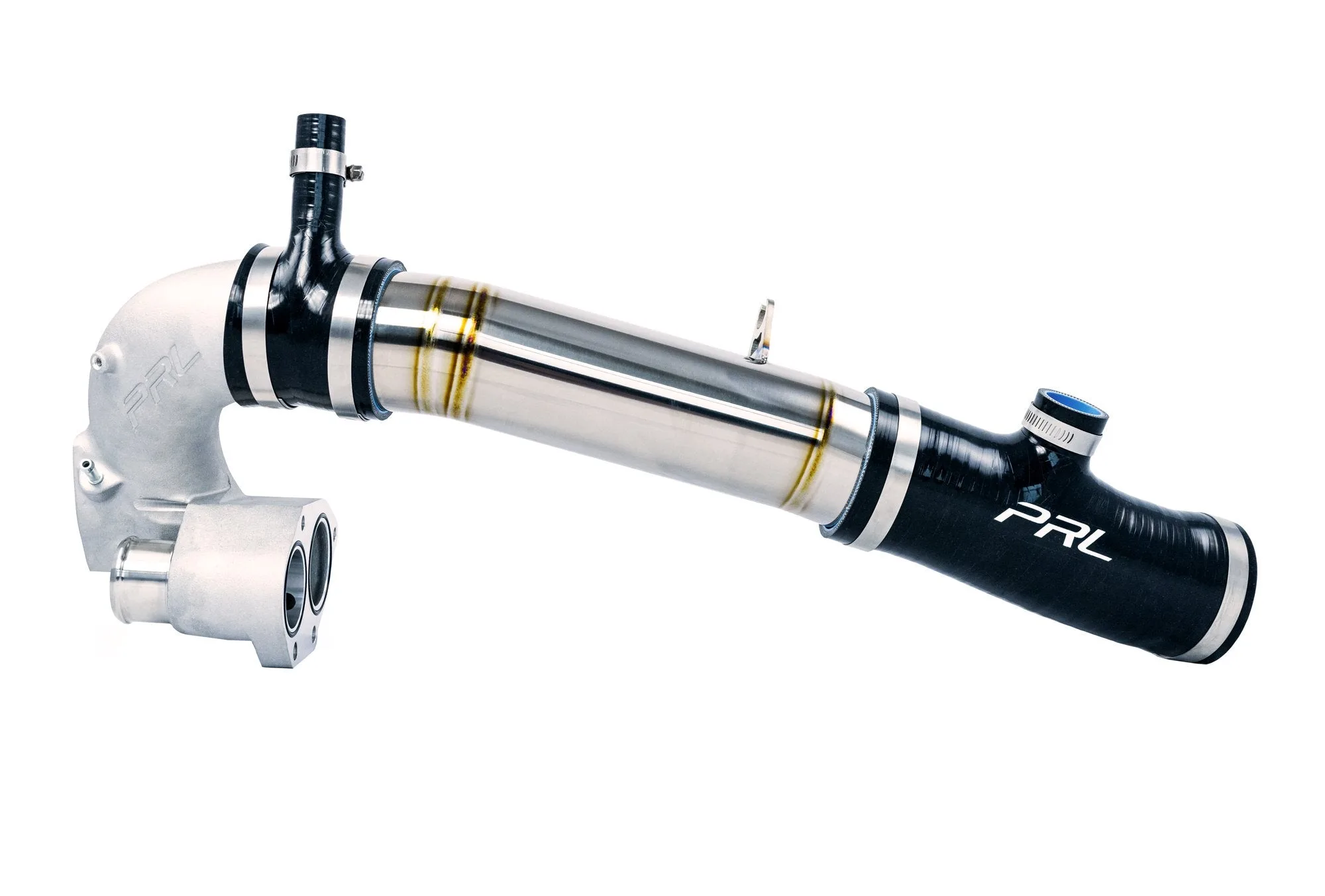
- 2016-2021 Honda Civic 1.5T Titanium Turbocharger Inlet Pipe Upgrade Kit: Fits all 2016-2021 Honda Civic 1.5T and 2017-2022 Honda CR-V 1.5T with OEM Civic inlet bracket. Only pairs with PRL Cobra Cold Air Intake or Short Ram Intake; does not fit stock airbox. Available with MAF Housing option. An upgraded inlet pipe can improve turbo spool and reduce restriction, but it requires a compatible intake. If you are chasing misfire under boost, a poorly sealed inlet can create a boost leak. This part is not a fix for ignition problems, but it is a common supporting mod that must be installed correctly.
- https://prlmotorsportsec.com/products/genuine-honda-turbocharger-oil-feed-filter-assembly-bc0d4752ded6f8b0dc23bd6a-2682051https://prlmotorsportsec.com/products/genuine-honda-turbocharger-oil-feed-filter-assembly-1-20ec938e7903c75bde5f8cf8-2682059Genuine Honda Turbocharger Oil Feed Filter Assembly: Fits all 2016-2021 Honda Civic 1.5T, 2017-2021 Civic Type-R FK8, 2018+ Accord 1.5T and 2.0T, and 2017-2022 CR-V 1.5T. Factory replacement part number 15533-59B-003. A restricted oil feed filter can starve the turbo of oil, leading to turbo failure and potential engine damage. Replacing this inexpensive filter during spark plug service is smart preventive maintenance for any turbo Honda.
Fit Guidance
Best for
- Turbocharged Honda owners who want a clear maintenance and upgrade path for spark plugs and ignition
- Enthusiasts experiencing misfire under boost who need to diagnose the cause before buying parts
- Daily drivers and weekend track cars running up to 400 hp on pump gas or ethanol blends
Not for
- Naturally aspirated engines with no forced induction—heat range and gap rules differ
- Owners looking for a single 'best' plug without considering boost level, fuel, and tuning
- Those who have not addressed basic maintenance like oil feed filter or fuel delivery
Choosing the right spark plugs and ignition setup for a turbocharged engine comes down to heat range, gap, and honest diagnosis. Start with a quality iridium plug like the Genuine Honda (NGK) Laser Iridium Spark Plug ILZKAR8H8S, set the gap for your boost level, and replace them on a shorter interval than you would on a naturally aspirated car. Upgrade coils only when you have data showing you need them—and never overlook supporting maintenance like the turbo oil feed filter.