Quick answer
For most home systems, match gauge to run length and speaker impedance: use 16-gauge for runs under 25 feet with 8-ohm speakers, 14-gauge for runs up to 50 feet or 4-ohm speakers, and 12-gauge for runs beyond 50 feet or very low impedance. If you are unsure, 14-gauge is a safe default for typical living-room distances.
Why gauge and length matter together
Gauge is a measure of conductor thickness: lower numbers mean thicker wire. Thicker wire has lower resistance, which matters because resistance steals a small amount of amplifier power and can slightly alter the frequency response at the speaker. The longer the run, the more resistance accumulates, so a gauge that works at 10 feet may be marginal at 50 feet.
Speaker impedance also changes the calculation. A 4-ohm speaker draws more current than an 8-ohm speaker for the same voltage, so it is more sensitive to cable resistance. That is why the same 30-foot run might be fine with 16-gauge into 8 ohms but better served by 14-gauge into 4 ohms.
A practical gauge-to-length chart
Use this as a starting point, not a rule etched in stone. These recommendations assume typical two-conductor speaker cable and a goal of keeping resistance low enough that it does not audibly interact with your speakers.
If your run falls between two columns, choose the thicker gauge when your speakers are 4 ohms or when you listen at high levels. If your speakers are 8 ohms and your run is short, the thinner gauge is usually sufficient and easier to manage behind furniture.
- Up to 25 feet with 8-ohm speakers: 16-gauge is usually enough.
- Up to 50 feet with 8-ohm speakers, or up to 25 feet with 4-ohm speakers: 14-gauge is a sensible choice.
- Beyond 50 feet with 8-ohm speakers, or beyond 25 feet with 4-ohm speakers: 12-gauge is the safer pick.
- Very long runs over 75 feet: consider 10-gauge or moving the amplifier closer to the speakers.
What about 16 vs 14 gauge speaker wire?
The difference between 16 and 14 gauge is small in short runs but becomes more meaningful as distance increases. For a 10-foot run into 8-ohm speakers, both will perform similarly. For a 40-foot run into 4-ohm speakers, 14-gauge has a clear advantage because it adds less resistance.
If you are buying once and want flexibility for a future room layout, 14-gauge is often the better value. It costs a little more and is slightly thicker, but it covers more scenarios without going to bulky 12-gauge.
How to measure your actual run length
Measure the path the cable will take, not the straight-line distance. Add slack for routing around corners, behind furniture, and at both ends. A run that looks like 20 feet in a straight line can easily become 30 feet once it follows baseboards and door frames.
If you plan to move speakers or rearrange the room, add a few extra feet now. A cable that is too short is useless, while a slightly long cable can be coiled or tucked away.
When thicker gauge is not the answer
Very thick cable can be stiff and difficult to terminate, especially with spring clips or small binding posts. In short runs with 8-ohm speakers, moving from 16-gauge to 12-gauge rarely solves an audible problem and may just cost more and frustrate installation.
If you hear hum, buzz, or intermittent dropouts, the issue is more likely grounding, connector contact, or a faulty amplifier than gauge. Fix those first before upgrading cable thickness.
Decision rules for speaker cable gauge and length
- Rule 1: Start with impedance and distance: If your speakers are 8 ohms and your run is under 25 feet, 16-gauge is typically fine. If your run is 25–50 feet or your speakers are 4 ohms, step up to 14-gauge. Checkpoint: measure the actual cable path, not the straight-line distance.
- Rule 2: Go thicker for long runs or low impedance: For runs over 50 feet with 8-ohm speakers, or over 25 feet with 4-ohm speakers, choose 12-gauge. For runs over 75 feet, consider 10-gauge or relocating the amplifier. Checkpoint: if the cable feels warm or the sound is thin at high volume, thicker gauge may help.
- Rule 3: Do not overspend on short runs: With 8-ohm speakers and a run under 15 feet, 16-gauge is usually sufficient. Spending more on 12-gauge in this scenario rarely yields an audible improvement. Checkpoint: put the savings toward a better source or room treatment instead.
Product facts to know
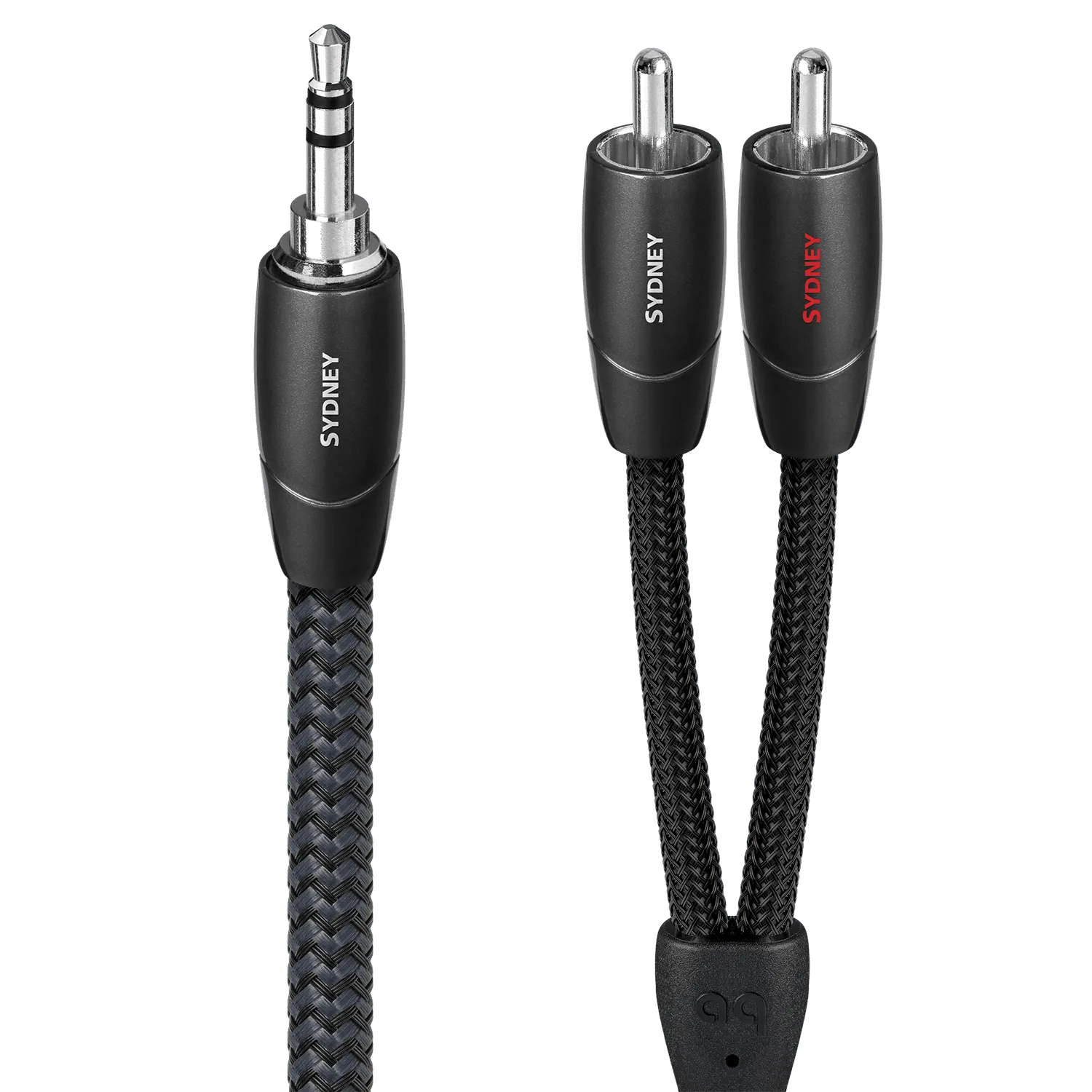
- Sydney 3.5mm Mini > RCA Factory Certified Refurbished: Solid Perfect-Surface Copper+ (PSC+) conductors and Carbon-Based 3-Layer Noise-Dissipation. Solid conductors avoid strand-interaction distortion, and the noise-dissipation system helps prevent RF interference from modulating the ground reference in sensitive 3.5mm-to-RCA runs.
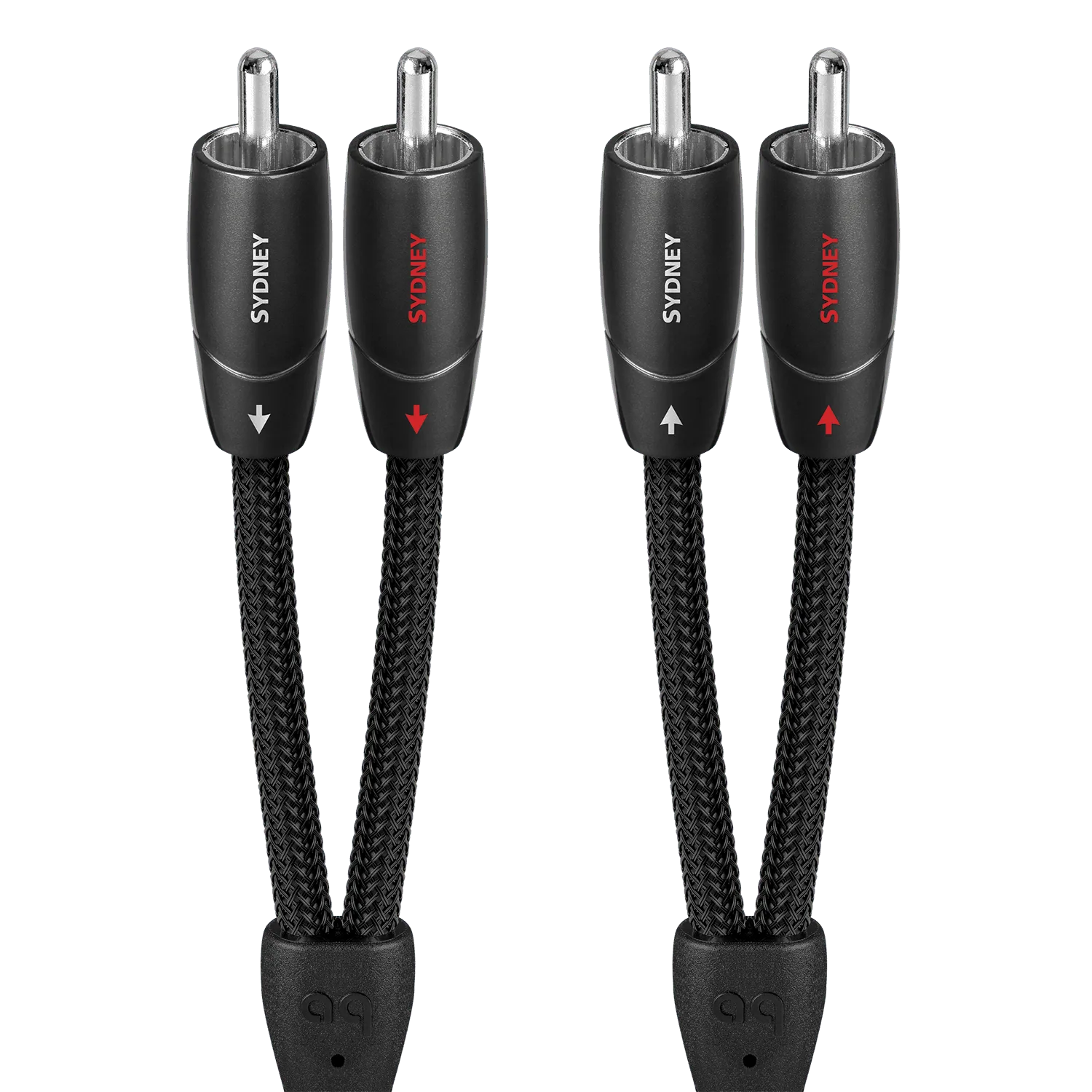
- Sydney RCA > RCA: Solid Perfect-Surface Copper+ (PSC+) conductors and Carbon-Based 3-Layer Noise-Dissipation. For RCA line-level connections, these design choices support cleaner signal transfer over longer or electrically noisy runs.
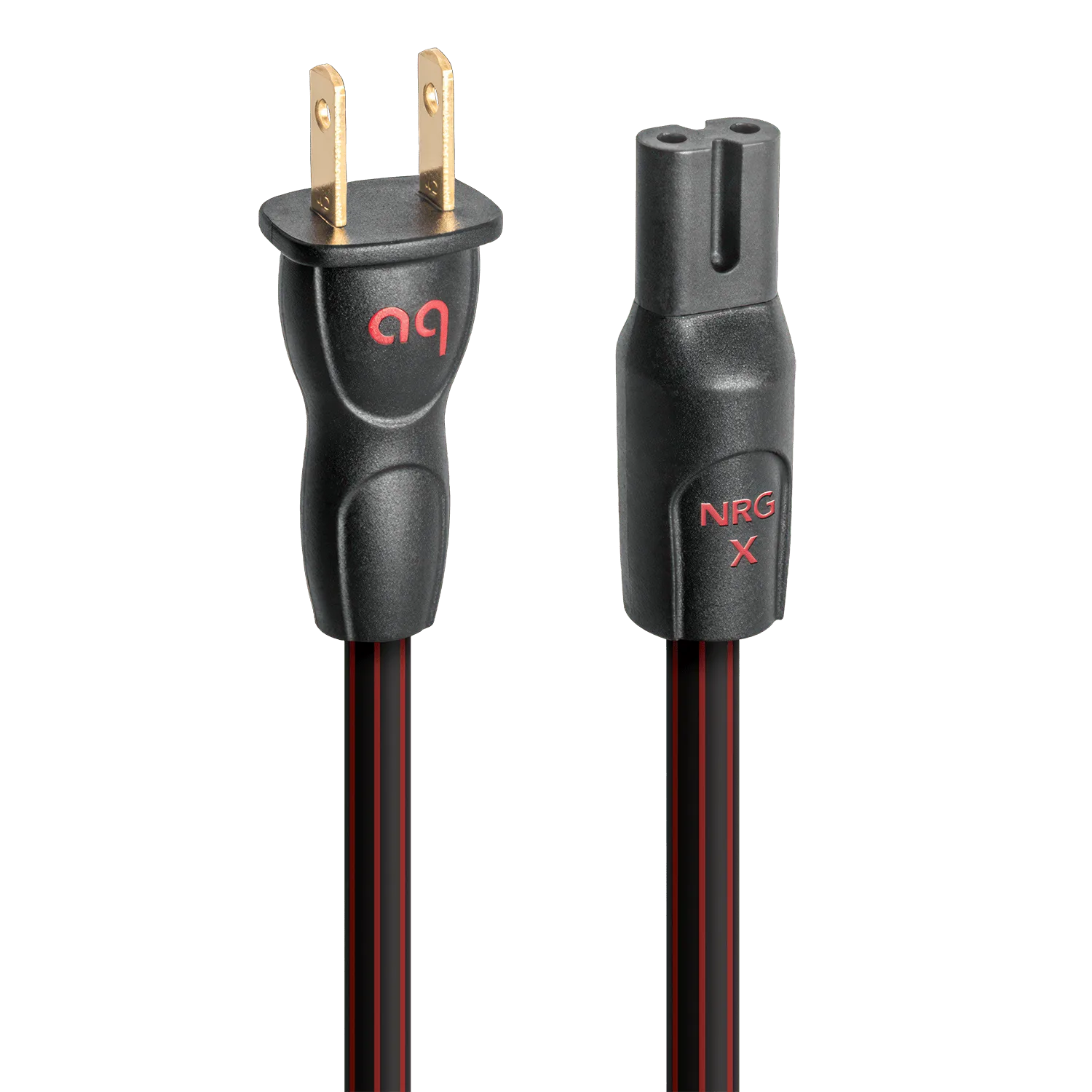
- NRG-X2 Factory Certified Refurbished: Long-Grain Copper (LGC) conductors, Semi-Solid Concentric topology, and Direction-Controlled Conductors. LGC minimizes grain-boundary distortion, while the semi-solid concentric design reduces strand-interaction distortion in power cables.
Is this guide for you?
Best for
- Home listeners setting up a two-channel or home theater system with runs under 75 feet.
- Anyone choosing between 16, 14, and 12 gauge for 4-ohm or 8-ohm speakers.
- Buyers who want a clear rule of thumb before comparing cable prices.
Not for
- Pro audio installs with constant-voltage distributed systems or 70V/100V lines.
- Custom in-wall installations that require plenum-rated or fire-rated cable.
- Systems where the amplifier is bridged or running at very low impedance below 4 ohms.