Why These Pencils Work Differently on Dark Paper
Standard colored pencils often disappear or look chalky on black or dark cardstock. Spectrum Noir Metallic Pencils are formulated to deliver a reflective, metallic sheen that shows up vividly against dark backgrounds. The 12-color set is designed specifically for this purpose — the pigments catch light and create a shimmering effect that ordinary pencils can't match.
Blending these pencils requires a slightly different approach than wax or oil-based colored pencils. Because the metallic finish comes from fine reflective particles, heavy pressure or excessive layering can dull the shine. The goal is to build color gradually while preserving the metallic character.
What the Set Includes
-
Metallic Pencils by Spectrum Noir (12pk): Metallic Pencils by Spectrum Noir (12pk) — 12 different colors in a storage tin, designed for a fantastic color effect on black or dark paper. Knowing you have 12 distinct metallic shades helps you plan blends that transition across the color wheel without muddying the reflective quality.
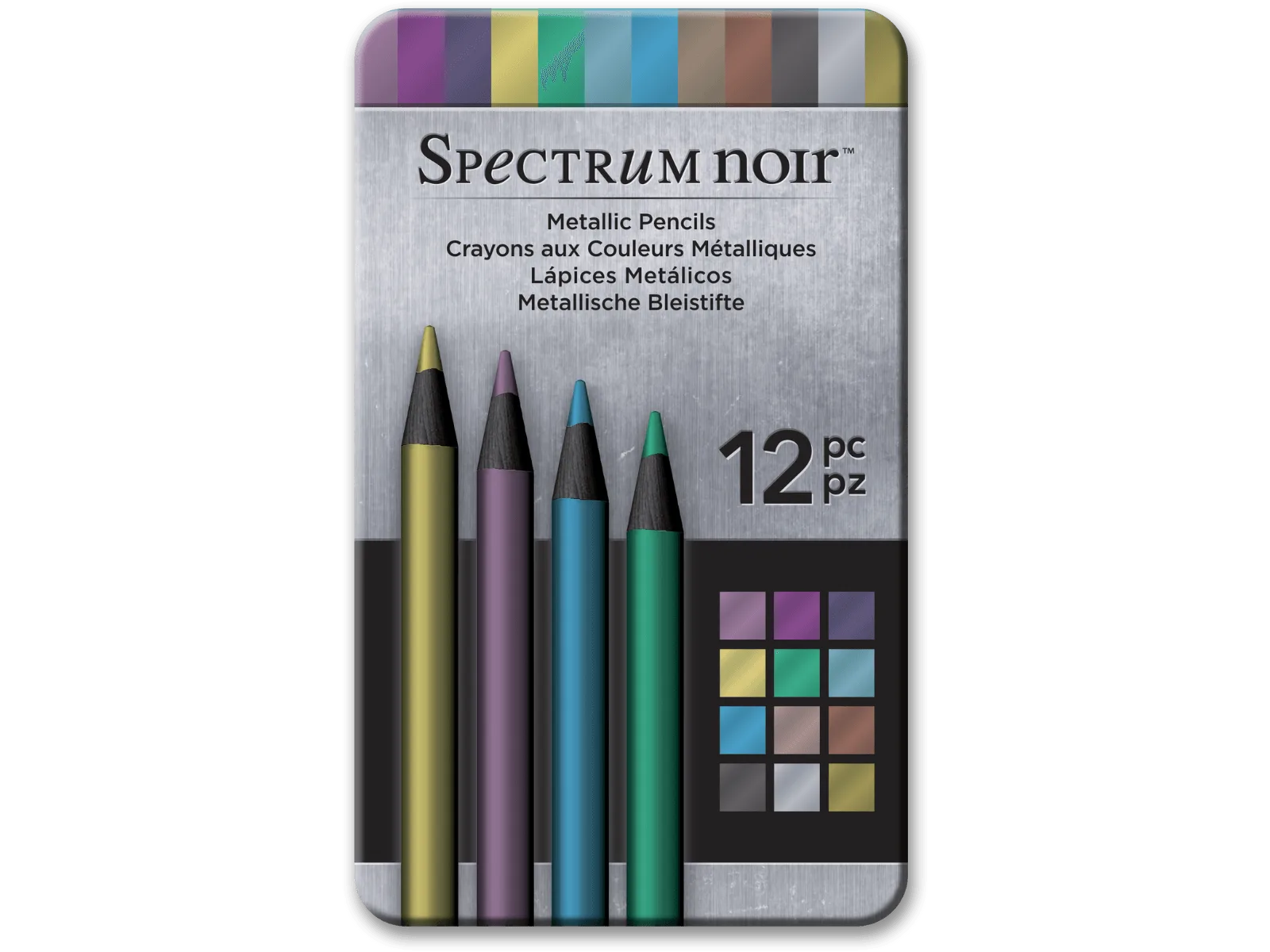
Metallic Pencils by Spectrum Noir (12pk)
Blending Technique for Smooth Metallic Transitions
These steps assume you are working on black or very dark paper. The same approach works on dark gray or deep navy cardstock.
- Start with light pressure: Apply the first metallic pencil using a light, even circular motion. This deposits a thin layer of pigment without crushing the metallic particles. The color will look faint at first — that is normal.
- Layer a second color at the transition zone: Choose a neighboring metallic shade and begin layering where the two colors meet. Keep your strokes light and overlapping. The metallic particles will mix optically rather than physically blending into a muddy third color.
- Build saturation with repeated light layers: Go over the area two or three more times, increasing pressure slightly with each pass. Stop as soon as the paper surface feels waxy or the metallic sheen starts to flatten. Overworking the area will reduce the reflective quality.
- Use a colorless blender sparingly: If you have a colorless blending pencil, test it on a scrap of the same dark paper first. Some blenders can dull the metallic effect. If you do use one, apply it with very light pressure only at the final pass.
Pairing with Black Cardstock for Maximum Impact
The contrast between the metallic pencil and the dark paper is what makes the color pop. Smooth black cardstock gives the cleanest results — textured paper can scatter the light and reduce the metallic shimmer. If you are using a textured dark surface, burnish the area lightly with a tissue before applying the pencil to help the pigment sit on the high points.
The 12-color tin includes a range that covers warm and cool metallics, so you can create gradients from copper to silver or gold to bronze. Experiment with layering a warm metallic over a cool one for an iridescent effect.
What the Supplied Information Does Not Cover
The product record confirms that these pencils are intended for dark paper but does not specify recommended paper weight, tooth, or blending tools. The blending advice above is based on the general behavior of metallic pigments and the product's stated purpose. For best results, test on your specific paper before committing to a finished piece.
No information is provided about lightfastness, wax bloom, or compatibility with solvents. If these factors matter for your project, consider running your own tests on a small sample.