Two party games, two very different kinds of fun
Speed Colors and Trash Talk both work as quick party games, but they ask players to do opposite things. Speed Colors is a silent, simultaneous race to recreate a colorful picture from memory. Trash Talk is a talk-heavy debate game where players argue about which odd object best matches a word.
That difference matters more than theme or box size. One rewards speed and visual memory; the other rewards persuasion and creative reasoning. Before you pick, decide which kind of energy your group actually enjoys.
Speed Colors vs Trash Talk at a glance
- Core activity: Speed Colors: memorize a colored picture, flip the card, and color the black-and-white side to match. Trash Talk: secretly assign three objects to three word cards, then reveal and compare choices.
- Player interaction: Speed Colors is simultaneous and competitive—everyone reaches for the same color markers. Trash Talk is discussion-driven, with players or teams locking in choices and then revealing them.
- Time and pace: Speed Colors is described as quick 15-minute games. Trash Talk plays in rounds that escalate as more objects and word cards are added; the record does not state a total play time.
- Age and audience: Speed Colors is suitable for children ages 6 and up. Trash Talk's age recommendation is not confirmed in the supplied information, so check the box before buying for younger players.
- Skills exercised: Speed Colors develops memory and motor skills. Trash Talk leans on language, categorization, and persuasion—matching objects to words like 'double,' 'dream,' or 'sharp.'
Speed Colors: a fast, silent race for families
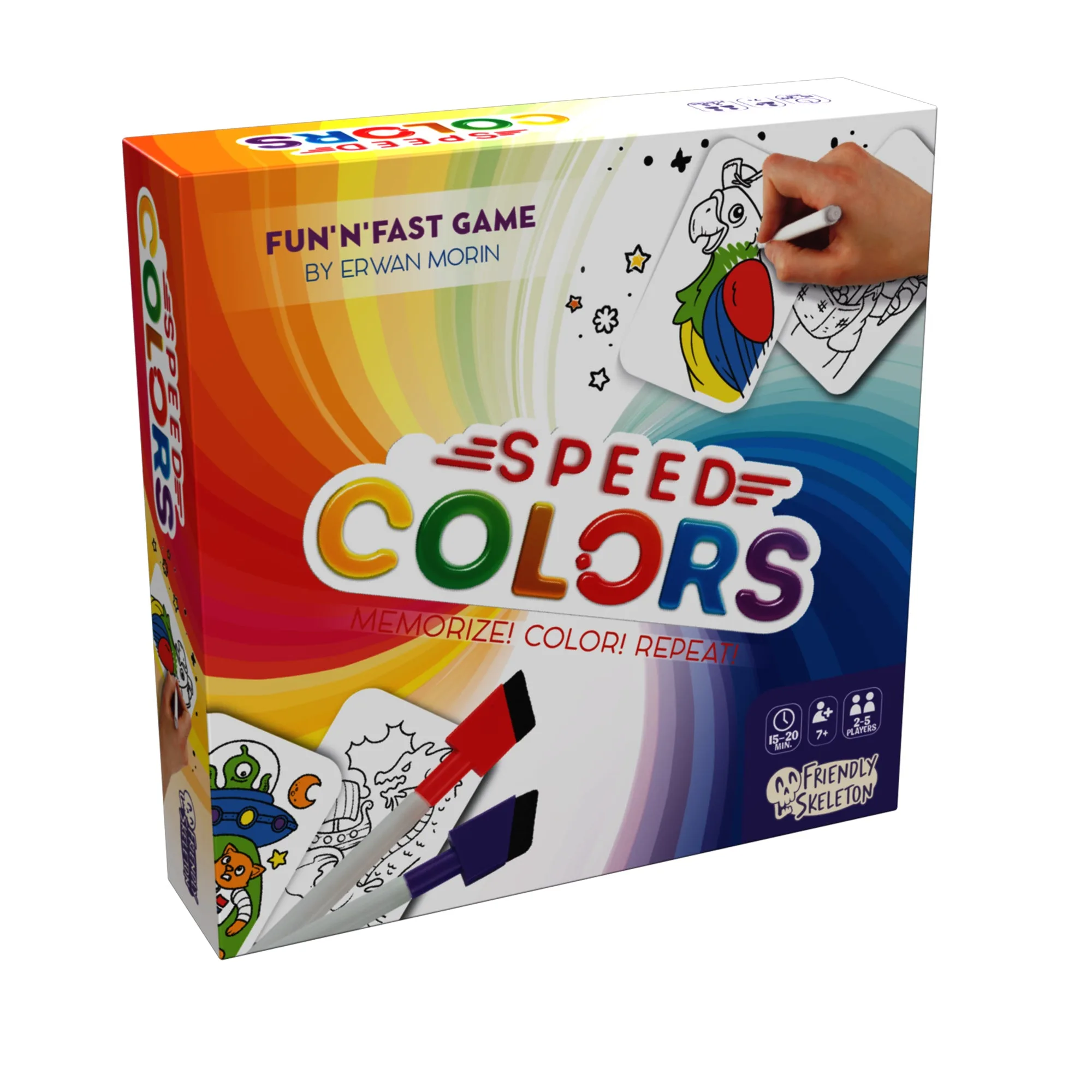
Speed Colors is the easier pick for mixed-age family groups. Each player gets a double-sided card: one side shows a colorful picture, the other the same picture in black and white. Everyone studies the colored side, flips it, and then colors the blank side as quickly and accurately as possible. Faster, more accurate coloring earns more points.
Because everyone plays at once, there is no waiting for turns. The box includes 55 dry erase cards and 6 dry erase markers, and the dry erase surface makes it travel-friendly—you can play on a car ride or at a picnic. The game is compact and portable, with a rulebook included.
Speed Colors: what the record confirms
-
Speed Colors: Each player has a double-sided card with a colorful picture on one side and the same picture in black and white on the other. This is the core mechanic: you memorize the colors, then recreate them from memory.
Speed Colors
-
Speed Colors: The faster and more accurate you are, the more points you get. Scoring rewards both speed and precision, so it suits players who like a light pressure challenge.
-
Speed Colors: Enjoy quick 15-minute games where players race to accurately color their cards based on memory. The short play time makes it easy to fit in a quick round or several back-to-back.
-
Speed Colors: Suitable for children ages 6 and up. A clear age floor helps you decide if younger kids can join.
-
Speed Colors: Compact and portable design with dry erase cards and markers included, making it easy to play anywhere. Travel-friendly components mean less setup and cleanup away from home.
Trash Talk: a talking game about odd connections
Trash Talk is for groups that like to argue—playfully. In the first round, three word cards are revealed, and each player (or team) secretly assigns the same three objects to those three words. The objects are odd items included in the box, and the goal is to match all three. If you do, you set those cards aside, add a fourth object, lay out new cards, and play another round. If not, you try again with three new cards. Fail again, and you lose the game.
The win condition escalates: you keep matching more objects to more word cards until you successfully match ten objects with ten cards. That structure makes the game challenging and gives it a natural 'one more round' pull. The box includes 20 physical items, and the fun comes from debating questions like whether a plastic plant is more like 'double,' 'dream,' or 'sharp.'
Trash Talk: what the record confirms
-
Trash Talk: In the first round of play, three word cards are revealed, and each player (or team) secretly assigns the same three objects to these three words. The simultaneous secret assignment keeps everyone involved and sets up the reveal.
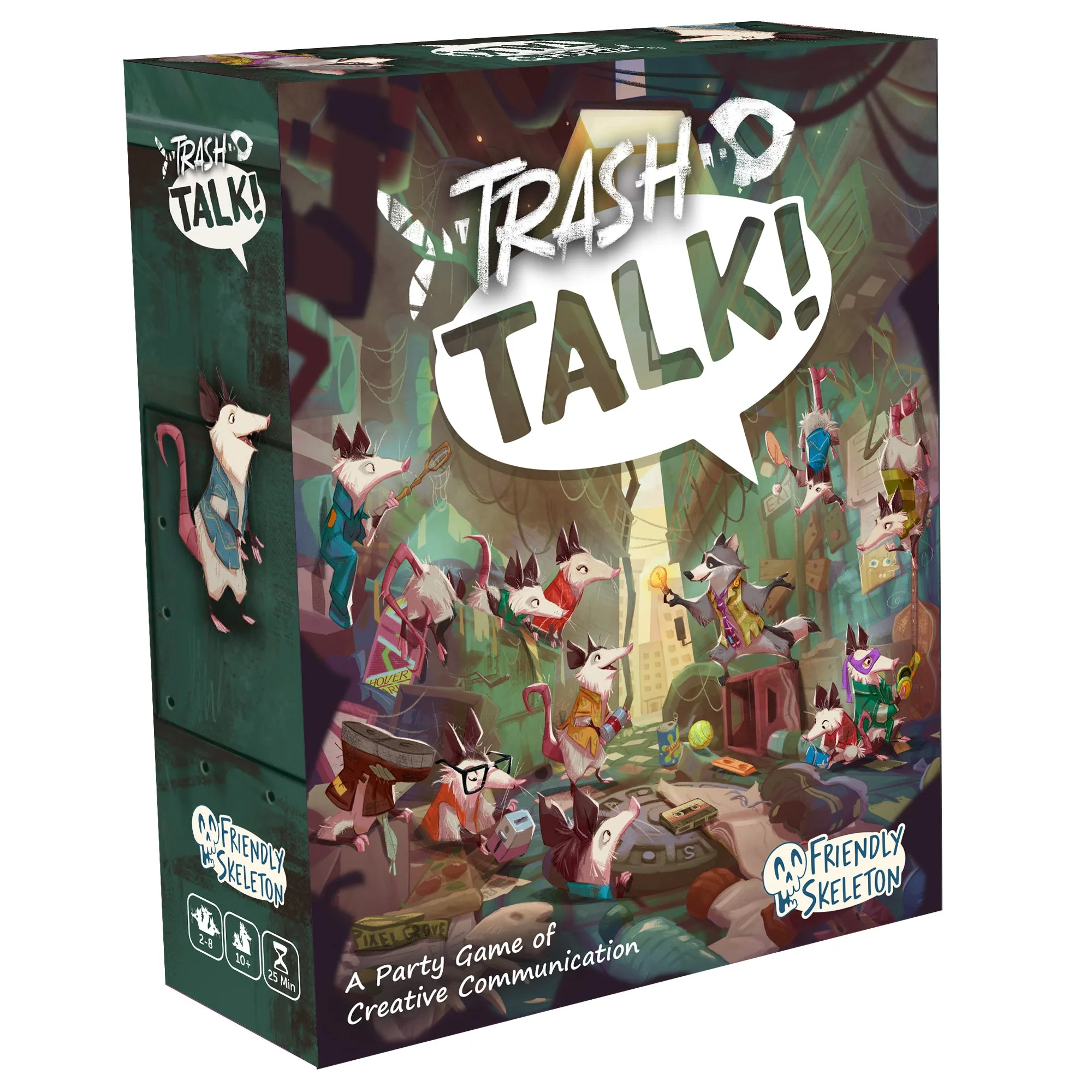
Trash Talk
-
Trash Talk: If you match all three objects, put those cards aside, add a fourth object, lay out new cards, and play another round; if not, try again with three new cards. This escalating structure is the heart of the game's challenge and replayability.
-
Trash Talk: Includes 20 physical items your friends will be fighting over the meaning of all night! The physical objects are central to the debate, so the game is tactile as well as verbal.
-
Trash Talk: If you successfully make your way up to matching ten objects with ten cards, you win! A clear, ambitious win condition gives the game a satisfying arc.
Which game fits your group?
Choose Speed Colors if your group includes younger children (6 and up), prefers parallel play over discussion, and enjoys quick, low-pressure challenges. It is also the better travel option thanks to the dry erase components and compact design.
Choose Trash Talk if your group likes to talk, debate, and laugh at absurd connections. It suits older kids and adults who enjoy wordplay and persuasion. Because the age recommendation is not confirmed in the supplied information, check the box if you plan to play with younger children.
One more difference: Speed Colors is a race against the clock, while Trash Talk is a race against the matching condition. Neither is inherently better—they simply reward different skills.
What the records do not settle
The supplied information does not state a player count for either game, so check the box for the exact number. Trash Talk's age recommendation is also missing, which matters if you are buying for a family with young children. Speed Colors lists ages 6 and up, but the maximum player count is not given.
Neither game's record includes care instructions for the components, so follow the manufacturer's guidance on the box. These gaps are not negatives—they are simply details to confirm before you buy.