Quick answer
Choose Spidderwood if you want dramatic branching for a focal point or shrimp climbing structure; choose Honeycomb Wood if you need a dense, porous surface for attaching mosses and epiphytes like Anubias.
Branching vs. porous surface
Spidderwood (also sold as Redmoor wood) features long, twisting branches that create open negative space in your aquascape. Honeycomb Wood is denser, with a pitted texture that mimics natural root systems and provides more surface area for plant attachment.
The trade-off is clear: Spidderwood gives you height and visual drama, while Honeycomb Wood offers better grip for mosses and java fern without needing as much glue or fishing line.
Shrimp and small fish habitat
Both woods are safe for shrimp tanks, but they serve different purposes. Spidderwood's fine branches give dwarf shrimp (like Neocaridina) excellent climbing and grazing surfaces, while Honeycomb Wood's crevices offer more hiding spots for shy species.
If you keep breeding colonies, Honeycomb Wood's nooks help protect shrimplets from tankmates. For display-oriented scapes where you want shrimp to be visible, Spidderwood's open structure keeps them in sight.
Trade-offs at a glance
- Visual style: Spidderwood gives you tall, branching silhouettes; Honeycomb Wood offers a more compact, root-like appearance. Think about the overall shape you want before choosing.
- Plant attachment ease: Honeycomb Wood's porous surface holds moss and epiphytes with less glue or thread; Spidderwood's smoother branches may require more careful tying. If you prefer low-maintenance planting, Honeycomb Wood saves time.
- Size variability: Both woods are sold by size range (Small to X-Large), but individual pieces vary greatly in shape. You cannot pick the exact piece online. Order a size larger than you think you need, as branches may be trimmed or shaped.
- Shrimp and nano fish use: Spidderwood's fine branches are perfect for shrimp climbing; Honeycomb Wood's crevices create hiding spots for shrimplets. Combine both if your tank is large enough to accommodate different microhabitats.
Product facts
-
Honeycomb Wood 20-45+cm: Honeycomb Wood is 100% natural wood; ideal for attaching mosses, java fern, and Anubias using cotton thread, fishing line, or plant glue. Its porous texture holds plants securely with minimal effort, making it a top choice for beginners building a planted hardscape.
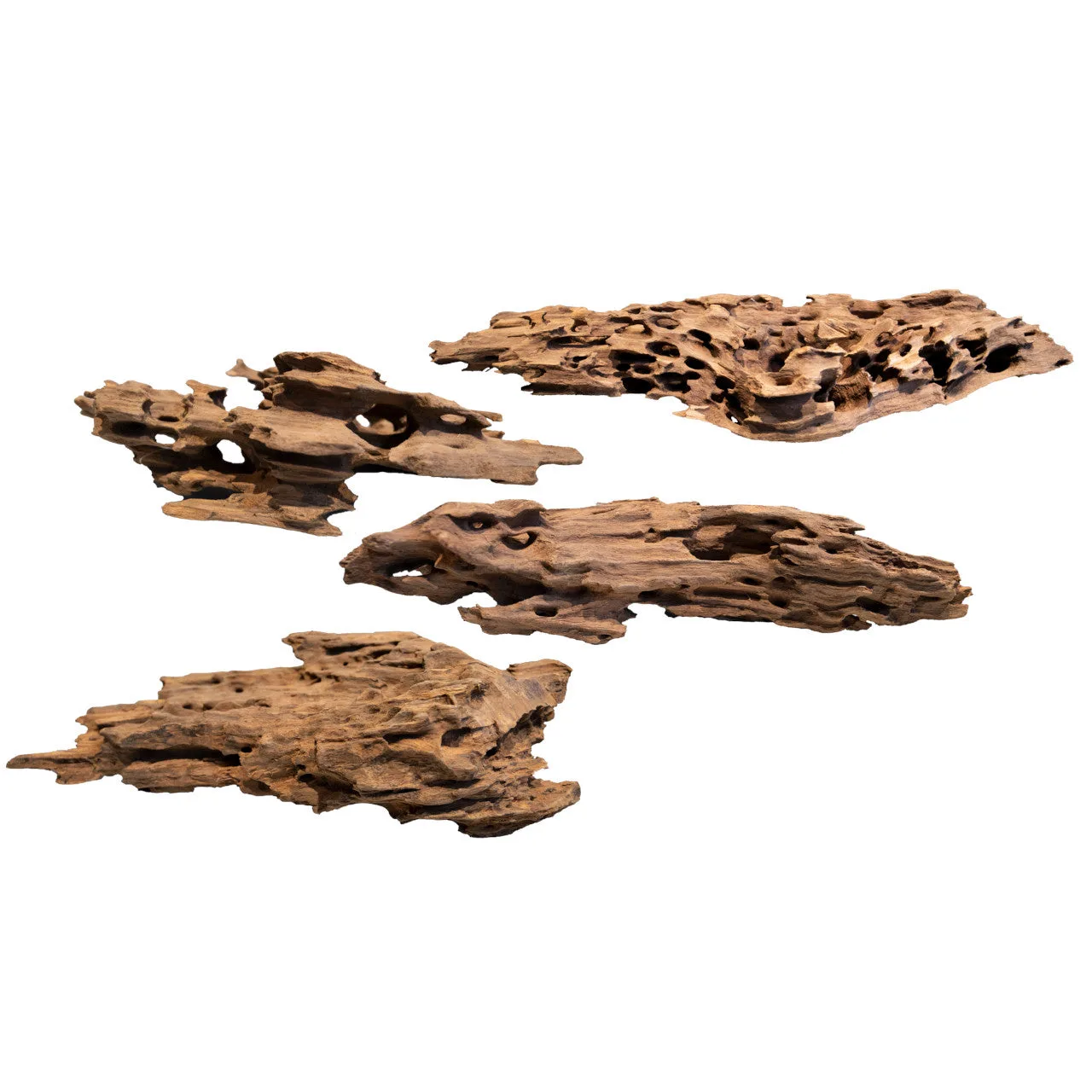
Honeycomb Wood 20-45+cm
-
Spiderwood 20-60cm: Spidderwood (Redmoor wood) is also ideal for attaching mosses and epiphytes, with available sizes from 20 cm to 60 cm. The branching shape lets you create layered, tree-like structures that add vertical interest to medium and large tanks.
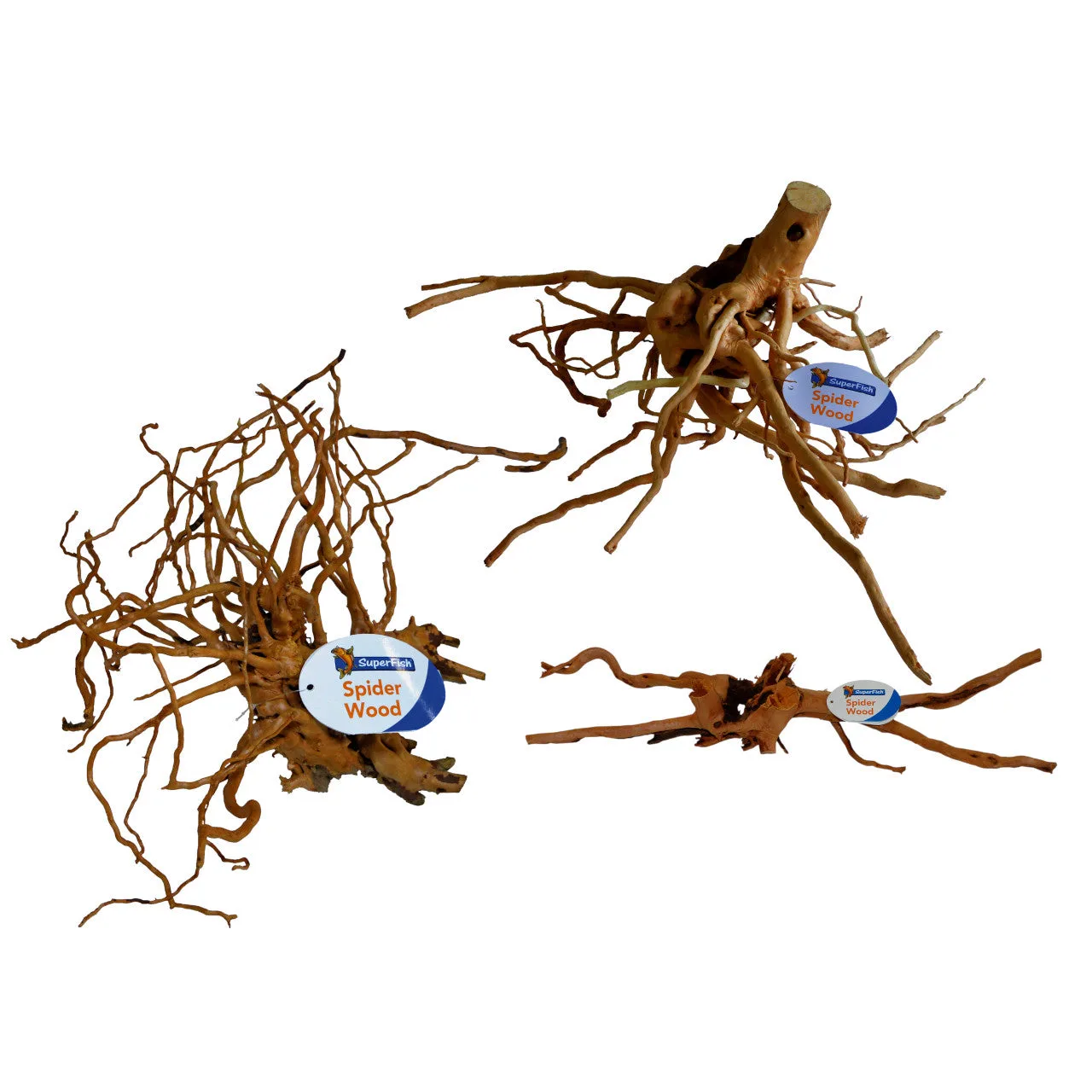
Spiderwood 20-60cm
Which one fits your tank?
Best for
- Aquascapers who want a dramatic, tree-like focal point in a medium to large tank
- Shrimp keepers who want visible climbing structures for their colony
- Hobbyists who prefer open negative space in their hardscape layout
Not for
- Those who need a dense, all-over moss carpet without gaps (choose Honeycomb Wood instead)
- Very small nano tanks (under 10 liters) where branches crowd the space