Quick answer
Choose the Red Feather Tickler if you want a gentle, teasing introduction to sensory play textures. Choose the Spiked Sensory Mitt if you want a tool that switches between soft faux fur and a prickly spike sensation for more varied, intense feedback.
How the textures differ in practice
The Red Feather Tickler relies on ultra-soft feathers to create a light, tracing sensation. That makes it easy to control pressure and speed, which is useful when you are learning how your partner responds to textured touch toys. The Spiked Sensory Mitt offers two distinct textures in one item: faux fur on one side and hidden spikes tucked within the fur on the other. Rotating the mitt changes the sensation from soothing to prickly without swapping tools.
Because the mitt is one size fits all, it fits most hands, but the fixed size means you cannot adjust the fit for smaller or larger hands. The tickler has no sizing concerns, but it also offers only one texture.
Intensity and control trade-offs
The feather tickler is generally the lower-intensity option. Its soft feathers are unlikely to surprise you with a sudden change in sensation, so it suits warm-ups or partners who prefer a gentle approach. The spiked mitt can deliver a more stimulating experience because the spikes create a prickly feeling that is noticeably different from the fur. That variety is appealing for spiked mitt sensation play, but it also means you need to communicate before rotating the mitt so your partner expects the change.
Control is another trade-off. The tickler gives fine control over where and how lightly you touch, while the mitt covers more surface area with each stroke. If you want precise, teasing touches, the tickler is easier to direct. If you want broader stimulation with a texture switch, the mitt is more efficient.
When to choose each as a beginner sensory toy
For a first textured touch toy, the feather tickler is the more forgiving choice. Its single, soft texture makes it simple to gauge reactions without introducing a spike sensation. The spiked mitt can still work for beginners if you start with the fur side and only rotate to the spikes after checking in. However, the mitt’s dual texture adds a step that some beginners may prefer to skip until they are more comfortable with sensory play textures.
If you already know you enjoy variety and want a tool that can shift intensity, the spiked mitt may be the better fit even early on. Just treat the spike side as an advanced option and introduce it gradually.
Key trade-offs at a glance
- Texture variety: The Spiked Sensory Mitt offers two textures (faux fur and hidden spikes), while the Red Feather Tickler offers one (ultra-soft feathers). If you want options in a single tool, the mitt wins; if you want simplicity, the tickler is easier.
- Intensity range: The tickler stays in gentle, teasing territory; the mitt can move from soothing fur to a prickly spike sensation. Match the tool to the intensity level you and your partner have already discussed.
- Control and coverage: The tickler allows precise, light tracing; the mitt covers more area per stroke and requires rotation to change sensation. Choose the tickler for detailed teasing, the mitt for broader stimulation with a texture switch.
Product facts
-
Red Feather Tickler: Ultra-soft feathers designed for tracing and teasing. The single gentle texture makes it easy to control pressure and ideal for light, introductory sensory play.
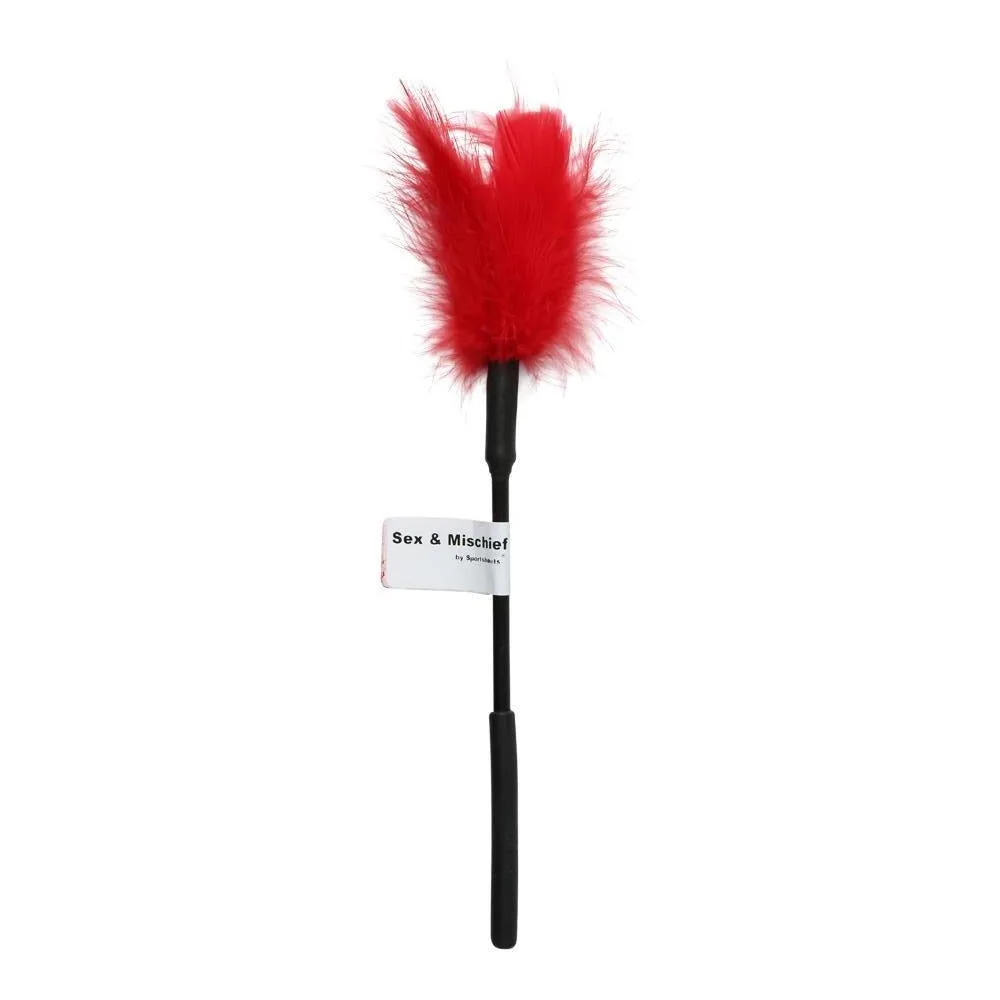
Red Feather Tickler
-
Spiked Sensory Mitt: Faux fur on one side and hidden spikes tucked within the fur on the other. You can switch from a soft brush to a prickly sensation by rotating the mitt, adding variety without a second tool.
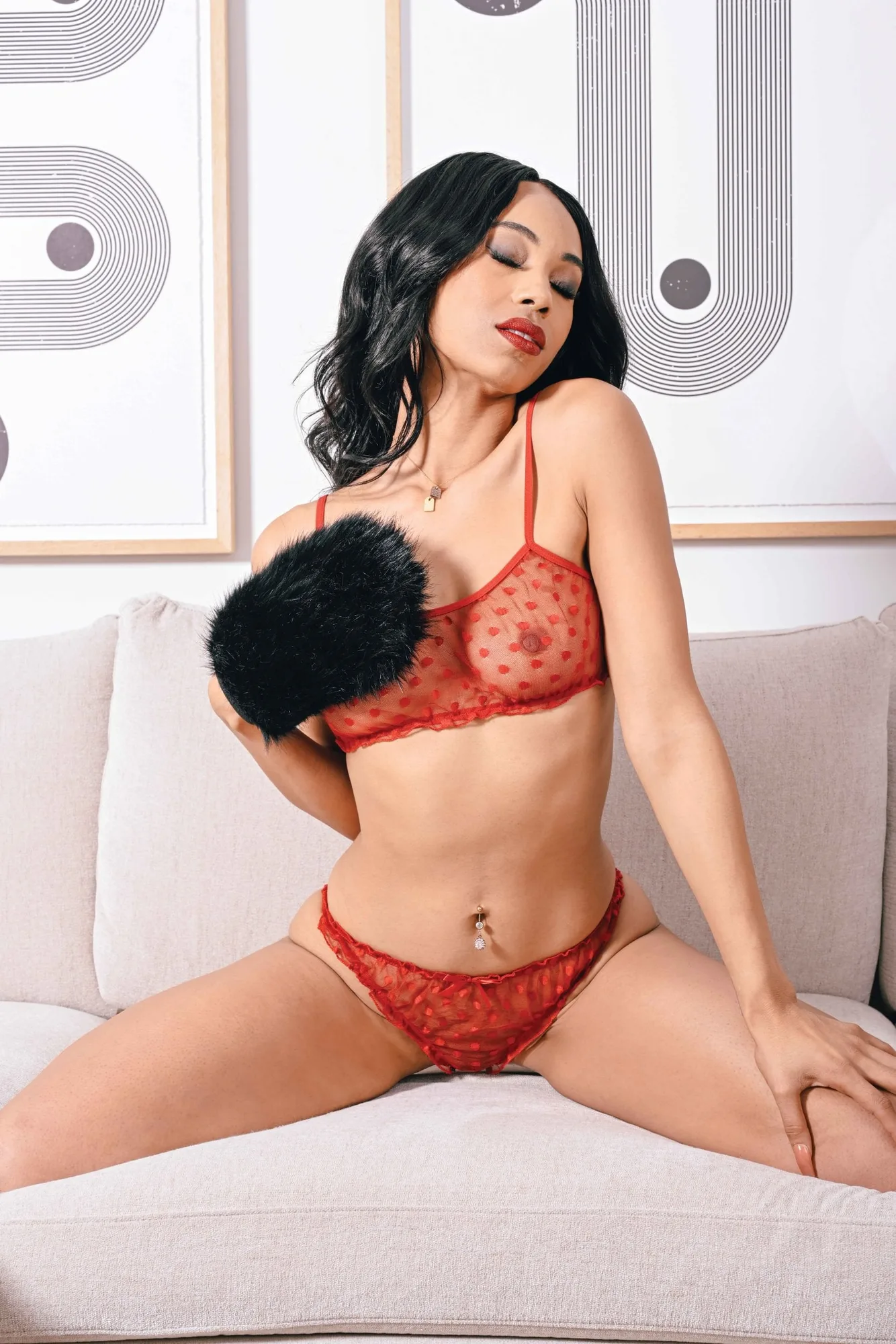
Spiked Sensory Mitt
Which should you choose?
Best for
- Beginners who want a gentle, single-texture introduction to sensory play
- Partners who prefer light, teasing touch with precise control
Not for
- Those who already know they want a spike sensation and variety in one tool
- People who prefer broad strokes over detailed tracing