Quick answer
Use a standard D20 for attack rolls, saving throws, and any result that needs to be random. Use a spindown D20 as a life counter for Magic: The Gathering and other games with a running total. The two dice look alike, but their number layouts serve opposite purposes, so keeping one of each on the table prevents confusion.
How the number layout changes what the die is good for
On a standard D20, high and low numbers sit next to each other so that no cluster of faces gives an unfair result. That layout is what makes it trustworthy for a roll that decides an outcome. A spindown D20 does the opposite: the faces are arranged so adjacent numbers stay close in value, letting you rotate the die one face at a time from 20 down to 1. That sequential layout is why it works as a life counter and why it should not be used when you need a fair random result.
- Standard D20: scattered numbering, built for random rolls.
- Spindown D20: sequential numbering, built for counting down.
- Both are usually the same size and material, so check the faces before you roll.
When a spindown D20 is the better tool
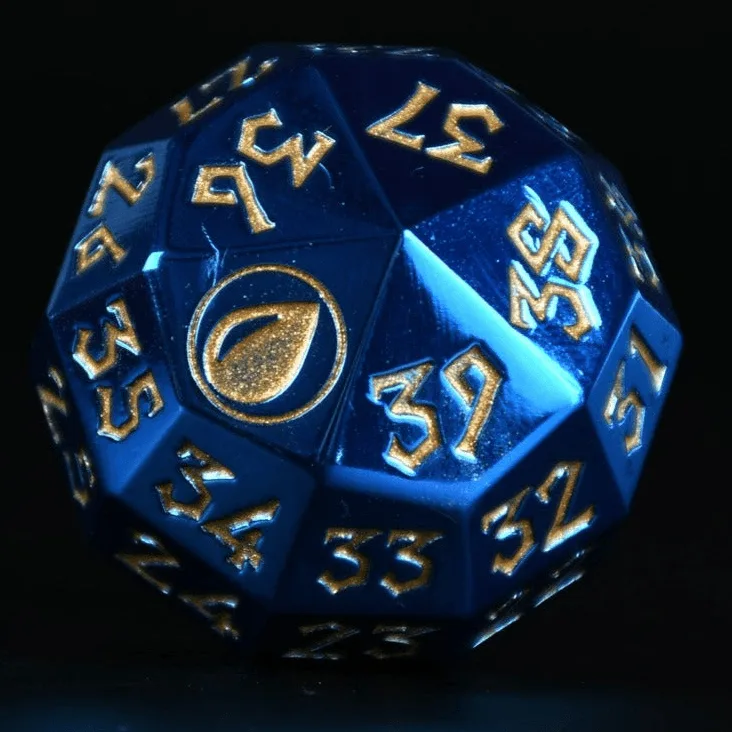
Life totals change constantly in Magic, and a spindown lets you tick down one face at a time instead of doing mental math or hunting for a notepad. It also keeps your life total visible to opponents, which cuts down on disputes. If you play Commander or any format where life swings often, a dedicated spindown stays on the table while your standard dice stay in the bag for rolls. Themed spindowns, like an Island Mana counter, also make it easy to spot your own die in a crowded play area.
When a standard D20 is the only correct choice
Any time the number matters as a random result, reach for a standard D20. That includes attack rolls, saving throws, ability checks, and any table where the group agrees that a spindown is not a fair roller. A spindown can still be rolled in a casual game, but because its numbering clusters values, it is not the die to trust when the outcome is contested. If you only own spindowns, borrow a standard D20 for rolls rather than arguing about it mid-game.
Mixing materials and sets at the table
Metal spindowns feel heavier and stay put on the table, which suits a life counter that gets handled every turn. Glass and gemstone sets, by contrast, are usually bought as matching polyhedral sets for rolling, and they come with their own storage. If you carry both, a soft bag keeps the finishes from scratching each other. The practical split is simple: one durable spindown for the life total, one full set for the rolls.
Trade-offs to weigh before you buy
- Spindown as a life counter: Sequential faces let you adjust a life total one step at a time and keep it visible to the whole table. Best when life totals change often and you want fewer math errors.
- Spindown as a roller: The clustered numbering makes it a poor choice when a random result is contested. Keep a standard D20 on hand for any roll that decides an outcome.
- Standard D20 as a counter: Scattered faces make counting down slow and easy to misread across the table. Use a spindown for tracking and a standard D20 for rolling.
Products that fit this comparison
- Island Mana Spindown Metal D40: Island Mana Spindown Metal D40 is a metal spindown life counter themed around Island mana, with a lifetime warranty on all dice and a 30-day money-back guarantee. A metal body holds up to repeated handling as a life counter, and the lifetime warranty covers the wear that comes with using one die every game.
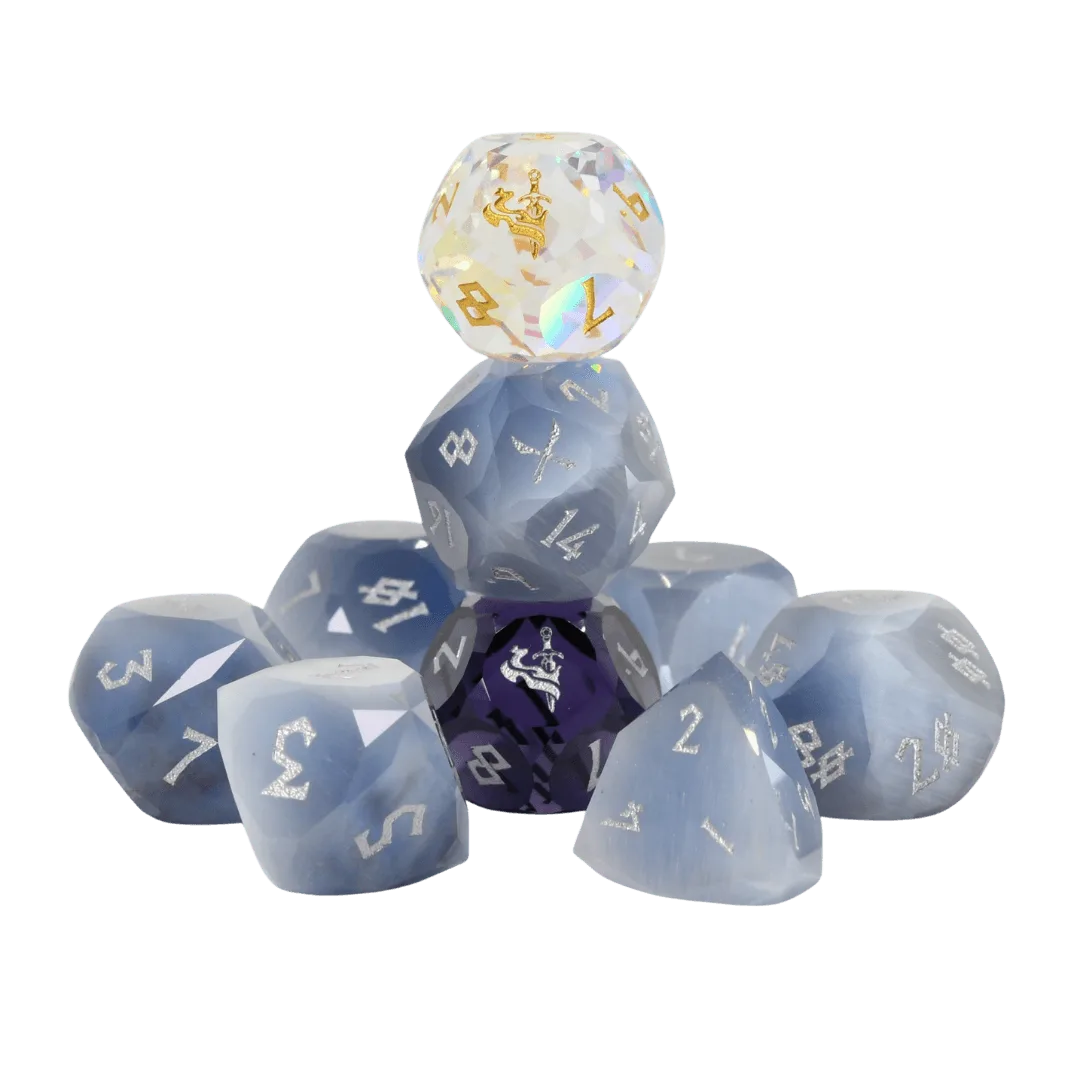
- PRE-ORDER || Daggerheart Bone Domain Multifaceted Glass Dice Set: Daggerheart Bone Domain Multifaceted Glass Dice Set is a multifaceted-cut glass set with a Hope Die and a Fear Die, including one D20, three D12, one D10, one D%, one D8, one D6, and one D4. This is a rolling set, not a counter, so it covers the random-result side of the table while a spindown handles the life total.
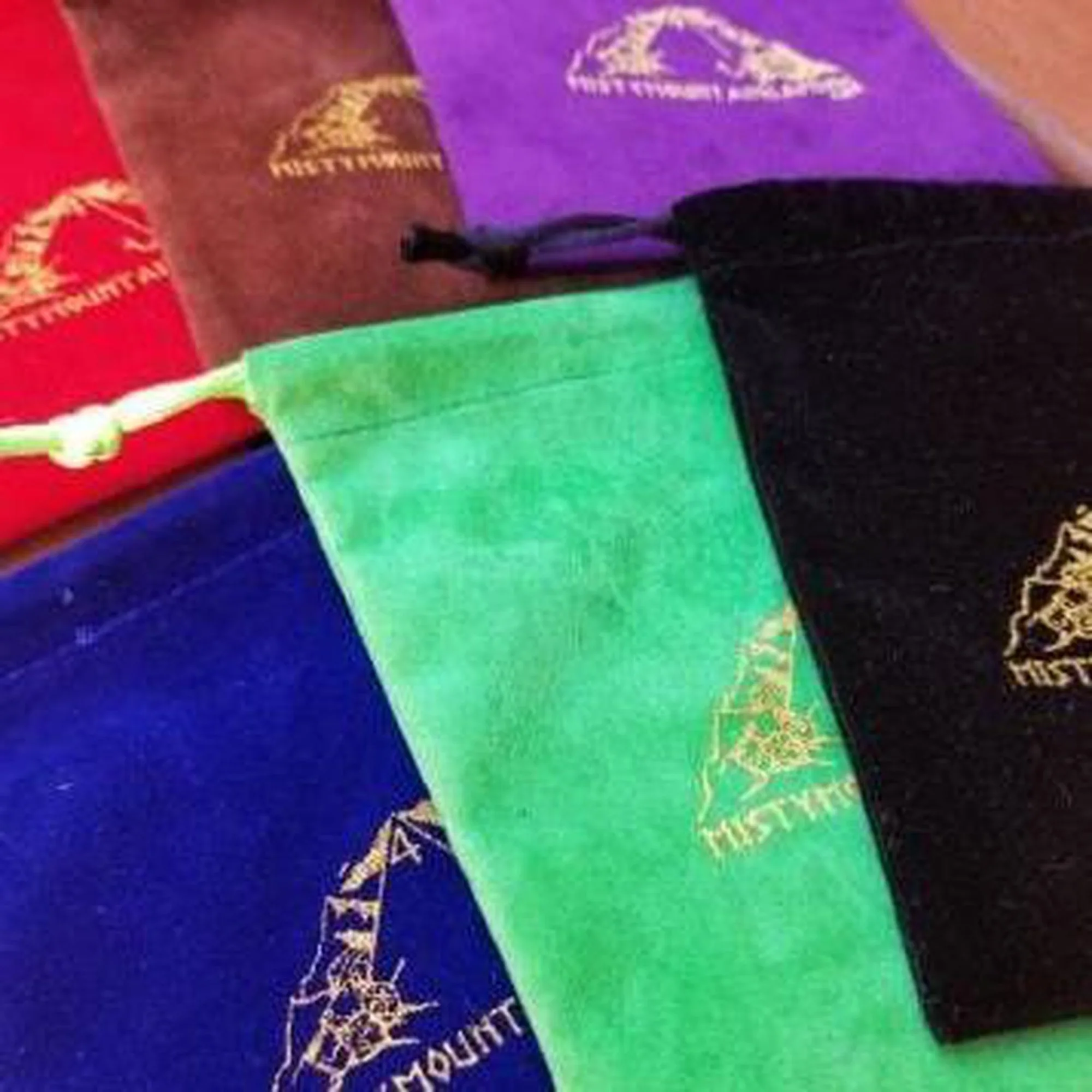
- Velvet Dice Bag: Velvet Dice Bag is a velvet drawstring bag sized 3.5"x4.5" that can hold 3-4 dice sets, with a 30-day money-back guarantee. Carrying a spindown and a rolling set together risks scratches, and a soft-lined bag keeps both finishes intact between sessions.
Which should you choose?
Choose a spindown D20 if you
- Play Magic: The Gathering or another game with a running life total
- Want your life total visible to opponents without a notepad
- Prefer a single durable die that stays on the table all game
Choose a standard D20 instead if you
- Need a fair random result for attack rolls or saving throws
- Play a system that does not use a tracked life total
- Want one die to cover every roll at the table