Start with the flow path, not the filter body
When your 2L Squeeze Water Filter System slows to a trickle, the most useful first step is to separate a clogged filter from a setup problem. The catalog describes a Hollow Fiber Membrane with Activated Carbon and a 0.1 micron pore size, rated for 5,000L. That rating tells you the filter is meant for long use, but it doesn’t list a backflushing procedure, so avoid guessing at one. Instead, check the simple, supported variables: whether water is reaching the filter, whether you’re squeezing or using gravity, and whether the 28mm threads are seated correctly on your bottle or bladder.
What the 2L Squeeze system is designed to do
-
2L Squeeze Water Filter System: The system weighs only 4.6 ounces and uses a 0.1 micron Hollow Fiber Membrane with Activated Carbon rated for 5,000L. A long-rated filter that suddenly slows is more likely to be set up wrong or clogged with sediment than worn out, so check the simple causes first.
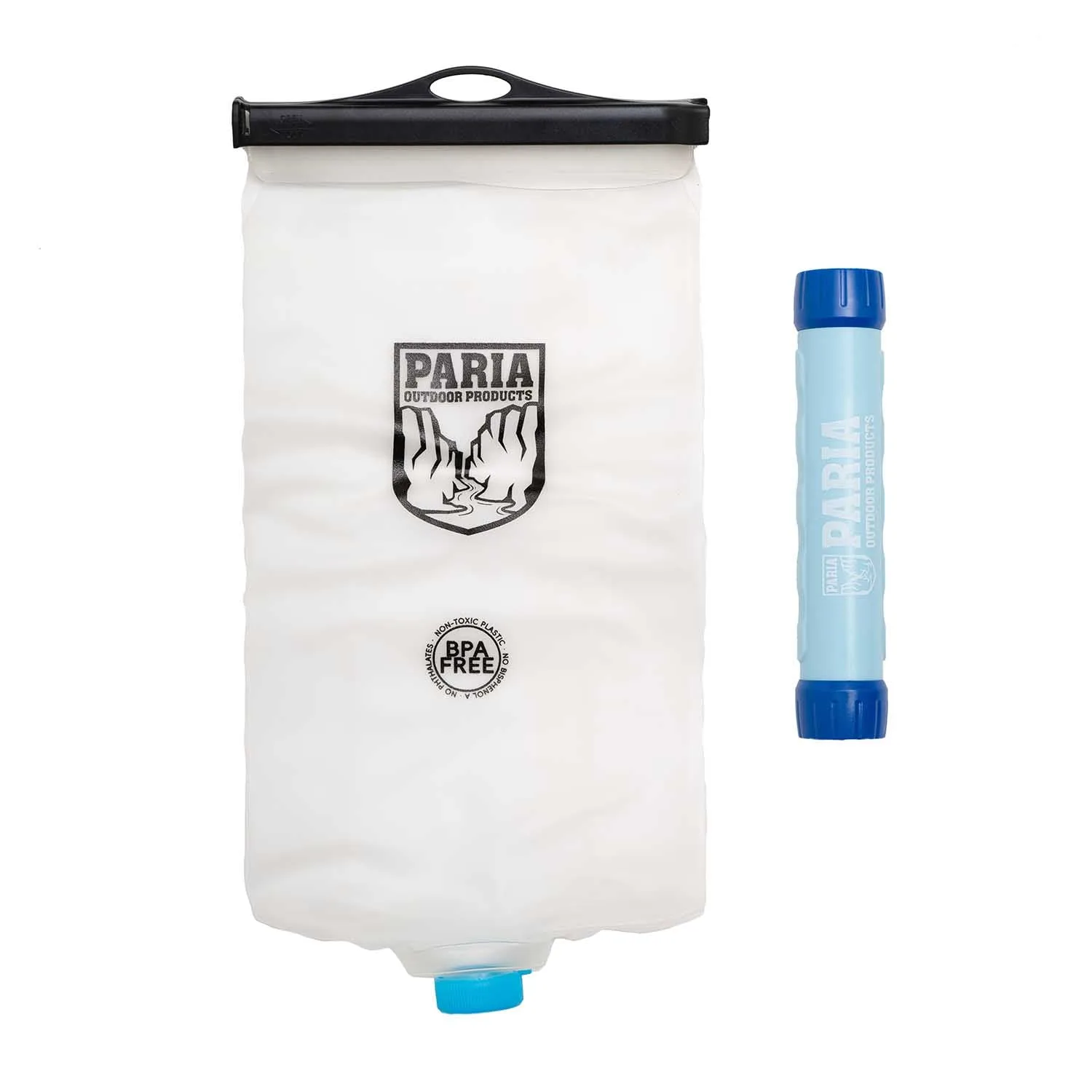
2L Squeeze Water Filter System
-
2L Squeeze Water Filter System: The 28mm thread on each end is designed to fit most water bottles and bladders. A cross-threaded or mismatched connection can block flow before water ever reaches the filter.
Supported checks when flow drops
Work through these in order. Each one is grounded in the product record rather than a general filter ritual.
- Confirm the reservoir is open and filled: The 2L reservoir has a large open mouth for gathering water. If the cap or closure is sealing the top, squeezing won’t move water through the filter.
- Check the 28mm thread connection: The filter threads onto most bottles and bladders at 28mm. Remove and reseat the connection; a crooked thread can restrict flow.
- Try gravity instead of squeezing: The catalog states the higher-diameter filter allows a flow rate good enough for gravity use. Hang the reservoir above your bottle and let weight do the work—this also tells you whether the issue is your squeeze pressure or the filter itself.
- Use the hose clamp when swapping containers: The included hose clamp stops flow while you change bottles. If it’s partly closed during normal use, flow will be reduced.
- Inspect for visible sediment: The filter is designed to eliminate sediments. Heavy silt can slow any hollow-fiber filter. The catalog does not supply a backflushing method, so do not improvise one; if sediment is heavy, switch to a clearer water source where possible.
Why backflushing advice may not apply here
Many hollow-fiber filters are backflushed to clear clogs, but the supplied record for the 2L Squeeze Water Filter System does not include a backflushing procedure, a syringe, or a cleaning port. That absence is a limit of the available information, not proof that the manufacturer forbids backflushing. If you want a definitive cleaning method, check the manufacturer’s documentation rather than forcing water backward through a filter that may not be designed for it. For routine care, the supported steps are simpler: keep the open mouth clean, seal the bottom with the included cap for watertight storage, and use the hose clamp to control flow during container swaps.
Squeeze vs gravity: which setup matches your symptom
The same filter can feel slow for different reasons depending on how you run it. Use this to narrow the cause.
- Slow only when squeezing: Check that the reservoir mouth is open and the 28mm connection is seated. If gravity flows well, the filter is likely fine and your squeeze pressure or reservoir position is the variable.
- Slow in both squeeze and gravity: Suspect a clogged or sediment-loaded filter, or a blocked connection. The catalog does not provide a backflush step, so verify the manufacturer’s care instructions before attempting one.
- No flow at all: Confirm the hose clamp is open and the bottom closure is not sealed with the cap during filtering. The cap is for watertight storage, not for filtering.
What the catalog does not settle
The supplied record does not include a backflushing procedure, replacement filter part numbers, or a flow-rate specification in milliliters per minute. It also does not state a maximum number of days between cleanings. Those gaps mean you should not treat any particular backflush routine as manufacturer-approved. What the record does support is the 5,000L filter rating, the 4.6-ounce weight, the 28mm thread compatibility, and the gravity option—enough to diagnose most slow-flow setups without inventing maintenance steps.