What Affects Longevity in Lunch Containers?
When you compare a stainless steel lunch box and plastic containers, the main difference is how each material handles daily wear. Stainless steel resists scratches, dents, and stains, while plastic tends to absorb odors, warp in heat, and develop cracks over time. The material choice directly affects how long your container stays usable and safe.
How Stainless Steel Holds Up Over Time
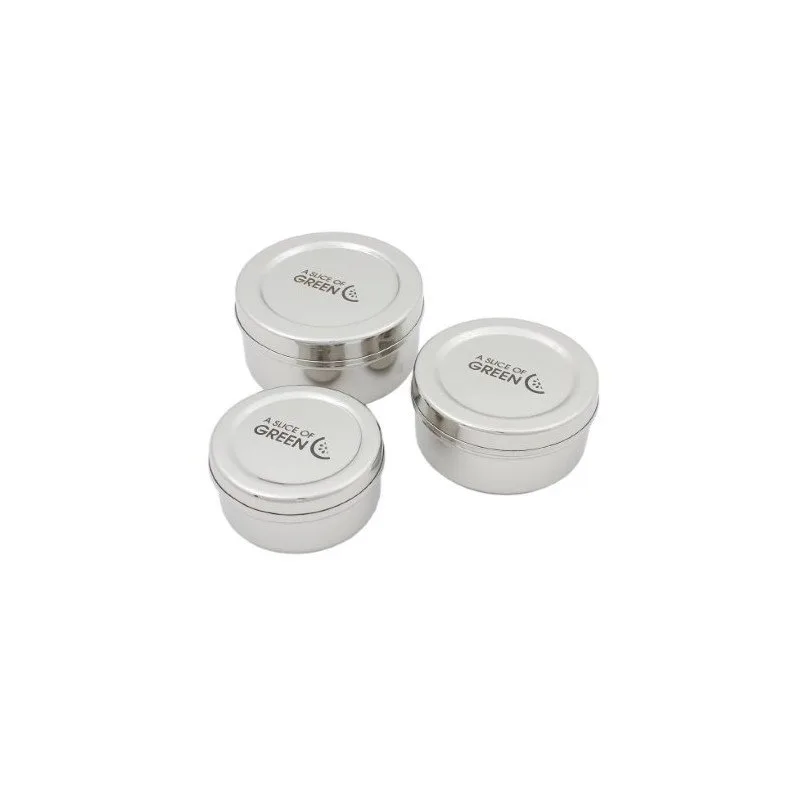
The Stainless Steel Round Mini Food Containers – Set Of 3 from A Slice Of Green are made from food grade 201 stainless steel. According to the product information, stainless steel is durable, tough, and keeps temperatures cool or warm. It is also non-toxic and won't leach chemicals into your food. The manufacturer states these containers are made to last years, if not forever. This means you can expect them to resist rust, dents, and daily use without degrading.
Evidence from the Stainless Steel Round Mini Food Containers
-
Stainless Steel Round Mini Food Containers – Set Of 3: Made from food grade 201 stainless steel, non-leaching and non-toxic. Stainless steel does not release chemicals over time, so the container stays safe for food even after years of use.
Stainless Steel Round Mini Food Containers – Set Of 3
-
Stainless Steel Round Mini Food Containers – Set Of 3: Stainless steel is durable, tough, keeps temperatures cool or warm, and is infinitely recyclable. This durability means the container can withstand drops, daily packing, and temperature changes without cracking or warping.
-
Stainless Steel Round Mini Food Containers – Set Of 3: Made to last you years, if not forever. The manufacturer's claim supports the idea that stainless steel outlasts plastic in normal use.
Plastic Containers: Common Wear Points
Plastic lunch containers often show wear in specific ways. They can absorb stains from tomato sauce or turmeric, retain odors from strong foods, and develop scratches that harbor bacteria. Over time, plastic may warp in the dishwasher or microwave, and lids can lose their seal. While some plastic containers are labeled BPA-free, the material itself can still degrade and leach chemicals when scratched or heated. These factors mean plastic containers typically need replacement sooner than stainless steel.
Stainless Steel vs Plastic: Key Durability Factors
Here is a direct comparison of the factors that affect how long each container lasts.
- Material strength: Stainless steel resists dents, scratches, and cracks. Plastic can crack under pressure or when dropped.
- Chemical safety over time: Stainless steel is non-leaching and non-toxic. Plastic may leach chemicals if scratched or heated.
- Odor and stain resistance: Stainless steel does not absorb odors or stains. Plastic can hold smells and discoloration from foods.
- Temperature tolerance: Stainless steel keeps foods cool or warm without damage. Plastic can warp in high heat or become brittle in cold.
- Lifespan: Stainless steel is made to last years, if not forever. Plastic often needs replacement within a few years.
- Recyclability at end of life: Stainless steel is infinitely recyclable. Plastic recycling is limited and many types end up in landfills.
What the Product Records Do Not Confirm
The supplied information for the Stainless Steel Round Mini Food Containers does not include a warranty period or specific drop-test results. It also does not confirm that the containers are fully leak-proof or that they are dishwasher-safe. If you need those details, check the manufacturer's packaging or contact the store. For general durability, the evidence strongly supports stainless steel as the longer-lasting option.
Which One Should You Choose for Long-Term Use?
If your main goal is a container that lasts through years of daily lunches, resists wear, and stays safe for food, a stainless steel lunch box is the better choice. Plastic containers are lighter and cheaper upfront, but they tend to degrade faster. For an eco friendly lunch box that reduces waste and replacement costs, stainless steel offers clear advantages in durability and material safety.