Stainless Steel vs Glass: What's Different in a Pyrex Bowl Set?
When you think of Pyrex, glass is probably the first material that comes to mind. But Pyrex Home also makes stainless steel mixing bowl sets that are worth a close look. The main difference is not just the material—it's how each material behaves during prep, mixing, and storage. This comparison focuses on the two stainless steel sets available and how they stack up against typical glass mixing bowls from the same brand.
If you are deciding between a stainless steel set and a glass set, the key factors are weight, heat tolerance, visibility, and storage flexibility. Stainless steel bowls are lighter and unbreakable, while glass bowls let you see contents and can go from oven to table. Neither is universally better; the right choice depends on your cooking habits.
What the Pyrex Stainless Steel Sets Offer
-
Pyrex® 6-piece Stainless Steel Mixing Bowl Set: These mixing bowls in 3 sizes are super versatile, going from food prep to serving and then storing any size mixing job. The 6-piece set gives you three nesting bowls, which saves cabinet space and covers most everyday mixing tasks. The stainless steel material makes them lightweight and stackable.
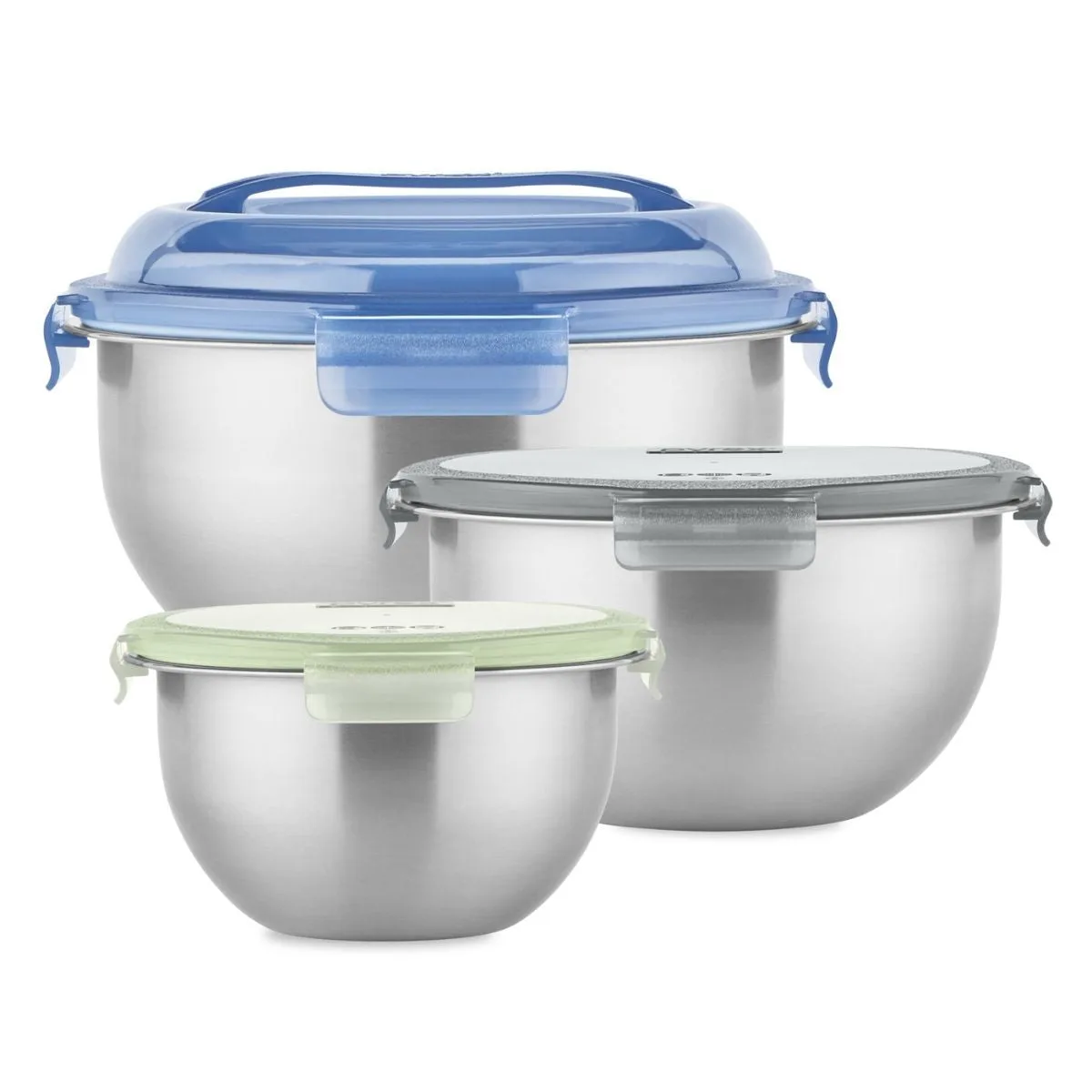
Pyrex® 6-piece Stainless Steel Mixing Bowl Set
-
Pyrex® 8-piece Stainless Steel Mixing Bowl Set: These mixing bowls in 4 sizes are super versatile, going from food prep to serving and then storing any size mixing job. The 8-piece set adds one more size, giving you four bowls instead of three. This extra bowl can be useful if you often prep multiple ingredients at once or need a larger mixing capacity.
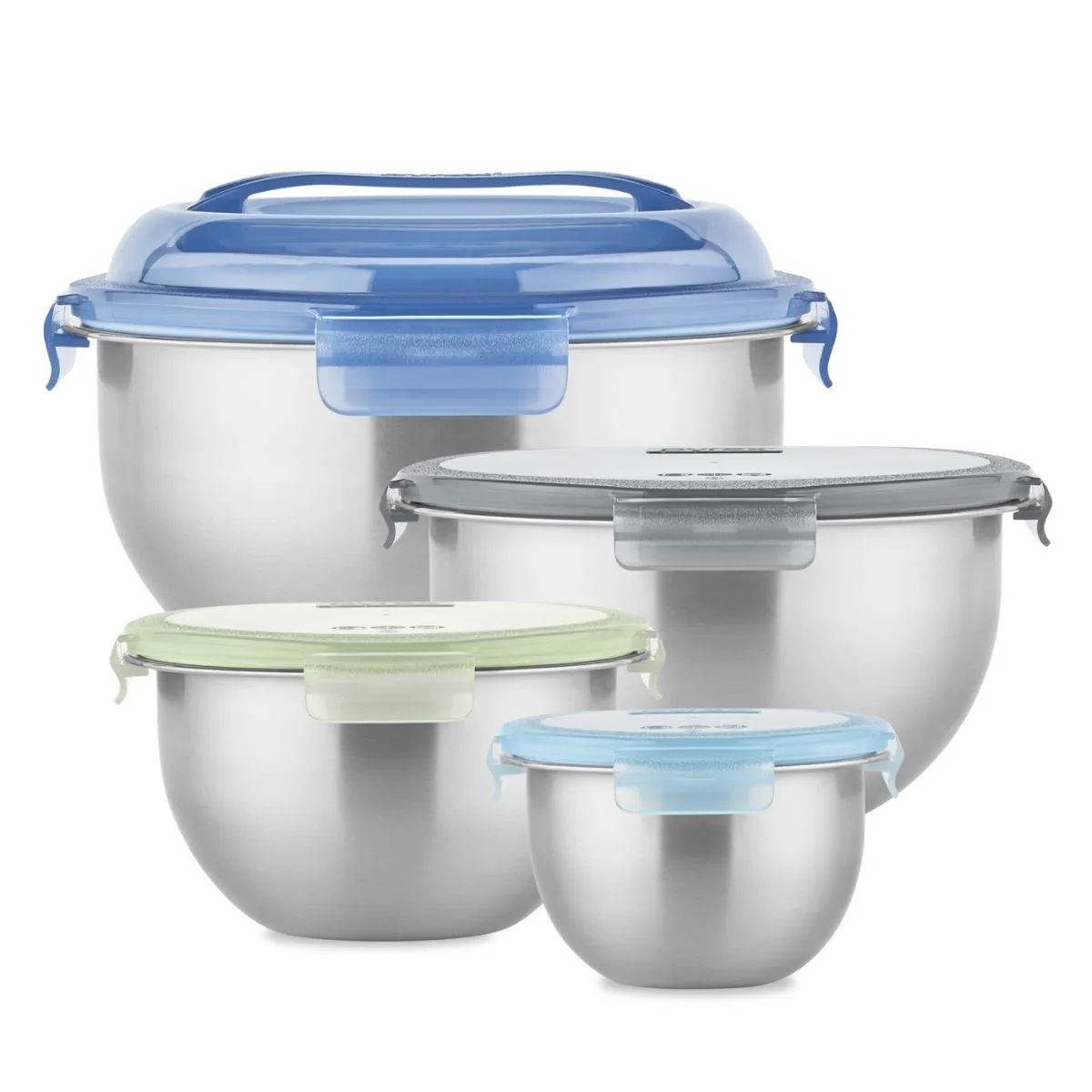
Pyrex® 8-piece Stainless Steel Mixing Bowl Set
Stainless Steel vs Glass: Key Trade-offs
Here are the main differences to consider when choosing between a stainless steel mixing bowl set and a glass one from Pyrex.
- Weight and Durability: Stainless steel bowls are lighter and won't shatter if dropped. Glass bowls are heavier and more fragile, but they can go from freezer to oven (if labeled oven-safe).
- Visibility: Glass lets you see the contents from any angle, which helps when checking dough consistency or mixing colors. Stainless steel requires you to look inside from above.
- Heat Resistance: Glass bowls can handle oven and microwave heat, but stainless steel bowls are not oven-safe and may get hot if placed near a heat source. Stainless steel does not react with acidic foods.
- Storage and Nesting: Both stainless steel sets nest together for compact storage. Glass bowls do not nest as neatly and take up more shelf space.
Which Set Fits Your Kitchen Routine?
If you bake often and need to see dough consistency or melt butter in the microwave, a glass mixing bowl set is a strong choice. If you mix heavy batters, prep multiple ingredients, or want a set that stores flat, stainless steel is more practical.
Between the two stainless steel sets, the 6-piece set (3 bowls) is a good start for most home cooks. The 8-piece set (4 bowls) adds an extra size for larger batches or more prep steps. Both are priced below comparable glass sets, and the stainless steel material means you won't worry about breakage during everyday use.