Quick answer
Choose a tilt-head stand mixer if you bake small-to-medium batches and want easy access to the bowl; choose a bowl-lift model if you regularly mix heavy doughs or larger volumes and prefer a sturdier, stationary head. Match bowl size to your typical batch, and treat wattage as a guide to workload rather than a guarantee of performance.
Head design changes how you work, not just how the mixer looks
A tilt-head mixer hinges upward so you can lift the head to add ingredients or scrape the bowl. That convenience suits frequent small additions, but the moving head adds height clearance and can feel less rigid under heavy loads. A bowl-lift mixer keeps the head fixed and raises the bowl into the mixing tool. This design gives a more stable platform for dense doughs and larger batches, but you need to lower the bowl before changing attachments or scraping down.
Wattage is a workload clue, not a score
Higher wattage generally signals a motor built for heavier or longer mixing, but it does not automatically mean better results. A lower-wattage mixer can handle cake batter and cookie dough comfortably, while dense bread dough benefits from more power and a sturdier head design. Use wattage to match the hardest task you attempt regularly, not the one you make once a year.
Bowl size should follow your real batch size
An oversized bowl can leave small batches under-mixed because the beater does not reach the ingredients well. An undersized bowl forces you to split recipes and clean up more often. Estimate the largest single batch you make in a typical month, then choose a bowl that handles that batch with a little headroom. If you often bake for a crowd, a larger bowl paired with a bowl-lift design is the more practical combination.
Decision rules for your first stand mixer
- Pick tilt-head if you bake in small-to-medium batches: Choose tilt-head when your typical recipes are cakes, cookies, frostings, and single loaves, and you value lifting the head to add ingredients or scrape the bowl without lowering it. Measure your counter clearance above the mixer before buying; the head needs room to tilt back.
- Pick bowl-lift if you mix dense dough or large batches: Choose bowl-lift when you regularly make bread dough, double batches of cookie dough, or large volumes that benefit from a fixed head and a bowl that raises into the attachment. Plan for the extra step of lowering the bowl before you scrape or change attachments.
- Match wattage to your hardest regular task: Use higher wattage as a signal for heavier or longer mixing, and lower wattage for light batters and occasional baking. Do not pay for power you will not use regularly. If you are unsure, choose the wattage that covers your most demanding monthly recipe, not your most ambitious annual project.
- Size the bowl to your largest regular batch: Choose a bowl that holds your biggest routine batch with a little headroom. Avoid a bowl so large that small batches cannot be mixed efficiently, and avoid one so small that you must split recipes often. Write down your three most frequent recipes and their total batch volume before comparing bowl sizes.
- Set a budget that includes the attachments you need: Compare the mixer price against the attachments you will actually use, such as a dough hook or extra bowl. A lower-priced mixer can become poor value if the included tools do not cover your tasks. Check the included accessories before deciding between two similarly priced models.
Product facts
-
Juniper: Juniper is a versatile stand mixer suitable for everyday baking and cooking needs, built with durable construction and a timeless design. It suits a first mixer or a daily-use mixer where reliable performance across routine tasks matters more than a specialized high-volume setup.
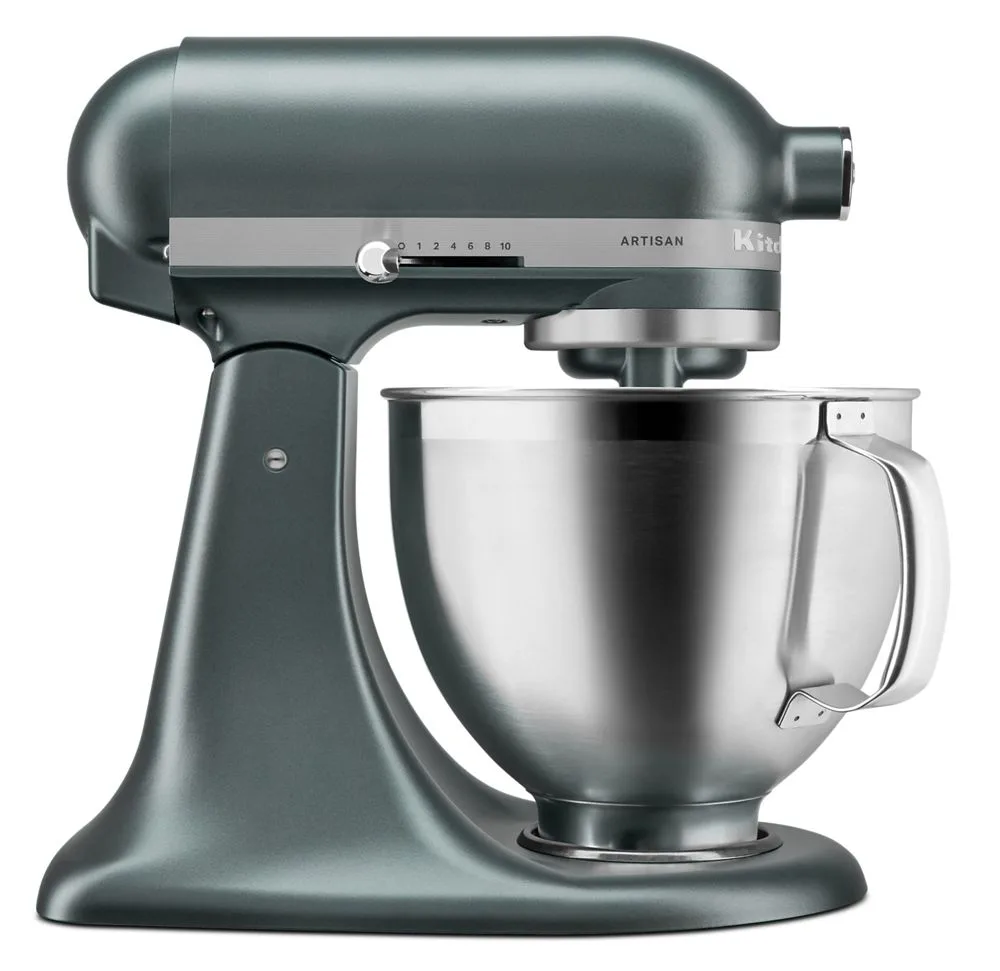
Juniper
Who should choose which
Best for
- Home bakers who make cakes, cookies, and frostings several times a month
- First-time stand mixer buyers who want straightforward bowl access
- Bakers who regularly mix bread dough or large batches and prefer a fixed head
Not for
- Bakers who need a lightweight mixer they can move and store after every use
- Commercial or high-volume production where a heavier-duty machine is required
- Anyone who cannot spare the counter clearance for a tilting head