When it comes to wound closure, medical professionals often use either surgical staples or sutures (stitches) to bring the edges of a wound together. Both methods are effective, but the removal process requires different tools and techniques. Understanding the differences between a staple removal kit and a suture removal kit is crucial for anyone who wants to be prepared for emergencies or who is responsible for post-operative care.
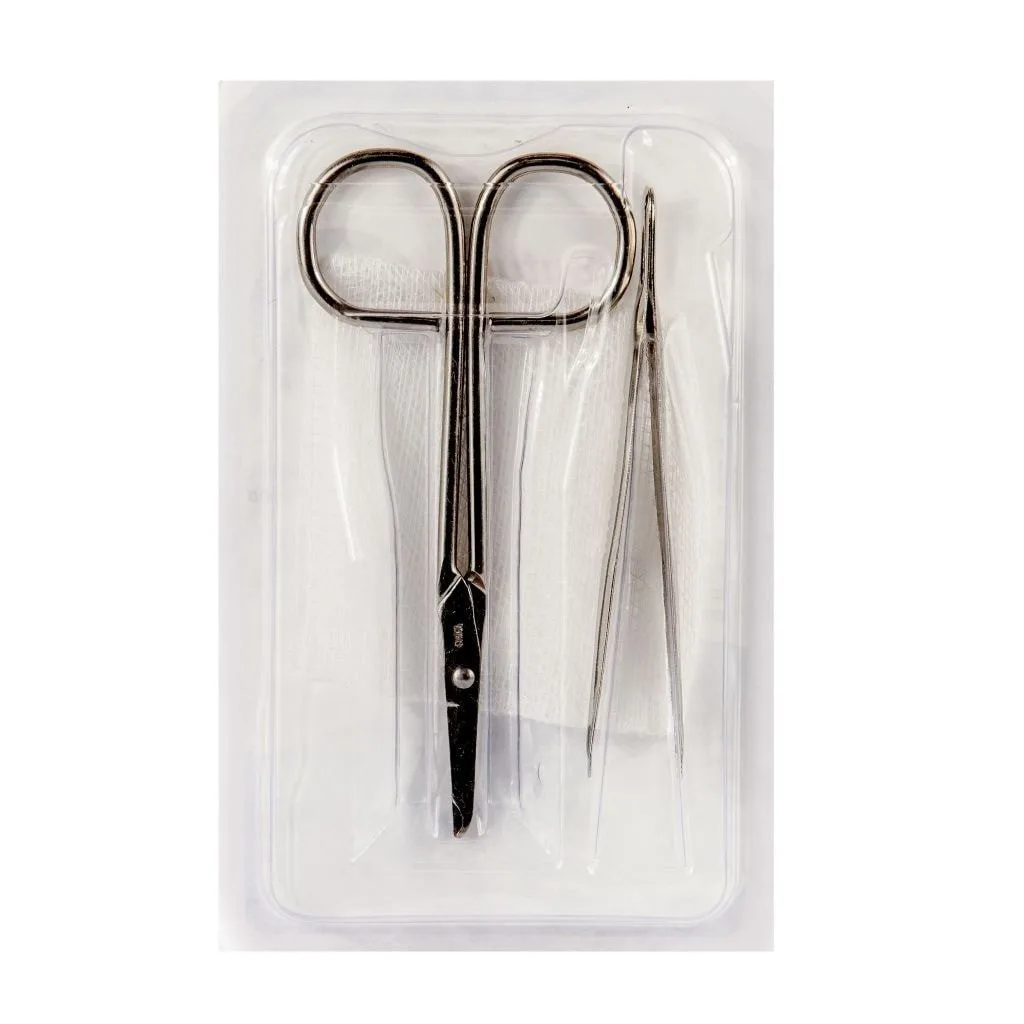
suture removal kit
In this guide, we'll compare these two types of removal kits, discuss their components, and help you decide which one (or both) should be in your first aid kit. We'll also highlight some essential tools from My Medic that can enhance your preparedness.
What Is a Staple Removal Kit?
A staple removal kit is designed specifically for removing surgical staples that are used to close larger wounds or surgical incisions. Surgical staples are made of stainless steel or titanium and provide a strong, quick closure. The kit typically includes a medical staple remover, which is a specialized tool that fits under the staple and compresses it to release the barbs from the skin.
Staple removers come in various designs, but they all work on the same principle. The tool has two prongs that slide under the staple, and when the handles are squeezed, the staple is bent in the middle, causing the ends to lift out of the skin. This process is quick and relatively painless. Some kits also include antiseptic wipes and a sterile dressing for aftercare.
- Medical staple remover: a handheld tool with prongs to lift staples
- Antiseptic wipes: to clean the area before and after
- Sterile gauze: to apply pressure if bleeding occurs
What Is a Suture Removal Kit?
A suture removal kit, on the other hand, is designed for removing stitches. Sutures can be either absorbable (dissolving) or non-absorbable (requiring removal). Non-absorbable sutures are typically removed 5-14 days after placement, depending on the location and type of wound. The kit includes suture scissors, which have a small hook on one blade to slide under the stitch, and forceps to grasp and pull the suture out.
Suture removal is a delicate process that requires precision. The scissors are used to cut the suture close to the skin, and then the forceps are used to pull the suture out from the other side. This minimizes the risk of pulling contaminated suture material through the skin. Some kits also include a scalpel or blade for cutting sutures if scissors are not available, but dedicated suture scissors are safer and more precise.
- Suture scissors: small, sharp scissors with a hook to lift stitches
- Forceps: to grasp and pull sutures
- Antiseptic solution: to clean the wound before removal
Key Differences Between Staple and Suture Removal Kits
The primary difference lies in the tools and the technique. Staple removal requires a staple remover that bends the staple to release it, while suture removal requires cutting the suture and pulling it out. Staple removers are generally easier to use for someone with minimal training, as they require less precision. Suture removal, on the other hand, demands a steady hand and careful technique to avoid cutting the skin.
Another difference is the type of wound closure. Staples are often used on linear wounds under high tension, such as on the scalp, knees, or abdomen. Sutures are more versatile and can be used on any part of the body, including areas where cosmetics matter, like the face. The choice between staples and sutures is made by the healthcare provider based on the wound's characteristics.
- Staple removal is faster and less precise; suture removal requires more care.
- Staples are common on limbs and scalp; sutures are used on face and joints.
- Both kits are compact and should be included in a well-stocked first aid kit.
Which Kit Should You Have in Your First Aid Kit?
For most people, having both a staple removal kit and a suture removal kit is ideal, especially if you are a healthcare provider, a first responder, or someone who spends a lot of time outdoors where injuries are more likely. However, if you have to choose one, consider your environment and likely scenarios. If you are in a setting where surgical staples are commonly used (e.g., after a cesarean section or orthopedic surgery), a staple removal kit is essential. For general use, a suture removal kit is more versatile.
At My Medic, you can find high-quality tools to add to your kit. For example, the Suture Removal Kit includes all the necessary instruments for safe suture removal. Additionally, the T-Ring Digit Tourniquet is a handy addition for controlling bleeding in finger injuries, which often require sutures. For wound care after removal, consider the SuperSkin® Assorted Bandage to protect the healing area.
- Assess your risk: if you have a medical condition that requires staples, get a staple remover.
- For general first aid, a suture removal kit is more commonly needed.
- Always sterilize tools before use and follow proper aseptic techniques.
Safety Tips for Removing Staples and Sutures
Removing staples or sutures at home is generally not recommended unless you have been trained by a healthcare professional. However, in an emergency situation where medical help is unavailable, you may need to do it yourself. Always clean the area with antiseptic, use sterile tools, and be gentle to avoid infection or tissue damage.
If you notice signs of infection (redness, swelling, pus, or fever), do not attempt removal and seek medical attention immediately. After removal, keep the wound clean and covered with a sterile bandage to promote healing and reduce scarring.
- Wash your hands and wear gloves if available.
- Clean the wound with antiseptic before and after removal.
- If you're unsure, seek professional help.
Choosing between a staple removal kit and a suture removal kit depends on your specific needs and level of training. Both are valuable additions to a comprehensive first aid kit. For high-quality tools and supplies, explore My Medic's range of medical products, including the Suture Removal Kit, to ensure you're prepared for any situation.