Quick answer
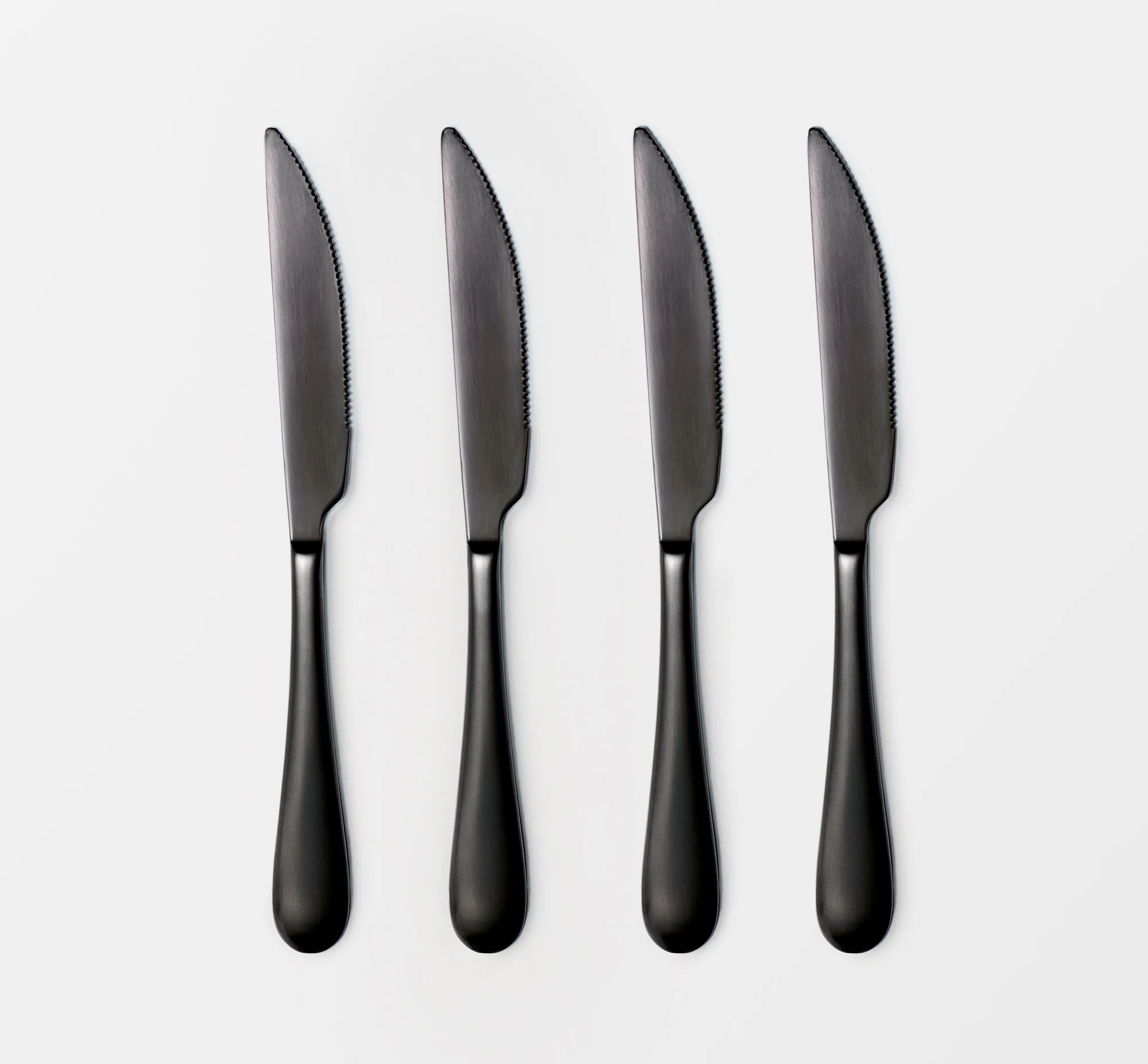
Buy a steak knives set of 4 if you regularly serve steak or lamb chops to two or more people and want a matched table setting. Buy a single steak knife if you cook for one, host rarely, or want to test the weight and handle before committing to a full set. For most households that eat steak at home more than once a month, the set of 4 is the more practical first purchase.
How many steak knives do you actually need?
Count the largest number of people you have served a steak dinner to in the last year. That number, rounded up to the nearest even figure, is your baseline. A set of 4 covers a couple plus two guests, which handles most weeknights and small dinners without forcing you to hand-wash mid-meal. If you routinely host six or more, buy two sets of 4 rather than mixing in odd single knives, because matching handles keep the table looking intentional and make storage simpler.
If you live alone or eat steak a few times a year, one knife is enough. A single steak knife also works as a low-risk way to check whether a handle shape and weight suit your grip before you buy more.
What to check before you choose a set or a single knife
Steak knives are not all the same tool. The two things you can evaluate without touching the knife are the blade edge type and the handle material, because those determine how the knife cuts and how it ages.
Serrated steak knives use a toothed edge that saws through fibrous meat and keeps cutting even after months of dinner plates. They are forgiving for beginners and for households where knives get washed in a hurry. Straight-edge steak knives slice more cleanly through a tender filet but need more frequent sharpening and a gentler hand. Neither is universally better; the right choice depends on what you cook and how much maintenance you will actually do.
Handle material matters for grip and care. Smooth finishes look dressier but can feel slippery when your hands are buttery. Textured or matte finishes give more control. Check whether the handle is riveted or molded, since riveted handles are generally easier to inspect for looseness over time. If a listing does not state the blade steel or edge type, treat that as a missing detail and ask before buying rather than assuming.
Set of 4 vs single steak knife: cost and storage trade-offs
A set of 4 usually lowers the per-knife cost compared with buying singles one at a time, and it guarantees a consistent finish across the table. The trade-off is that you pay upfront for knives you may not use every week, and a matched set takes up more drawer or block space than one knife.
A single steak knife costs less to try and fits a small kitchen or a single place setting. The trade-off is that buying more later can be harder: finishes sell out, and a replacement may not match the original exactly. If you think you will eventually want four, buying the set first usually avoids that mismatch.
Care and storage rules that protect your investment
Hand-wash steak knives and dry them immediately, especially if the handles are wood or a natural material. Dishwasher heat and long soaking dull edges and can loosen handles over time. Store knives in a block, on a magnetic strip, or in a drawer tray so the edges do not knock against other utensils.
If you choose serrated steak knives, expect to replace rather than sharpen them once they stop cutting well, since home sharpeners struggle with serrations. Straight-edge knives can be honed at home and professionally sharpened, which extends their working life.
Decision rules for choosing a set or a single knife
- Rule 1: Match quantity to your usual guest count: If you serve steak or lamb chops to two or more people at least monthly, choose a set of 4. If you cook for one or host once or twice a year, start with a single steak knife. Checkpoint: your baseline is the largest group you served in the past year, rounded up to an even number.
- Rule 2: Choose the edge based on your maintenance habits: Pick serrated steak knives if you want low-maintenance cutting and rarely sharpen knives. Pick straight-edge if you prefer clean slices and will hone or sharpen regularly. Checkpoint: be honest about whether you will actually maintain a straight edge.
- Rule 3: Buy the set first if you expect to grow into it: A set of 4 locks in a matching finish and usually costs less per knife than buying singles later. Buy a single only when you are testing fit or genuinely need one. Checkpoint: if you are unsure about the handle, buy one first, then add the set once you know it suits your grip.
Product facts to compare
- Steak Knives - Set of 4: Steak Knives - Set of 4, available in multiple finishes, described as strong, sharp, and well-balanced for steak or lamb chops. A matched set of 4 covers a couple plus two guests and keeps the table setting consistent, which is the main reason to buy a set rather than singles.
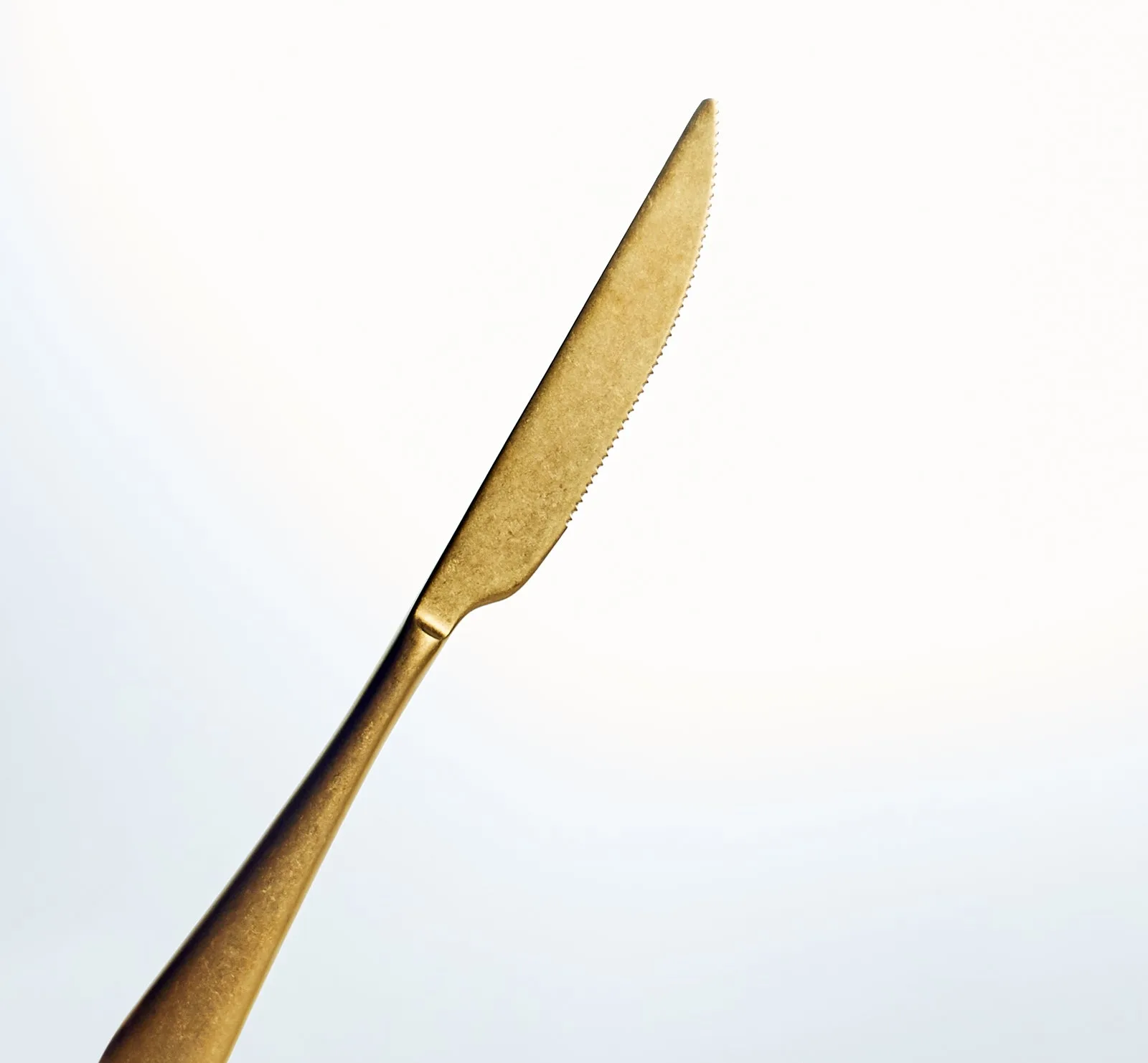
- Steak Knife - Each (Selling Out Soon): Steak Knife - Each, sold as a single knife in multiple finishes and marked as selling out soon. A single knife is the low-commitment way to test the handle and balance, but limited availability means matching a full set later may not be possible.
Who should choose which
Best for
- Households that serve steak or lamb chops to two or more people regularly and want a matched table setting
- Buyers who prefer to pay once for a consistent finish and avoid hunting for matching singles later
Not for
- Single-person households or occasional hosts who would rather test one knife before committing
- Very small kitchens with no room for a knife block or drawer tray for four knives