Quick answer
Use sticky notes to break down complex topics into single ideas, then rearrange them on a wall or notebook page to build connections and recall faster.
Why sticky notes work for active recall
Sticky notes force you to summarize one concept per note. That constraint helps your brain process and retain information better than copying full paragraphs. The ability to physically move notes around also mirrors how your mind should connect ideas — making them a natural tool for active recall and spaced repetition.
What to watch out for
Sticky notes are small — each sheet is only 3 x 3 inches. That works for keywords and short definitions, but not for detailed explanations. Use them as triggers for larger concepts, not as a replacement for your main notes. Also, avoid stacking too many notes on one surface; they can lose adhesion or become overwhelming to scan.
How to organize your study session with sticky notes
- Step 1: Write one idea per note: As you read a chapter or watch a lecture, jot down a single key term, definition, or question on each sticky note. Keep it to a few words or a short sentence. Common mistake: writing too much. If you need more than one note for a concept, split it into smaller pieces.
- Step 2: Sort notes into categories: After your study session, spread the notes on a desk or wall and group them by theme, chapter, or difficulty. Use different colored sticky notes or markers to mark each category. Checkpoint: if a note doesn't fit any group, it might be a sign you need to review that concept again.
- Step 3: Arrange notes into a sequence or map: Order the grouped notes in a logical flow — chronological, cause-and-effect, or from simple to complex. This creates a visual outline you can follow for revision. Common mistake: leaving no space between groups. Leave gaps so you can add new connections later.
- Step 4: Use the wall for active recall practice: Cover the answer or definition on each note with your hand, try to recall it, then uncover to check. Move notes you consistently remember to a "mastered" section. Checkpoint: if you keep forgetting the same notes, write a new version with a different prompt or example.
- Step 5: Refresh your wall before exams: A week before a test, review your sticky note wall. Remove notes you know cold and replace them with new ones covering weaker areas. Keep the total number manageable — around 20 to 30 notes per subject. Common mistake: leaving old notes up indefinitely. Stale notes lose their power to trigger recall.
Sticky notes we recommend for studying
-
Afterglow sticky notes: 50 sheets with adhesive back, measures 3" x 3", bordered in blue, purple, pink, and orange. The color-coded borders let you assign a different hue to each subject or priority level, making your study wall instantly scannable.
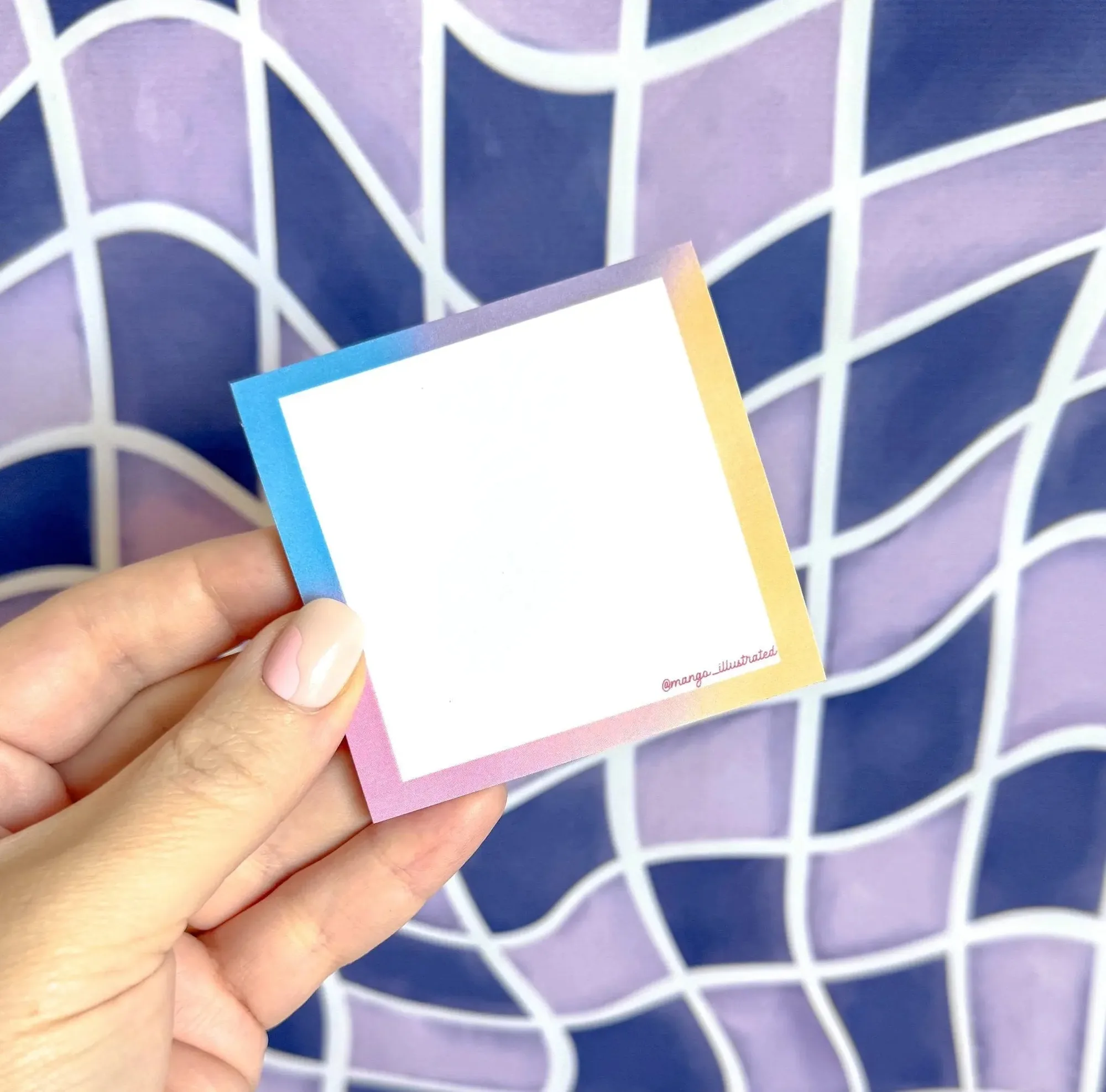
Afterglow sticky notes
-
To Remember If I Don't Lose This Note sticky notes: 50 sheets with adhesive back, measures 3" x 3", with a playful "To Remember If I Don't Lose This Note" header. The built-in reminder header adds a bit of humor to your study session while encouraging you to actually keep track of each note.
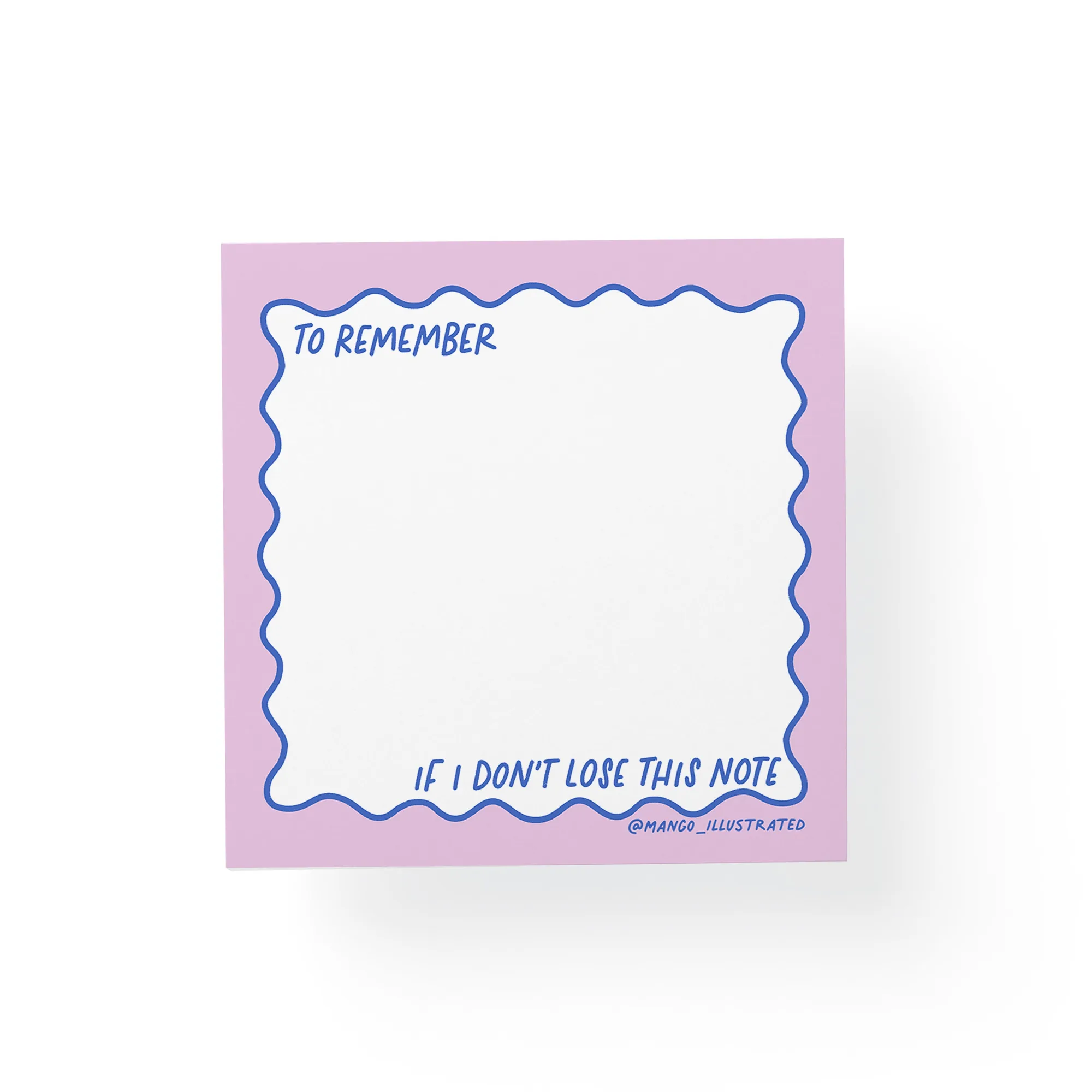
To Remember If I Don't Lose This Note sticky notes
-
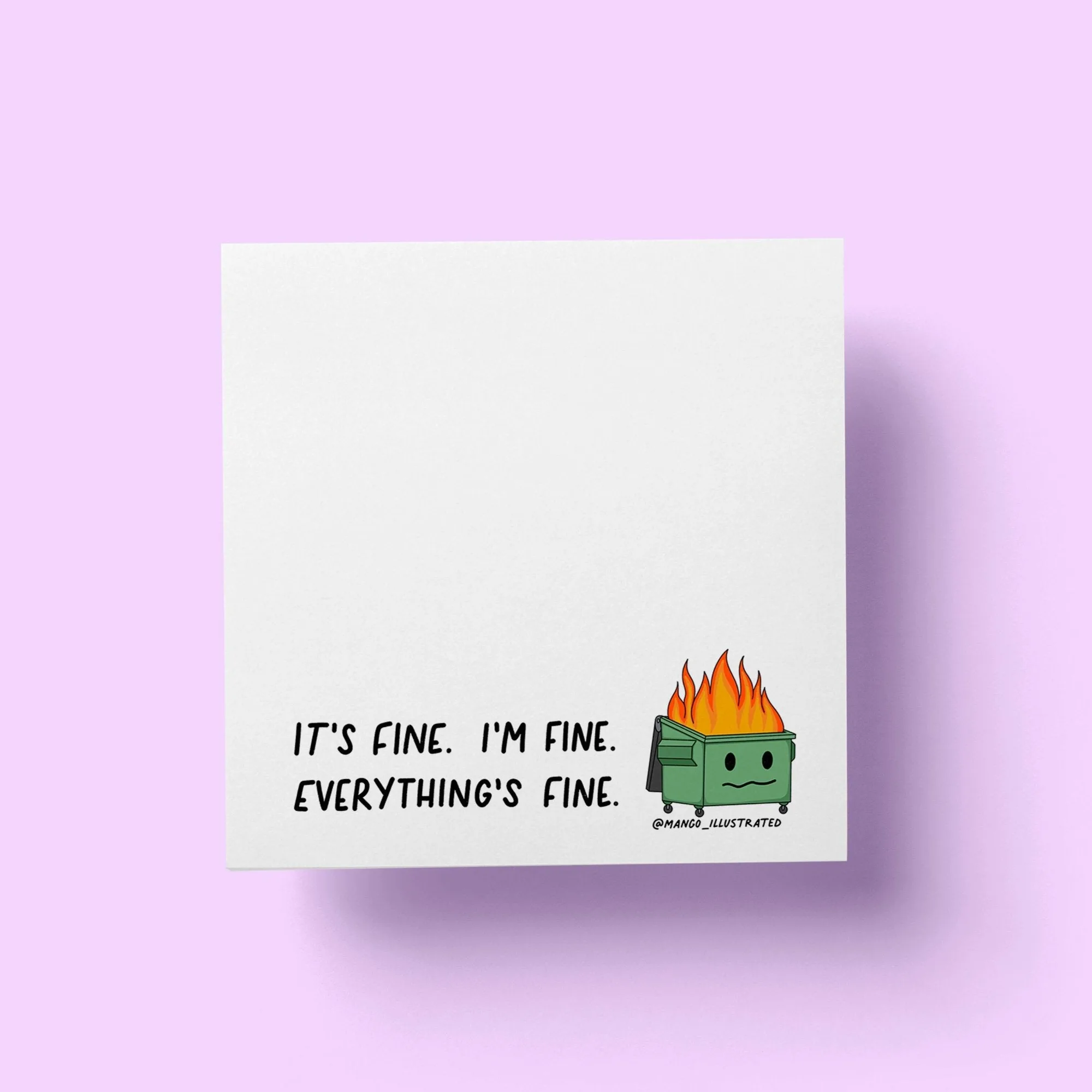
Everything's Fine Dumpster Fire Sticky Notes: 50 sheets with adhesive back, measures 3" x 3", each sheet features a small cheerful dumpster fire illustration. When a study session feels overwhelming, the honest illustration can lighten the mood and make even tough subjects feel more manageable.