Quick answer
Sticky notes win for temporary flags, quick reminders, and movable planning. Notepads win for meeting notes, lists, and anything you need to keep in one place. Most people need both, but if you only buy one, choose based on whether your notes need to move or stay put.
The real difference: movable vs. keepable
A sticky note is a temporary surface. You stick it to a page, a monitor, or a planner, and you can move it without losing the thought. A notepad is a permanent surface. You write on a page, tear it off if you want, and the rest of the pad stays intact. That single difference explains almost every practical trade-off between the two. If your note needs to travel between contexts, sticky notes are the better tool. If your note needs to survive as a record, a notepad is the better tool.
Where sticky notes actually beat notepads
Sticky notes are excellent for short, volatile information: a phone number you need for ten minutes, a reminder to reply to an email, or a page marker in a book. They also work well for planning when you are still deciding. Because you can physically rearrange them, they let you sort tasks by priority, day, or project without rewriting anything. For studying, sticky notes are best as question flags and quick memory prompts, not as the place where you write full explanations.
Where notepads take over
Notepads handle volume and sequence. A meeting that produces three decisions and six action items is easier to read later if it lives on one page in order. A notepad also gives you a cardboard backing, which means you can write while standing or holding it on your lap. Sticky notes have no backing, so they are awkward for anything longer than a sentence or two. If you have ever lost a sticky note behind a desk or under a keyboard, you already know the trade-off: sticky notes are easy to move and easy to lose.
How to use both without duplicating work
The cleanest system is to use sticky notes for capture and notepads for processing. Keep a small stack of sticky notes on your desk for anything that arrives while you are in the middle of something else. At the end of the day, move those notes into a notepad, either by rewriting them as a list or by sticking the notes directly onto a page. That way the notepad becomes the record and the sticky notes stay temporary. If you prefer a notepad that already has a built-in visual element, a color-in notepad can make the processing step less tedious because the margin gives your hands something to do while you think.
Matching the tool to the task
For work meetings, use a notepad. For a quick reminder during a meeting, use a sticky note on the corner of the page. For studying, use sticky notes to flag pages and a notepad to write summaries in your own words. For desk organization, sticky notes label temporary piles and notepads hold the running to-do list. The mistake is trying to force one tool to do both jobs. A sticky note that holds a full meeting summary will get lost. A notepad used for every tiny reminder becomes cluttered and hard to scan.
Trade-offs at a glance
- Sticky notes: movable but losable: You can reposition them across pages, planners, and screens, which makes them great for planning that is still changing. The same mobility means they fall off, get buried, or end up in the wrong pile. Use them for temporary flags and reminders, not for records you need next month.
- Notepads: keepable but fixed: A notepad keeps related notes in order on one page and gives you a backing to write on anywhere. You cannot rearrange a written page without rewriting it, so it is a poor fit for plans that change hourly. Use a notepad for meetings, lists, and any note you expect to reread.
- Using both: capture then process: Sticky notes capture incoming tasks; a notepad processes them into a list or record. This avoids the two common failures: a sticky note trying to hold a full meeting, and a notepad cluttered with one-line reminders. Keep a small sticky stack and one notepad within reach, and move notes at the end of the day.
Two notepads that fit the keepable side
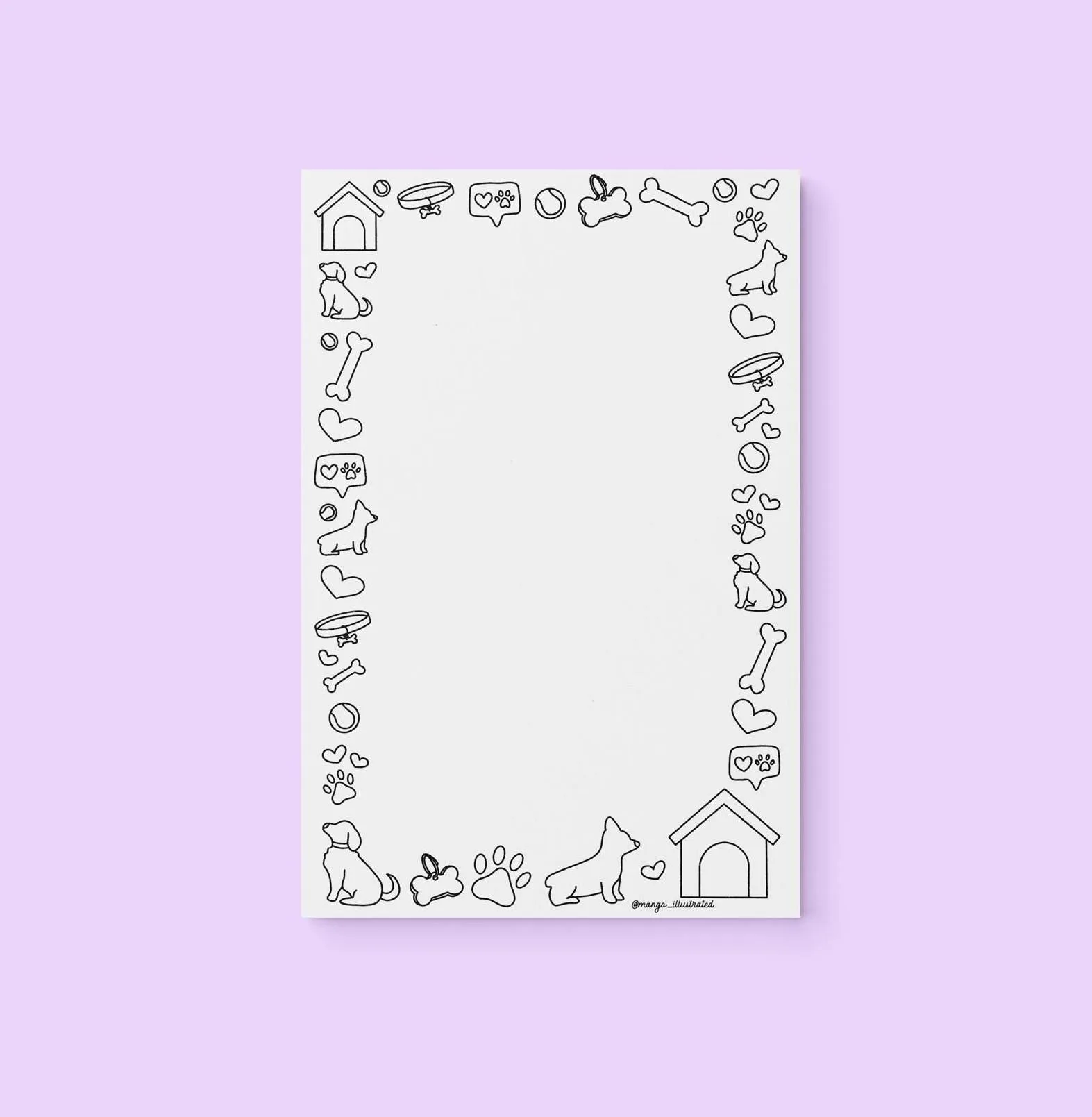
- Dog doodles color-in notepad: Every page is framed with hand drawn dog doodles, waiting to be colored in while you write the to-do list. 50 tear away sheets, 8.5 x 5.5 inches, cardboard backing. The doodle border makes a notepad work for low-stakes lists and meeting notes where you want a small break, and the cardboard backing means you can write without a table.
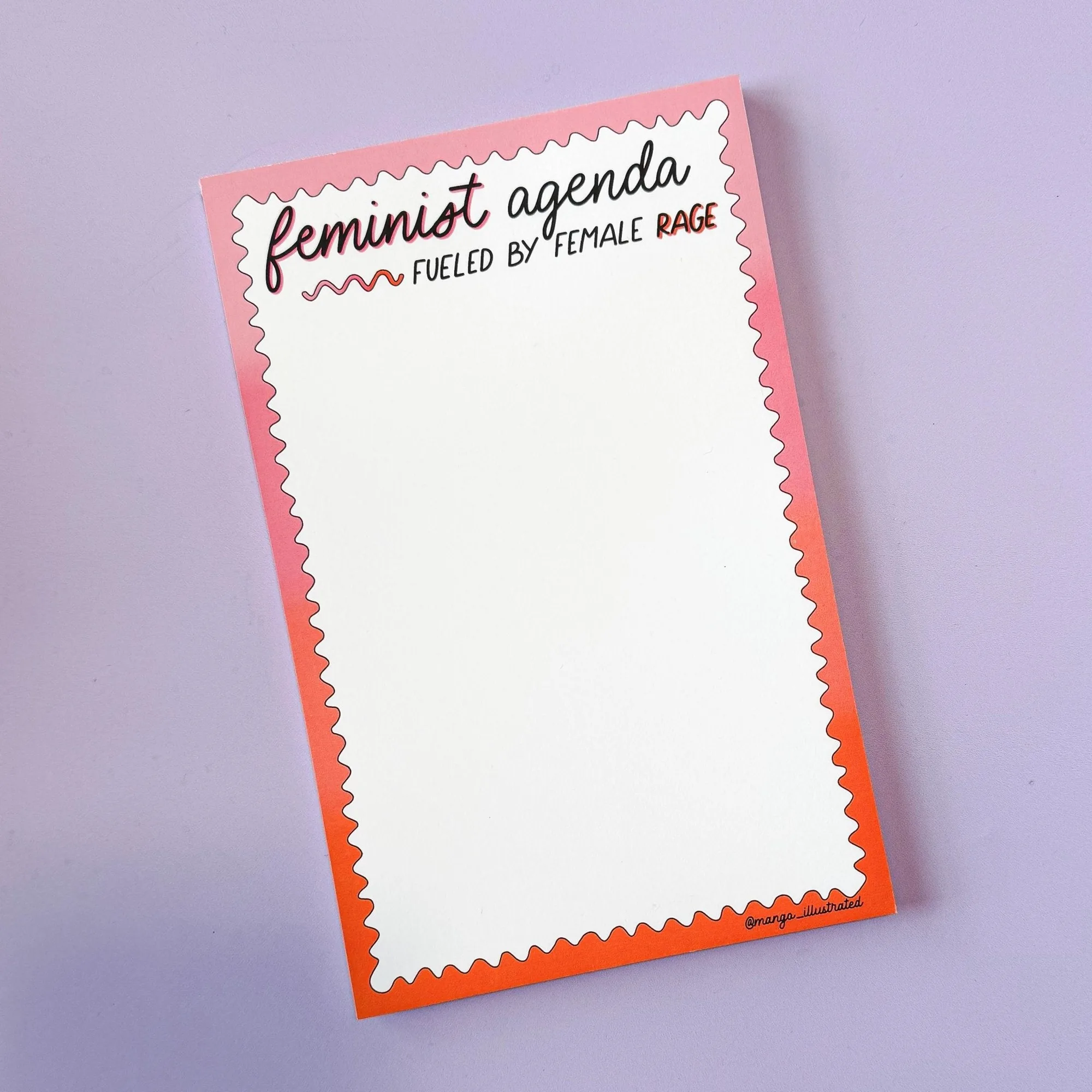
- Feminist agenda notepad: Features 'feminist agenda' and 'fueled by female rage' hand lettered inside a squiggly pink to orange to red gradient border. 50 tear away sheets, 8.5 x 5.5 inches, cardboard backing. A notepad with a clear point of view is easier to keep on your desk and use daily, which matters if you are replacing sticky notes for planning and want one place for your agenda.
Which should you choose?
Best for
- People who plan by moving tasks around and need temporary flags
- Students who flag textbook pages and write summaries separately
- Anyone who wants a quick reminder without opening a notebook
Not for
- Meeting notes you need to reread in order
- Long lists that would overflow a small square
- Anyone who loses loose paper easily and needs a backed page