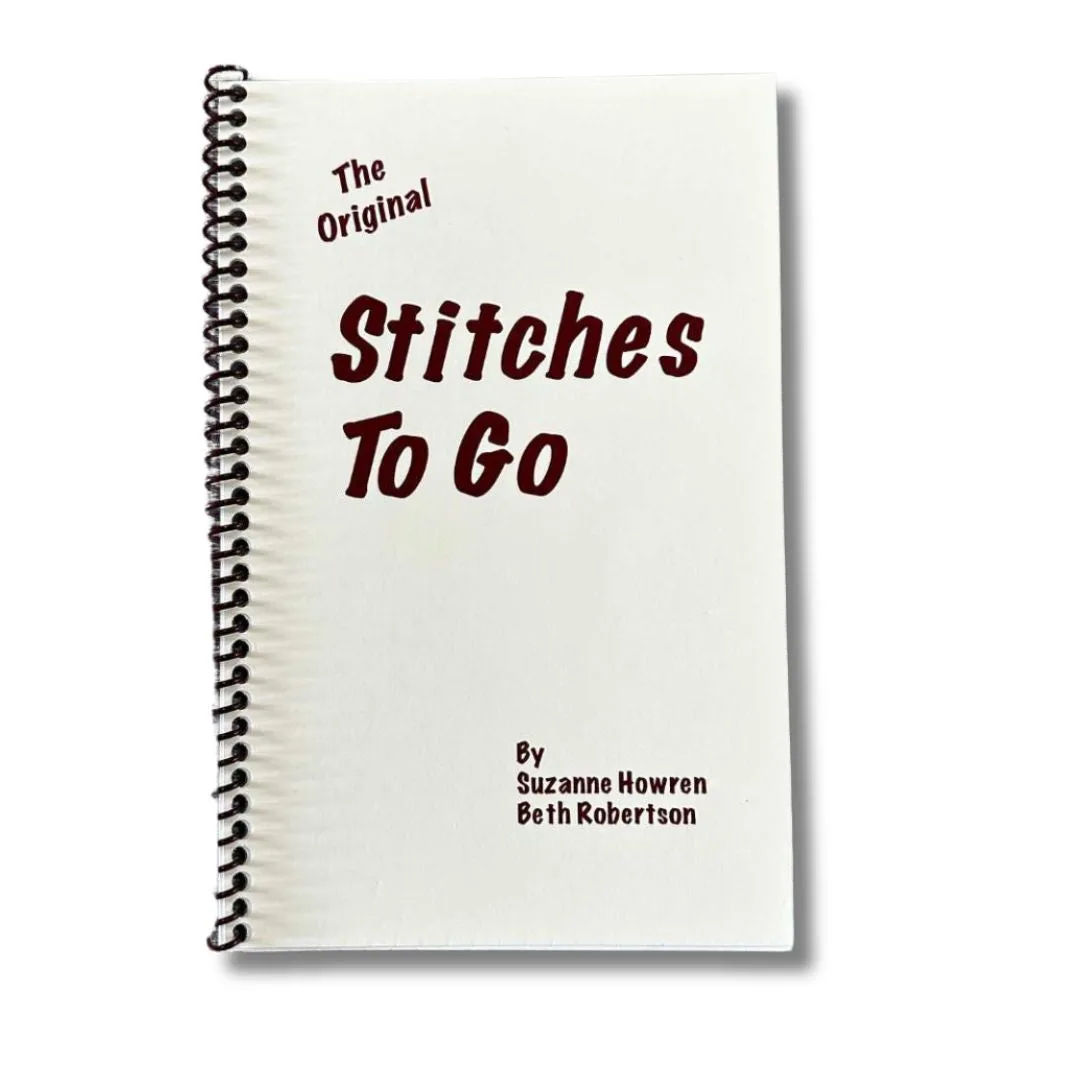
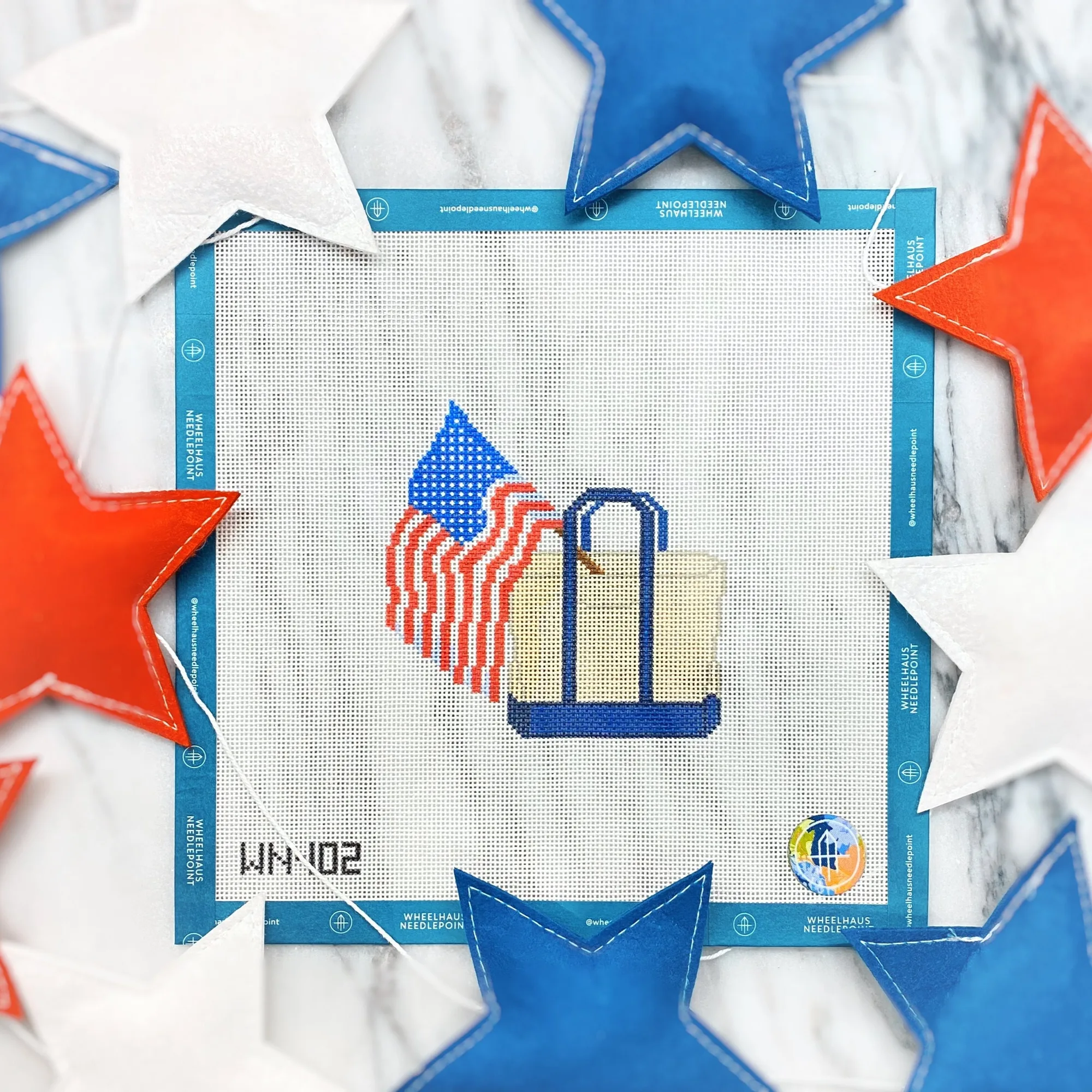
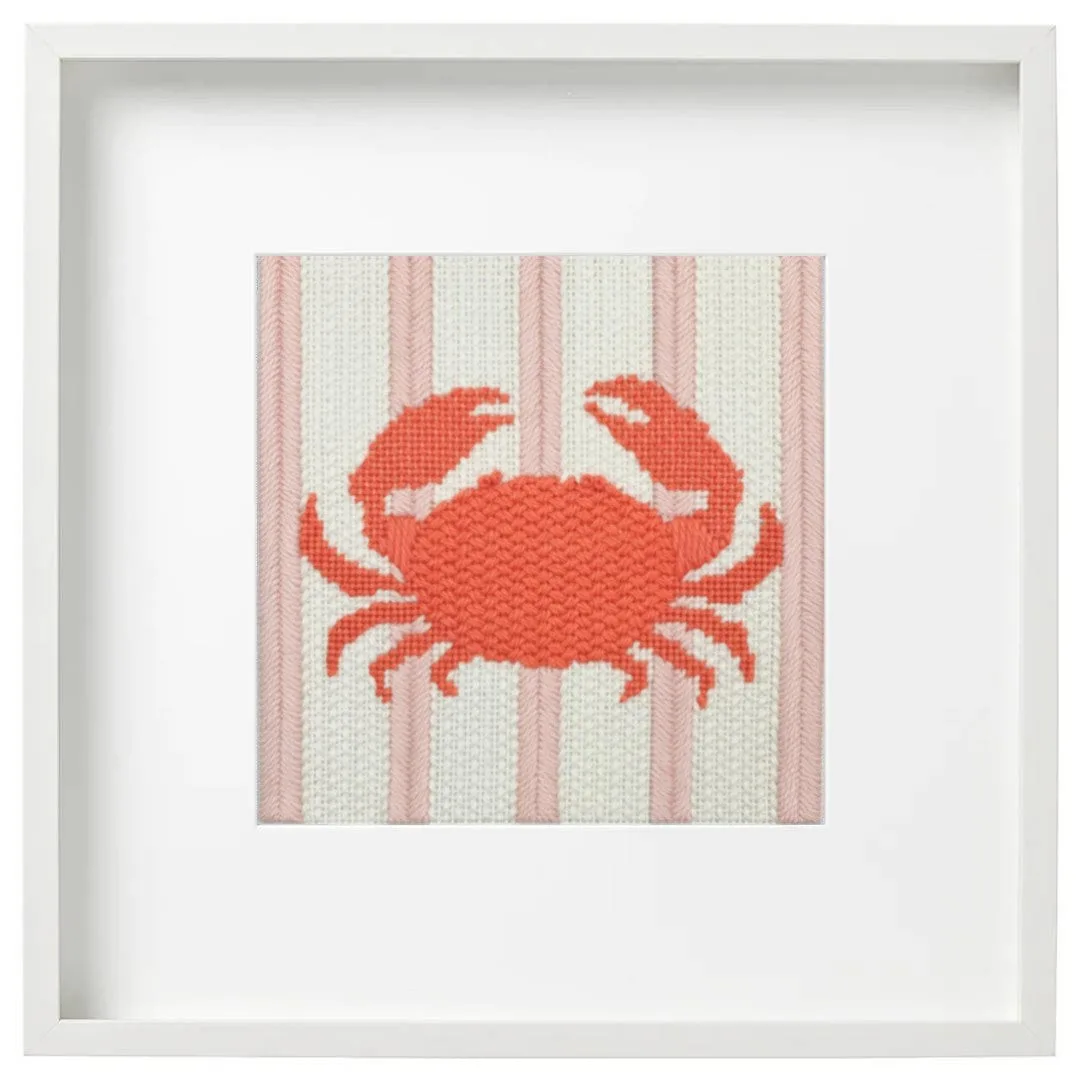
Start with the canvas, not the book
A stitch reference works best when you open it with a specific area of canvas in mind. Before you flip to the stitch list, look at the painted area you want to fill and decide what effect you want: texture, shine, a flat background, or a stitch that lets the painted color stay dominant. The Stitches For Effect book is organized around exactly that idea—decorative stitches and the threads used to create them—so it helps to arrive with a question rather than browsing at random.
This guide walks through a repeatable way to use the book: define the effect, find a candidate stitch, read the diagram and thread suggestion, then test it on the canvas edge. The book supplies 100 stitches in alphabetical order, black-and-white diagrams, and thread suggestions for each stitch, so most of the work is in matching those references to your canvas rather than memorizing stitches.
A four-step way to use the stitch reference
Treat the book as a lookup tool during a project, not a course you read cover to cover. These steps keep the reference practical.
- 1. Name the effect you want: Decide whether the area needs texture, a directional line, a dense fill, or a light stitch that lets the canvas show through. The book's title and contents focus on stitches chosen for effect, so naming the effect first narrows the alphabetical list quickly.
- 2. Find candidate stitches alphabetically: The 100 stitches are listed in alphabetical order. Use the stitch index at the back to jump to a name, or scan the diagrams for a shape that suits the area. Keep two or three candidates rather than committing to the first one.
- 3. Read the diagram and thread suggestion together: Each stitch has a black-and-white diagram and a thread suggestion explaining how that thread can be used for effect. Read both before you stitch: the diagram shows the path, and the thread note tells you what the stitch is meant to do visually.
- 4. Test on a spare corner or margin: Work a small sample of the stitch with your intended thread before committing it to the main canvas. This is your checkpoint for scale, coverage, and whether the effect matches what you pictured.
What the book actually provides
-
Stitches For Effect Needlepoint Reference Book: 100 stitches in alphabetical order with black-and-white stitch diagrams. Alphabetical order and diagrams make it a lookup reference during stitching rather than a book you read sequentially.
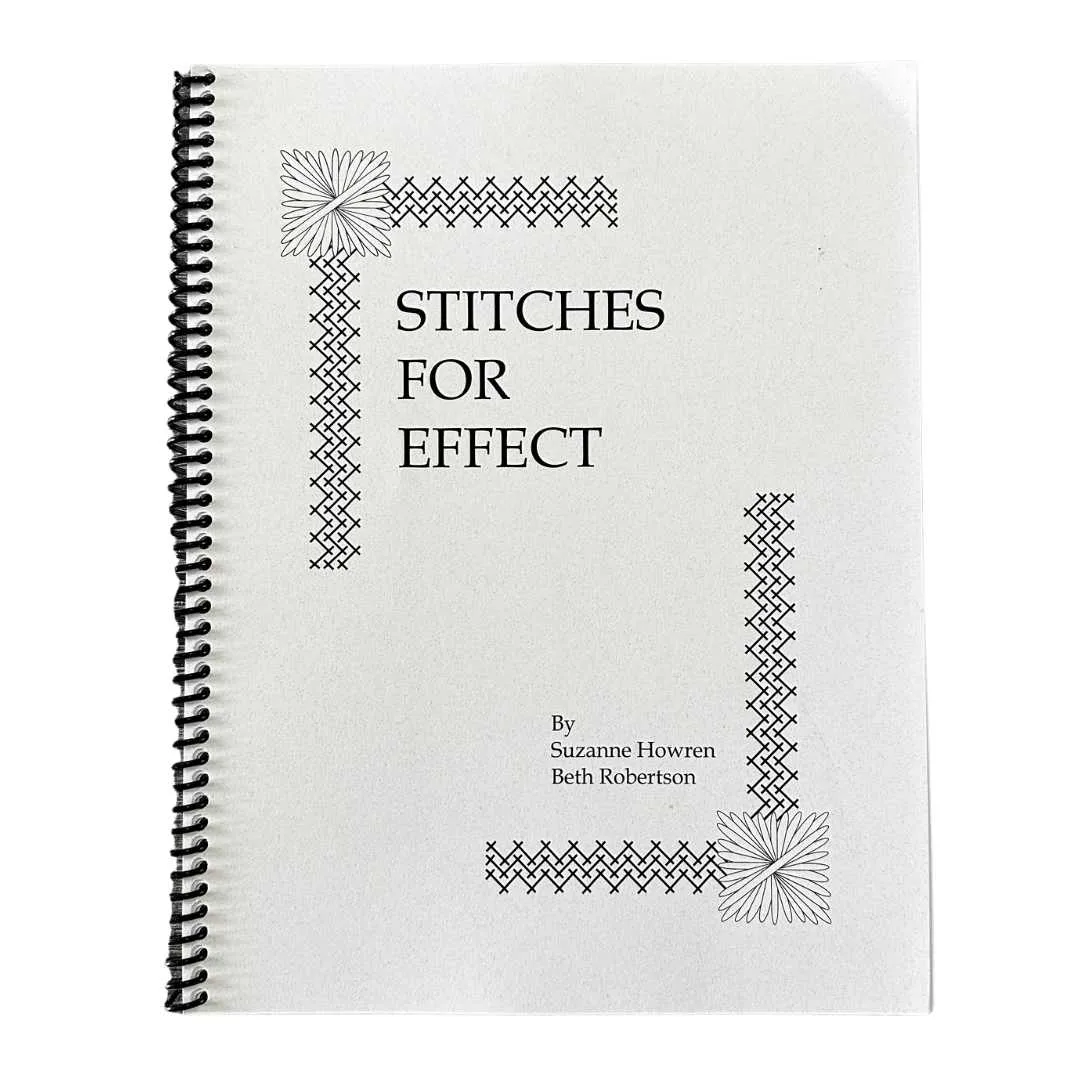
Stitches For Effect Needlepoint Reference Book
-
Stitches For Effect Needlepoint Reference Book: Thread suggestions for each stitch and how it can be used for effect. The thread note is the part that turns a diagram into a decision about texture and shine on your canvas.
-
Stitches For Effect Needlepoint Reference Book: 65 pages, spiral-bound to lie flat when open, with thread and stitch indexes at the back. A flat-lying spiral binding and back indexes suit hands-free consultation while you stitch.
-
Stitches For Effect Needlepoint Reference Book: Authors Suzanne Howren and Beth Robertson; published 1996 by SHEAR Creations LLC; ISBN 0-9663024-0-0. Identifies the specific edition so you know which reference you are using alongside your canvas.
Read a stitch entry in the right order
When you land on a stitch, resist starting with the diagram. Read the thread suggestion first, because it frames what the stitch is for. Then look at the diagram and trace the path with your finger or a dry needle before you thread up. The black-and-white diagrams are clear about stitch placement, but they do not show color, so keep your canvas colors in view while you read.
The book also explains common needlepoint terms and materials. If a stitch entry uses a term you do not recognize, check the front matter before guessing. That habit keeps your sample honest and reduces the chance of stitching an effect you did not intend.
Matching the stitch to the area on your canvas
Use the book's thread suggestions as a starting point, then adjust to the thread you actually own. The comparison below is about reading the reference, not about fixed rules for every canvas.
- Large background area: Look for a stitch whose diagram shows a repeatable, economical path and whose thread suggestion supports a consistent surface. Test coverage on a margin before filling a large area.
- Small focal motif: Choose a stitch with a compact diagram that fits inside the painted shape. The thread suggestion helps you decide whether a smoother or more textured thread supports the motif.
- Area where canvas color should show: Scan for stitches with open diagrams rather than dense coverage. The book's effect-based thread notes are useful here because they describe how a thread changes the look of the stitch.
- Border or directional element: Look for stitches with a clear directional path in the diagram. Trace the path first to confirm it follows the border without turning awkwardly at corners.
Build a personal stitch library from the book
The spiral binding makes the book easy to keep open beside your canvas, and the stitch and thread indexes at the back help you return to stitches you have used before. A simple habit is to note the stitch name, the thread you used, and the canvas area on a small sample. Over time those samples become your own stitch dictionary, grounded in the book's 100 stitches but filtered through the threads and canvases you actually work with.
This is also where the book earns its place as a reference for beginners: you do not need to learn all 100 stitches at once. Start with one effect you want to achieve, find two or three candidate stitches, and sample them. The alphabetical list and diagrams make that repeatable project after project.
What the supplied information leaves open
The supplied details confirm the book's structure, contents, binding, authors, and publication information, but they do not include project-specific stitch recommendations, thread quantities, or guidance on combining stitches within a single canvas. Treat the book as a reference for individual stitches and thread effects, and use your own sampling to decide how stitches work together on a particular design. If you need a stitch plan for a specific canvas, the book's indexes and diagrams will help you shortlist options, but the final combination remains your judgment call.