Quick answer
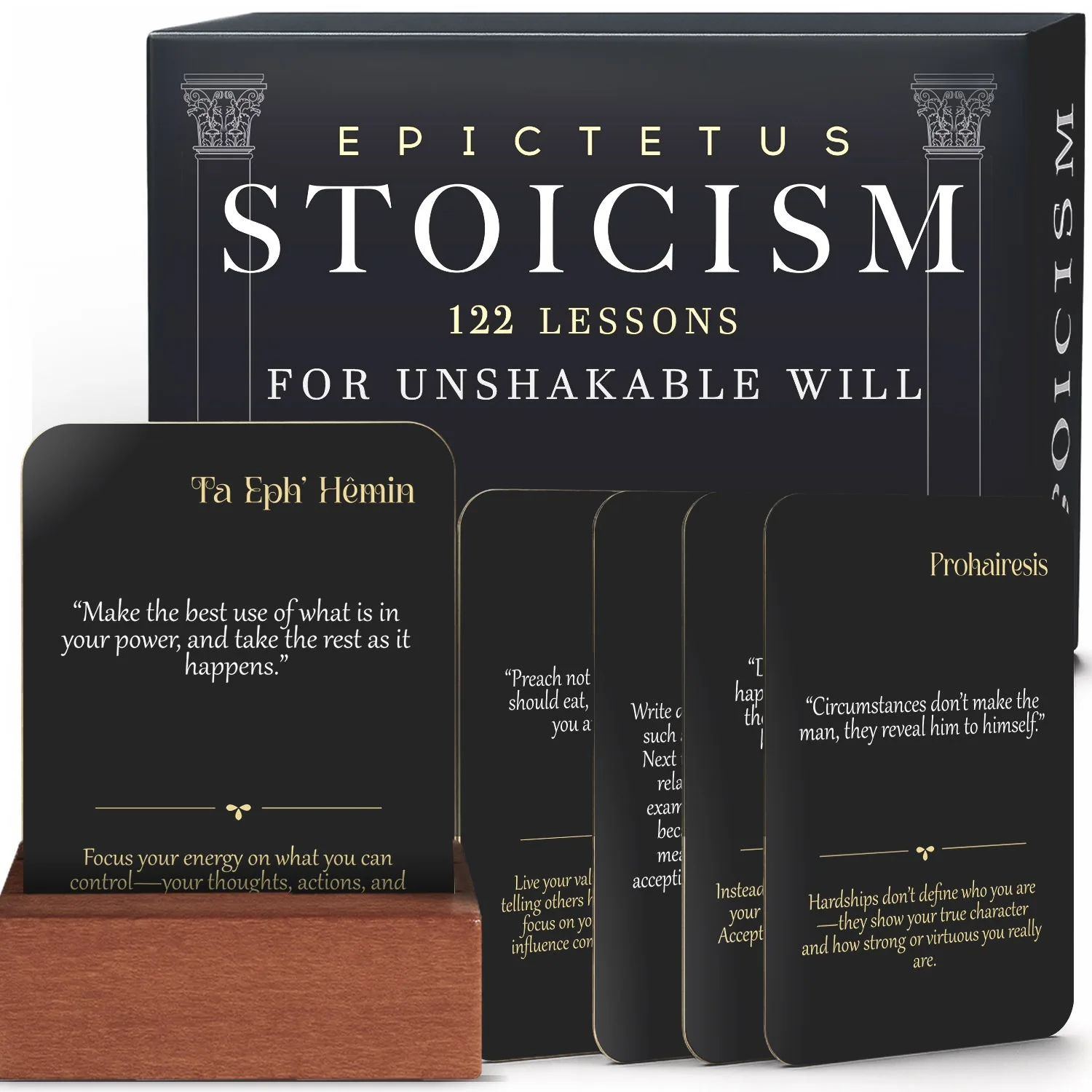
Use the Stoicism Cards Epictetus deck as a one-card-per-day practice: draw a card in the morning, read the quote and explanation, complete the exercise, and place the card on the wooden stand where you will see it again. Keep the same time each day so the habit sticks.
Why one card a day works better than reading the whole deck
A single card gives you one idea to apply, which is easier to remember than a stack of quotes. The deck’s format—quote, explanation, and exercise on each card—turns reading into doing. Beginners often try to race through many cards at once and end up retaining little. Slowing down to one card per day builds a small, repeatable routine instead of a one-time reading session.
What to do when a card feels too abstract or too simple
Some Epictetus quotes may seem removed from modern life, and some exercises may feel basic. That is normal. Treat the explanation as a bridge: read it twice, then ask how the idea shows up in one situation you expect today—a meeting, a commute, or a difficult message. If the exercise still feels vague, write one sentence about what you would do differently. The goal is a concrete action, not a perfect interpretation.
Keeping the practice fresh after the first month
With 122 cards, a daily draw lasts about four months before repeating. When you cycle back, you will likely notice different details because your circumstances have changed. To avoid autopilot, keep a short log of the date, the card’s core idea, and one action you took. Reviewing that log weekly shows patterns and keeps the deck from becoming decoration.
Your daily Epictetus card routine, step by step
- Choose a consistent time and place: Pick a moment you can protect—morning coffee, lunch break, or before bed—and keep the deck in the same spot. Common mistake: drawing a card at random times, which makes the habit easy to skip. Checkpoint: set a phone reminder for the first two weeks. Consistency matters more than the length of the session.
- Draw one card and read the quote slowly: Read the Epictetus quote twice before moving on. Let the words settle rather than rushing to the explanation. Common mistake: skimming the quote to get to the exercise. Checkpoint: if you cannot restate the quote in your own words, read it once more. A slow first read makes the explanation and exercise more useful.
- Read the explanation and connect it to today: After the quote, read the card’s explanation and name one situation today where the idea applies—a conversation, a task, or a worry. Common mistake: treating the explanation as general philosophy instead of a prompt. Checkpoint: say or write the situation in one sentence. Link the idea to a specific event, not a vague mood.
- Do the exercise as written, then adapt if needed: Complete the exercise on the card. If it does not fit your day, scale it down rather than skipping it—for example, a two-minute version instead of a longer reflection. Common mistake: waiting for the perfect moment. Checkpoint: mark the card or note what you did. A small completed exercise beats a perfect one you postpone.
- Display the card on the wooden stand: Place the card on the stand where you will see it during the day—desk, kitchen counter, or nightstand. Common mistake: putting it back in the box immediately, which hides the reminder. Checkpoint: choose a spot that does not block your work. The stand turns the card into a visual cue for the rest of the day.
- Review at day’s end and return the card: Before bed, glance at the card and ask whether you used the idea. Then return it to the box so tomorrow’s draw is clean. Common mistake: leaving old cards on the stand until they pile up. Checkpoint: keep a one-line note in a notebook or phone if you want to track progress. A quick end-of-day check closes the loop and keeps the deck organized.
Product facts
-
Stoicism Cards Epictetus - 122 Daily Quotes & Exercises: 122 cards, each with a quote, explanation, and exercise, plus a wooden stand and gift-ready box. The three-part card structure supports a complete daily reflection in a few minutes, and the stand makes it easy to keep today’s card visible.
Stoicism Cards Epictetus - 122 Daily Quotes & Exercises