Quick answer
Stoneware is fired at higher temperatures, making it denser, more durable, and less porous than earthenware. For everyday tableware that can handle dishwasher and microwave use, stoneware is the better choice. Earthenware, while often more decorative and colorful, is softer and more porous, requiring more careful handling. Choose stoneware for durability and low maintenance; choose earthenware if you prioritize artistic variety and don't mind extra care.
When you're shopping for ceramic tableware, you'll often see two main types: stoneware and earthenware. Both are made from clay and fired in a kiln, but they have distinct characteristics that affect durability, appearance, and care. Understanding these differences helps you choose pieces that fit your lifestyle, whether you're setting a casual weeknight table or hosting a dinner party.
In this comparison, we'll break down the key differences between stoneware and earthenware, including firing temperatures, porosity, durability, and care requirements. We'll also highlight some of our favorite stoneware pieces at East Fork to show you what to look for.
What Is Stoneware?
Stoneware is a type of ceramic that is fired at high temperatures, typically between 2,200°F and 2,400°F (1,200°C to 1,300°C). This high firing vitrifies the clay, making it dense, hard, and non-porous. As a result, stoneware is highly durable and resistant to chipping, scratching, and moisture absorption. It's safe for dishwasher and microwave use, making it ideal for everyday tableware.
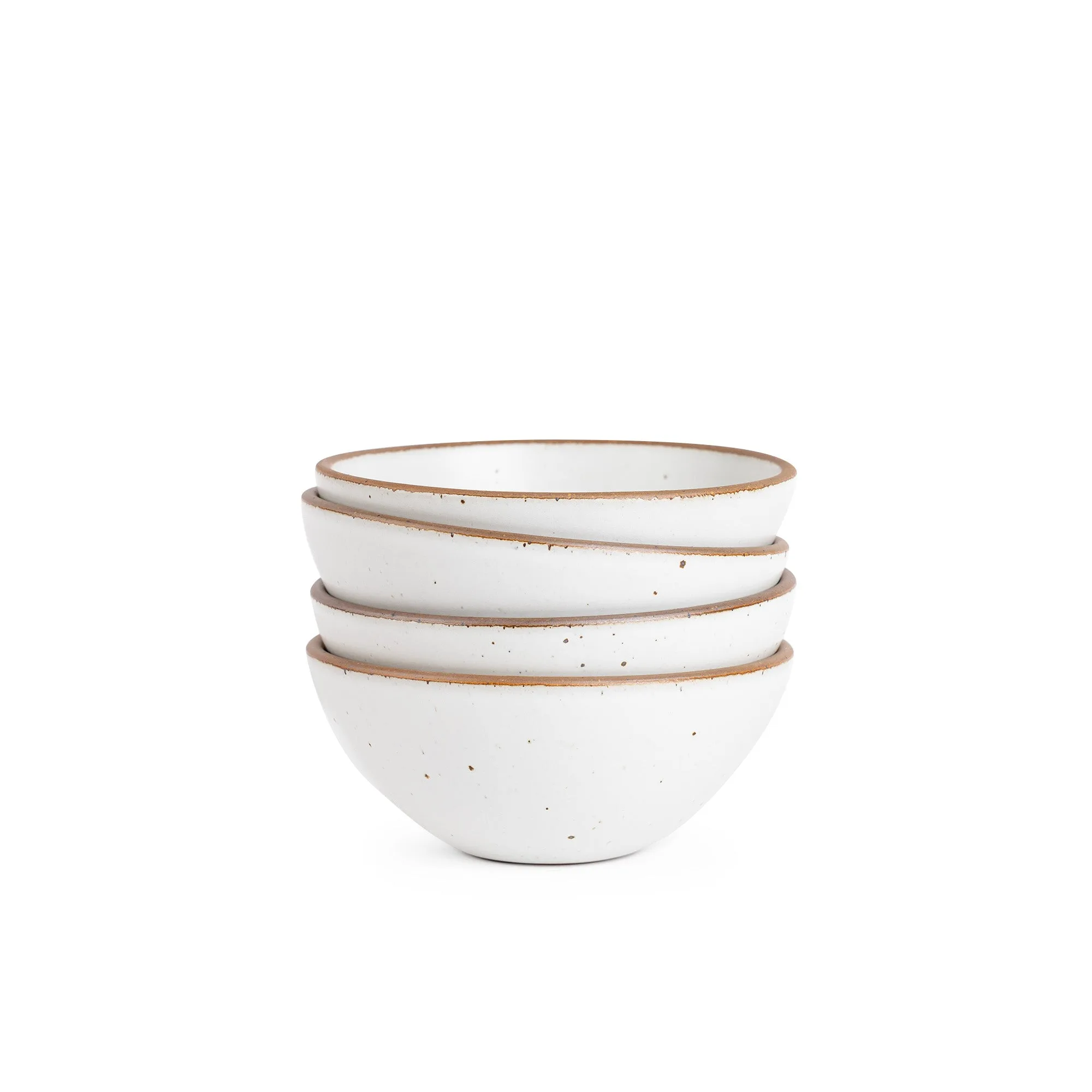
Stoneware often has a more earthy, rustic appearance, but it can be glazed in a wide range of colors and finishes. Because it's so sturdy, stoneware is a popular choice for dinnerware, baking dishes, and mugs that get heavy use. At East Fork, our Everyday Bowls are a prime example of stoneware's practicality: they're dishwasher and microwave safe, and they're named for how often you'll use them.
- High firing temperature creates a dense, non-porous body.
- Durable and resistant to chipping and scratching.
- Safe for dishwasher and microwave use.
- Holds temperature well, keeping food warm longer.
What Is Earthenware?
Earthenware is fired at lower temperatures, usually between 1,800°F and 2,100°F (1,000°C to 1,150°C). This results in a more porous, softer ceramic that is not fully vitrified. Earthenware is often more decorative, with vibrant glazes and intricate patterns, because the lower firing temperature allows for a broader range of colors. However, it is less durable and more susceptible to chipping, cracking, and water absorption.
Because earthenware is porous, it may require sealing if used for food storage, and it's often not recommended for dishwasher or microwave use. It also can be sensitive to thermal shock, so it's best to avoid sudden temperature changes. Earthenware is a great choice for decorative pieces or for those who appreciate the traditional, handcrafted look and don't mind extra care.
- Lower firing temperature results in a softer, more porous body.
- Often more colorful and decorative due to glaze options.
- May require hand washing and careful handling.
- Not ideal for high-heat or thermal shock situations.
Key Differences at a Glance
The main differences between stoneware and earthenware come down to firing temperature, porosity, and durability. Stoneware is fired hotter, making it denser and more resistant to moisture and damage. Earthenware is fired cooler, making it more porous and fragile. These differences affect how you use and care for each type.
When choosing between the two, consider your lifestyle. If you need everyday dishes that can handle the dishwasher, microwave, and the occasional drop, stoneware is the way to go. If you're looking for decorative pieces or don't mind hand-washing and extra care, earthenware offers more artistic variety.
- Stoneware: high-fired, non-porous, durable, dishwasher-safe.
- Earthenware: low-fired, porous, fragile, often hand-wash only.
- Stoneware is better for everyday use; earthenware is better for decorative or occasional use.
Stoneware vs. Earthenware: Tradeoffs
- Durability: Stoneware is more durable due to high firing, resisting chips and scratches. Earthenware is softer and more prone to damage. Choose stoneware for heavy daily use.
- Porosity: Stoneware is non-porous, so it won't absorb liquids or harbor bacteria. Earthenware is porous and may need sealing. Stoneware is more hygienic for food service.
- Care and Maintenance: Stoneware is dishwasher and microwave safe. Earthenware often requires hand washing and gentle handling. Stoneware saves time and effort.
- Appearance: Earthenware offers more color variety and decorative glazes. Stoneware tends to have a more earthy, rustic look. Earthenware for aesthetics, stoneware for function.
Stoneware Picks from East Fork
- https://astrakitchen.shop/products/everyday-bowl-4-pack-117646Everyday Bowl 4-Pack: Dishwasher and microwave safe, 100% lead free, made from regional clay. Dimensions: 8" x 2.25", holds 3 1/2 cups to the brim. These bowls are built for daily use and easy cleanup, making them a practical stoneware choice for weeknight meals and casual entertaining.
- Side Coupe: Handmade ceramic plate with a modern coupe shape, available in Panna Cotta color. The coupe shape is versatile for casual or formal settings, and the handmade construction gives each piece unique character.
Which Ceramic Should You Choose?
Best for
- Everyday meals and busy households
- Those who want low-maintenance, dishwasher-safe tableware
- Entertaining and serving durable, versatile pieces
Not for
- Collectors seeking vibrant, decorative glazes
- Those who prefer hand-washing and don't mind extra care
- Display pieces that won't see heavy use
In the end, the choice between stoneware and earthenware comes down to how you plan to use your tableware. Stoneware offers durability, convenience, and everyday practicality, making it a smart investment for most homes. Earthenware, while beautiful and artistic, requires more careful handling. Consider your lifestyle and preferences, and you'll find the perfect ceramic for your table.