Quick answer
If your dog destroys plush toys, stop the shredding by first identifying the trigger: teething, boredom, or genuine power-chewing. For teething or boredom, redirect with a structured play routine and a toy that offers a different texture or task. For a confirmed power-chewer, switch to a reinforced plush toy built with double-stitched seams or a rough-and-tough construction, and retire thin, single-layer plush before it becomes a swallow risk.
Symptom: what toy destruction actually looks like
Not every torn toy means the same problem. A dog that methodically opens a seam and pulls out stuffing is solving a puzzle. A dog that shakes, whips, and rips a toy in seconds is usually discharging energy. A dog that nibbles corners and leaves wet, frayed edges is often teething or soothing sore gums. Watch the first 60 seconds of play: the pattern tells you which fix to use.
- Seam-opening and stuffing-pulling: often a sign the toy is too easy to deconstruct.
- Shaking and rapid ripping: usually an energy or arousal issue, not a toy defect.
- Corner-nibbling and wet fraying: common in puppies and dogs with dental discomfort.
Cause: why plush toys fail so fast
Plush toys are built for comfort and fetch, not for extended chewing. A standard plush toy has a soft outer fabric, a squeaker, and loose stuffing. Once a dog creates a small hole, the squeaker and stuffing become the reward, which accelerates the destruction. That is why plush toy lifespan drops sharply when a dog moves from carrying and cuddling to chewing and wrestling.
If your dog is a genuine aggressive chewer, no plush toy will last indefinitely. The honest goal is to slow destruction, reduce the risk of swallowed pieces, and give your dog a better outlet. If your dog has already swallowed stuffing or a squeaker, contact your veterinarian rather than trying another toy.
Corrective action: a 10-minute reset that changes the pattern
Start by removing destroyed toys from the play area. A toy with exposed stuffing or a loose squeaker is no longer a toy. Then run a short, structured session: two minutes of tug or fetch with a reinforced plush toy, one minute of a chew-friendly alternative, and a calm finish with a treat. This gives your dog a beginning and an end, which reduces the frantic tearing that happens when play has no off-ramp.
Rotate toys every few days so the plush toy stays novel. A bored dog destroys faster than a challenged dog. If your dog targets seams, choose a toy with double-stitched seams and an interactive rope, which adds a different grabbing point and can absorb some of the tugging force.
- Remove any toy with exposed stuffing immediately.
- Use short, structured play sessions instead of leaving plush toys down all day.
- Rotate toys to keep the plush toy interesting without making it the only outlet.
When to stop and choose a tougher option
If your dog destroys a reinforced plush toy in under five minutes, stop buying plush for chewing and switch to a rough-and-tough toy. Plush is still useful for cuddling, carrying, and fetch, but it should not be the primary chew target for a power-chewer. At that point, the fix is not a stronger plush toy; it is a different category of toy plus more exercise and mental work.
A practical split is to keep one plush toy for supervised comfort and fetch, and one tougher toy for chewing and wrestling. That way your dog still gets the soft texture it likes without turning every plush toy into a shredding project.
Diagnosis: match the fix to the destruction pattern
- Teething or gum discomfort: Your dog nibbles corners, leaves wet frayed edges, and targets soft fabric rather than ripping. Offer a chilled chew and keep plush play short and supervised. If the fraying stops when a chew is available, the plush toy was not the real problem.
- Boredom or under-stimulation: Your dog destroys toys when alone or after long inactive periods. Add a walk, a puzzle feeder, or a training game before plush play. If destruction drops when exercise increases, keep plush for supervised play only.
- True power-chewing: Your dog opens seams, removes squeakers, and shreds reinforced plush in minutes. Stop replacing plush and switch to a rough-and-tough toy for chewing. When a reinforced plush toy fails in under five minutes, choose a tougher category and keep plush for fetch and comfort.
Products that match these fixes
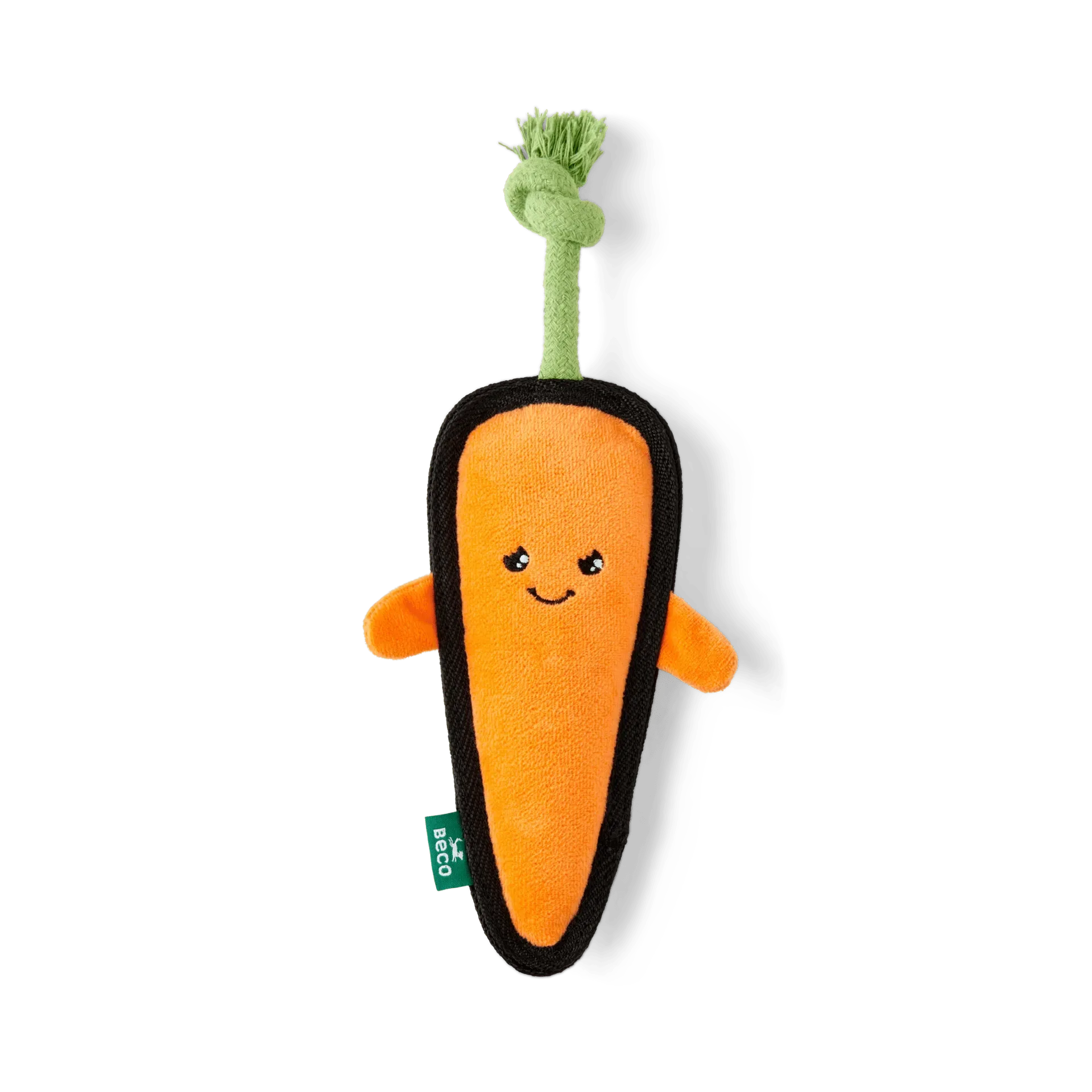
- Plush Carrot Dog Toy: Plush Carrot Dog Toy features double stitched seams, a squeaker, and an interactive rope, and is made with post-consumer recycled plastic. The double-stitched seams and rope give a determined dog more to grab and tug, which can slow seam failure compared with a basic plush toy. Best for dogs that carry, cuddle, and fetch, not for dogs that chew through reinforced seams in minutes.
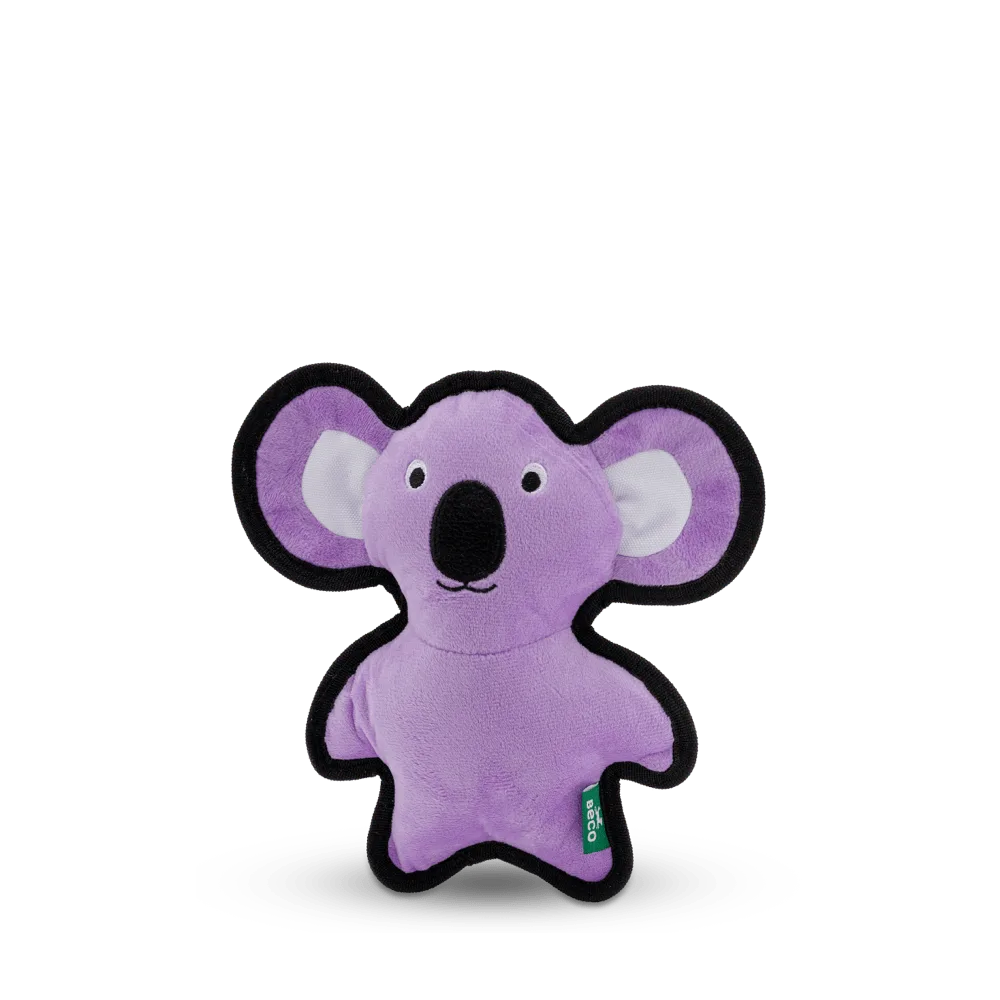
- Plush Koala Dog Toy: Plush Koala Dog Toy is described as a rough & tough toy that can withstand a chew and wrestle during playtime, made from recycled materials. It is the better match when your dog has already proven it can open standard plush seams. Use it for chew and wrestle sessions, and keep a softer plush toy for calm carrying.