Quick answer
Use a rigid, hinged eyewear case with a soft lining as a drill bit case alternative: group bits by size, wrap or sleeve them so they cannot rub, and label the outside. It suits small bits only, so keep oversized shanks in a proper tool roll.
Why an eyewear case works for small bits
A hard clamshell eyewear case already does what a small tool case needs: it closes securely, protects contents from knocks and costs little if you have a spare one. For micro-drilling sizes, the shallow depth is an advantage because bits sit in one layer rather than sliding into a jumble.
The trade-off is that eyewear cases are not built for sharp steel. Hinges are usually plastic, linings are fabric, and there is no built-in size indexing. Treat the case as a protected tray, not a workshop box, and keep it out of heavy tool bags.
What not to put in an eyewear case
Bits above roughly 3 mm, masonry drills with wide flutes, and anything with a hex shank tend to be too long or too heavy for a standard glasses case. They can bend the hinge or pierce the lining. Keep those in a dedicated index or roll, and reserve the eyewear case for micro sizes and spare tips.
Steps to pack and protect your bits
- Choose a rigid case with a soft lining: Pick a hard clamshell case with a clean, intact lining and a hinge that stays closed. Avoid soft pouches, which let bits rub together. Checkpoint: the case should snap shut and hold its shape when squeezed.
- Sort bits by size before packing: Lay the bits out in ascending order and separate duplicates. With a 0.8–2.0 mm set, the 0.2 mm increments are easy to mix up once loose. Mistake to avoid: packing straight from a pile, which hides missing or duplicated sizes.
- Sleeve or wrap each bit: Slide each bit into a short piece of soft tubing, a small paper sleeve or a strip of foam. This stops flutes from grinding against each other and protects the lining. Checkpoint: shake the closed case gently; you should hear no metal-on-metal rattle.
- Seat the bits in a foam or card insert: Cut a piece of foam or stiff card to the case footprint and press shallow slots for each bit. A fitted insert keeps sizes in order and stops bits rolling to the hinge. Mistake to avoid: overfilling the insert so the lid presses down on the bit tips.
- Label the case and the insert: Write the size range and contents on the outside, and mark each slot on the insert. A written index means you can spot a missing bit at a glance. Checkpoint: someone else should be able to identify the contents without opening the case.
- Store flat and away from moisture: Keep the case flat in a drawer or shelf, not upright in a tool bag. Add a small silica packet if the storage area is damp. Mistake to avoid: storing the case near a damp wall or window, where steel can spot with rust.
Product facts
-
Tungsten Steel Drill Bits Kit: The kit covers ten sizes from 0.8 mm to 2.0 mm in tungsten steel. The narrow size range fits a single-layer eyewear case, but the 0.2 mm steps are close enough that unlabelled bits are hard to tell apart by eye.
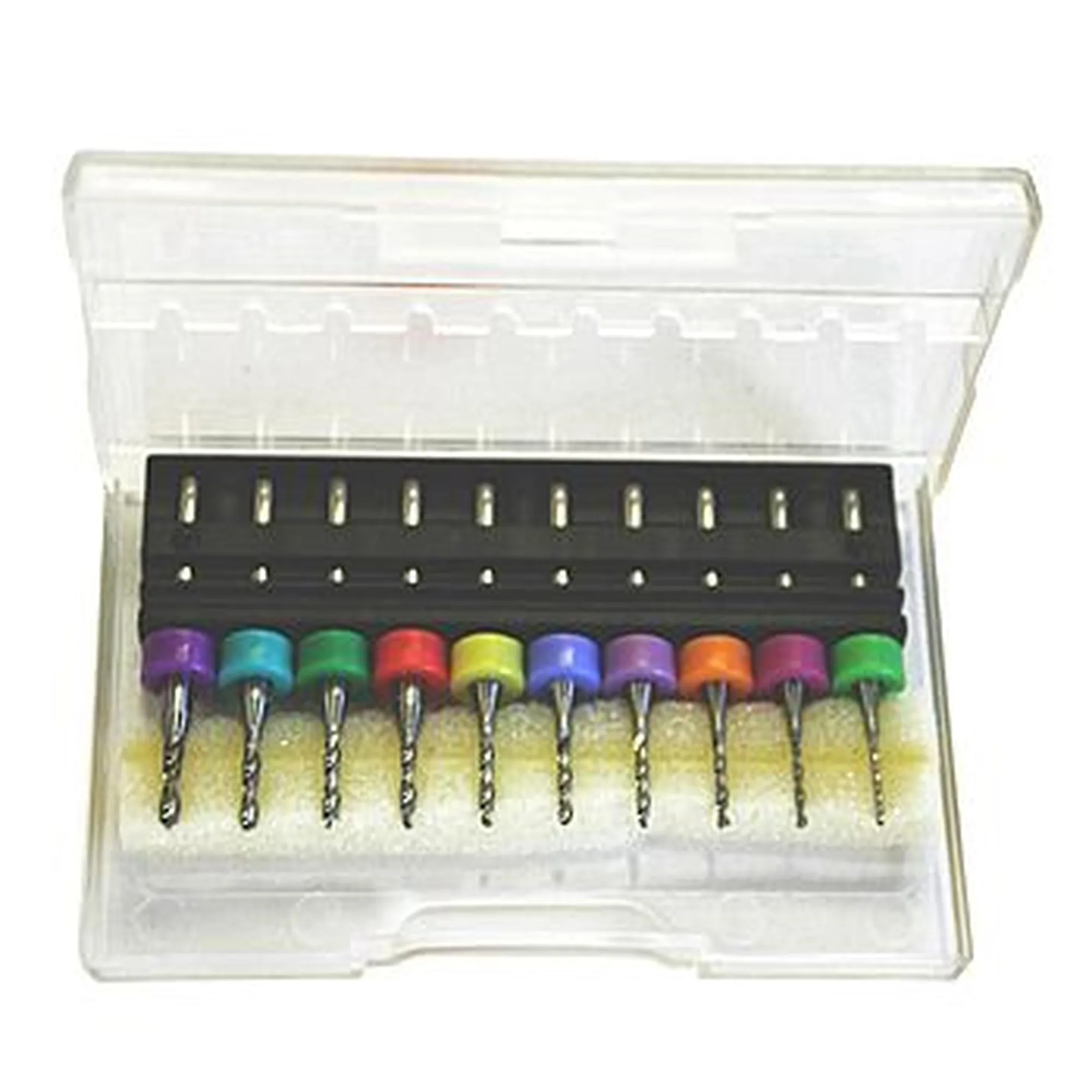
Tungsten Steel Drill Bits Kit