Quick answer
Store both jars sealed at room temperature, away from direct light and heat, with a dry spoon for each. Truffle honey is best used within a few months of opening to protect its aroma, while salted bourbon honey keeps longer but needs a stir if the salt settles.
Why truffle honey and salted bourbon honey age differently
Truffle honey carries a delicate, earthy aroma that fades with heat and repeated air exposure. Every time you open the jar, you lose a little of that perfume, so treat it as a finishing honey you open with purpose rather than a daily drizzle.
Salted bourbon honey is more robust, but its salt content can settle at the bottom over time. That is not spoilage; it is a sign the jar needs a gentle stir before serving. Neither honey should be stored in the refrigerator, where cold temperatures speed up crystallization and make the texture grainy.
Does honey expire?
Honey does not spoil in the food-safety sense when kept sealed and dry, but quality does decline. A jar can last years unopened, yet opened gourmet honey is best enjoyed within several months for peak flavor. The exception is contamination: if water or a wet spoon gets in, fermentation can begin, and that jar should be discarded.
When crystallization is not a problem
Crystallization is natural and does not mean the honey is bad. It happens faster in cool rooms and in honey with more natural glucose. If your truffle honey turns cloudy or gritty, warm the jar gently rather than tossing it. The crystallization fix is slow heat, not high heat.
How to store each jar, step by step
- Check the seal before you open: Press the lid to confirm it is tight and unbroken. If the safety button has already popped or the lid is loose, do not buy or use that jar. A compromised seal is the one storage problem you cannot fix at home.
- Choose a cool, dark pantry spot: Keep both jars on a shelf away from the stove, dishwasher, and sunny windows. Aim for a steady room temperature rather than a warm spot that fluctuates. Heat speeds up aroma loss in truffle honey and can make either jar crystallize faster.
- Use a dry spoon every time: Never dip a wet or crumb-covered spoon into the jar. Water is the main cause of fermentation in honey. Keep a dedicated dry spoon near each jar if you use them often.
- Seal and wipe the rim after serving: Close the lid firmly and wipe any sticky drip from the threads with a clean cloth. Sticky threads make the lid hard to open later and invite contamination. A clean rim keeps the seal working and the jar easy to reopen.
- Stir salted bourbon honey before serving: If you see salt settling at the bottom, stir gently with a dry spoon. Do not shake the jar, which introduces air and can make the honey cloudy. Settled salt is normal; a quick stir restores an even flavor.
- Fix crystallization with gentle warmth: Place the jar in a bowl of warm water for a few minutes, off the heat, and stir. Never microwave the jar or put it directly on a burner. Slow, indirect warmth clears crystals without cooking the honey.
- Know when to discard: Throw the jar away if you smell alcohol or vinegar, see bubbles rising on its own, or find mold on the surface. These are signs of fermentation or contamination, not crystallization. Off odors and active bubbling are the real expiration signals.
Product facts
-
Chef's Reserve Duo: Truffle Honey and Salted Bourbon Honey: The Home Chef’s Reserve Bundle is a limited-time duo of Southern Appalachian Truffle Honey and Barrel-Aged Salted Bourbon Honey. Buying both jars together means you can store the delicate truffle honey for finishing and the salted bourbon honey for everyday use without opening either one too often.
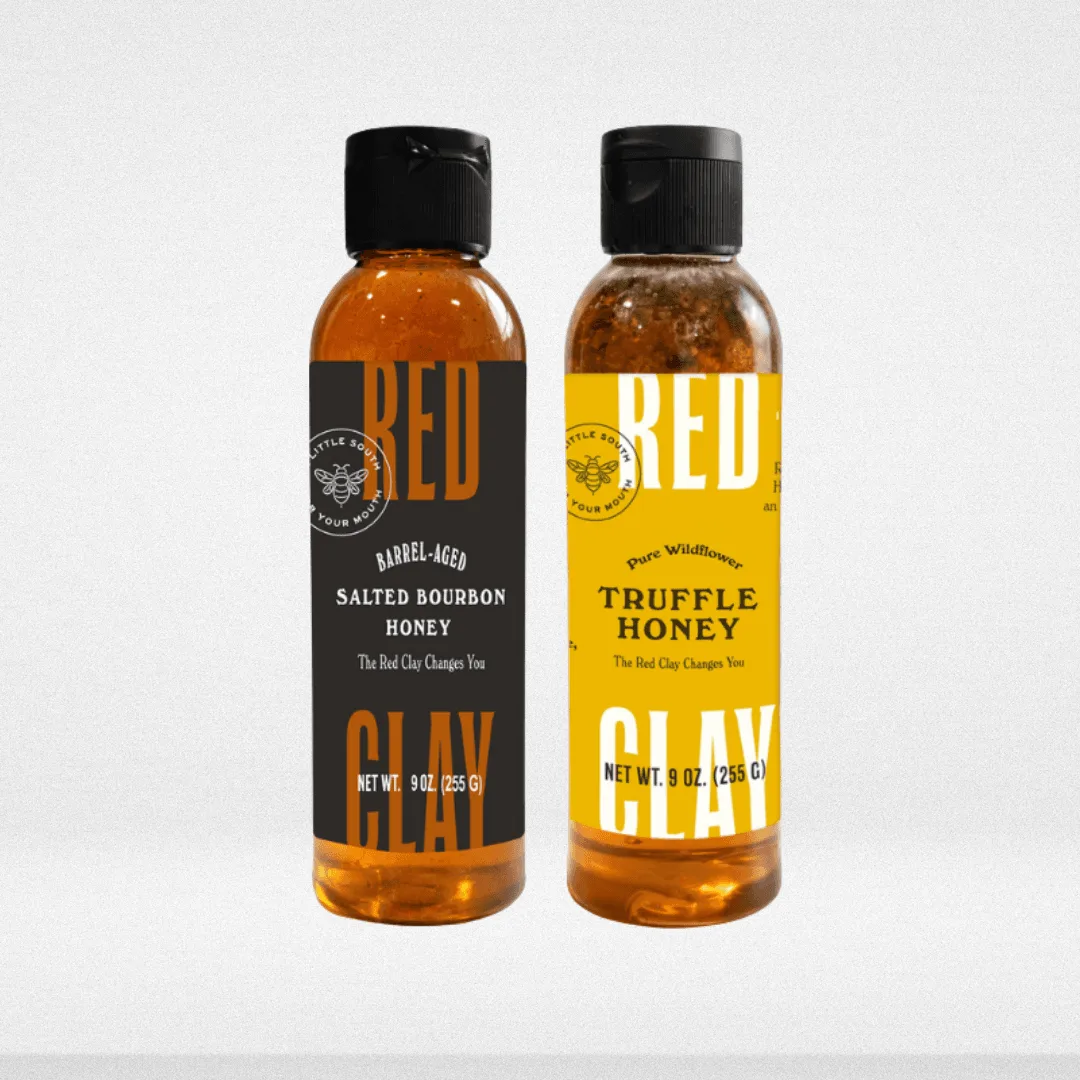
Chef's Reserve Duo: Truffle Honey and Salted Bourbon Honey