Quick answer
If you want a compact, evergreen hedge that provides privacy and autumn fruit, choose Strawberry Guava. For larger, classic guava fruit and a more traditional tree form, choose Common Guava.
Size and growth habit
Strawberry Guava grows as a dense, evergreen shrub, often reaching 2-4 meters tall and wide. Its compact habit makes it ideal for hedging or smaller gardens. Common Guava can grow into a small tree up to 6-10 meters, requiring more space and regular pruning to keep it manageable.
Fruit characteristics
Strawberry Guava produces small, round fruits with a sweet, aromatic flavor reminiscent of strawberries. The fruit is typically eaten fresh or used in jams and desserts. Common Guava yields larger, pear-shaped fruits with a milder, tropical flavor. The flesh can be white, pink, or yellow, and is often used in juices, smoothies, and preserves.
Climate and care
Both guavas thrive in warm, frost-free climates, but Strawberry Guava is slightly more cold-tolerant, handling light frosts once established. Common Guava prefers consistent warmth and may suffer in cooler coastal areas. Both need well-drained soil and regular watering during dry spells.
Trade-offs at a glance
- Strawberry Guava: Compact evergreen shrub, 2-4 m tall. Small, sweet, strawberry-flavored fruit. Good for hedging and privacy. More cold-tolerant.
- Common Guava: Small tree, 6-10 m tall. Larger, milder tropical fruit. Needs more space and warmer conditions. Classic guava flavor.
- Which one to pick?: Choose Strawberry Guava for a space-saving, edible hedge with autumn fruit. Choose Common Guava if you have room for a tree and want larger, traditional guava fruit. Consider your available space, climate, and fruit preference before deciding.
Product facts
-
Strawberry Guava: Often grown as an edible hedge, the dense evergreen foliage and compact habit provides privacy, protection from the wind and autumn fruits. This makes Strawberry Guava a dual-purpose plant: it screens your garden while yielding a harvest, perfect for smaller spaces where every plant counts.
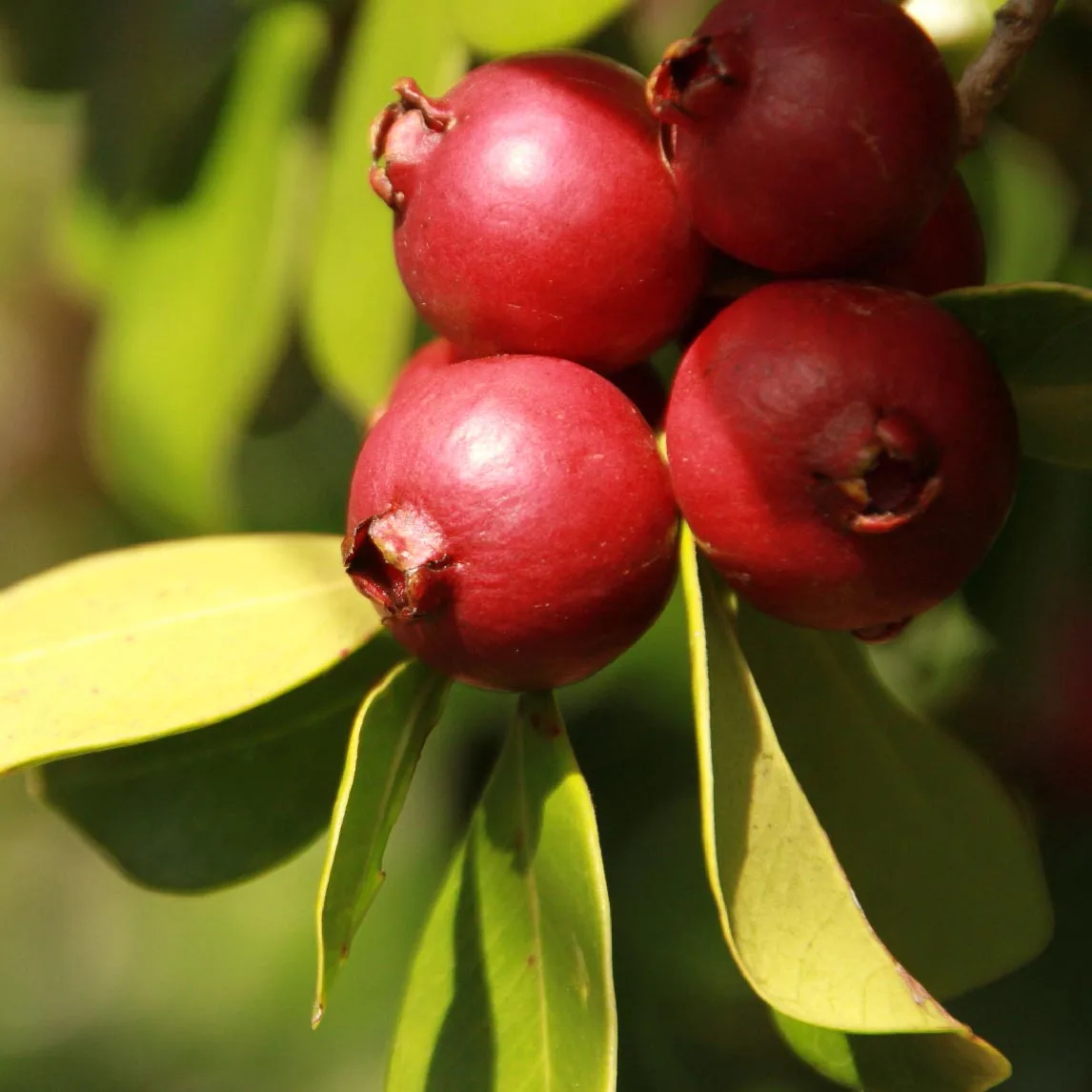
Strawberry Guava
Which guava fits your garden?
Best for
- Small gardens or courtyards where space is limited
- Gardeners who want an attractive, edible hedge with privacy benefits
- Cooler coastal areas with occasional light frosts
Not for
- Gardeners seeking large, traditional guava fruit for juicing or preserving
- Those with ample space who prefer a single specimen tree over a hedge