What you are trying to do in Stripes
Stripes is a race to line up. Each player builds a personal tableau of Stripe cards, and the first to complete a single line wins. The supplied description calls it a strategic card game built around pattern recognition, and that is the right frame: you are not collecting random cards, you are arranging them into a line while Action tiles push the game forward or disrupt other players.
The box plays 2-6 players, ages 8 and up, in about 15 minutes. That short clock matters for how you teach it. You can explain the goal in one sentence, deal, and learn the rest by playing a hand.
Stripes at a glance
-
Stripes | Family-Friendly Pattern Recognition Card Games | 2-6 Players: Number of players: 2-6; age group: 8+; time to play: 15 minutes These are the supplied player count, age, and play-time figures, so you can judge whether it fits your table before you open the box.
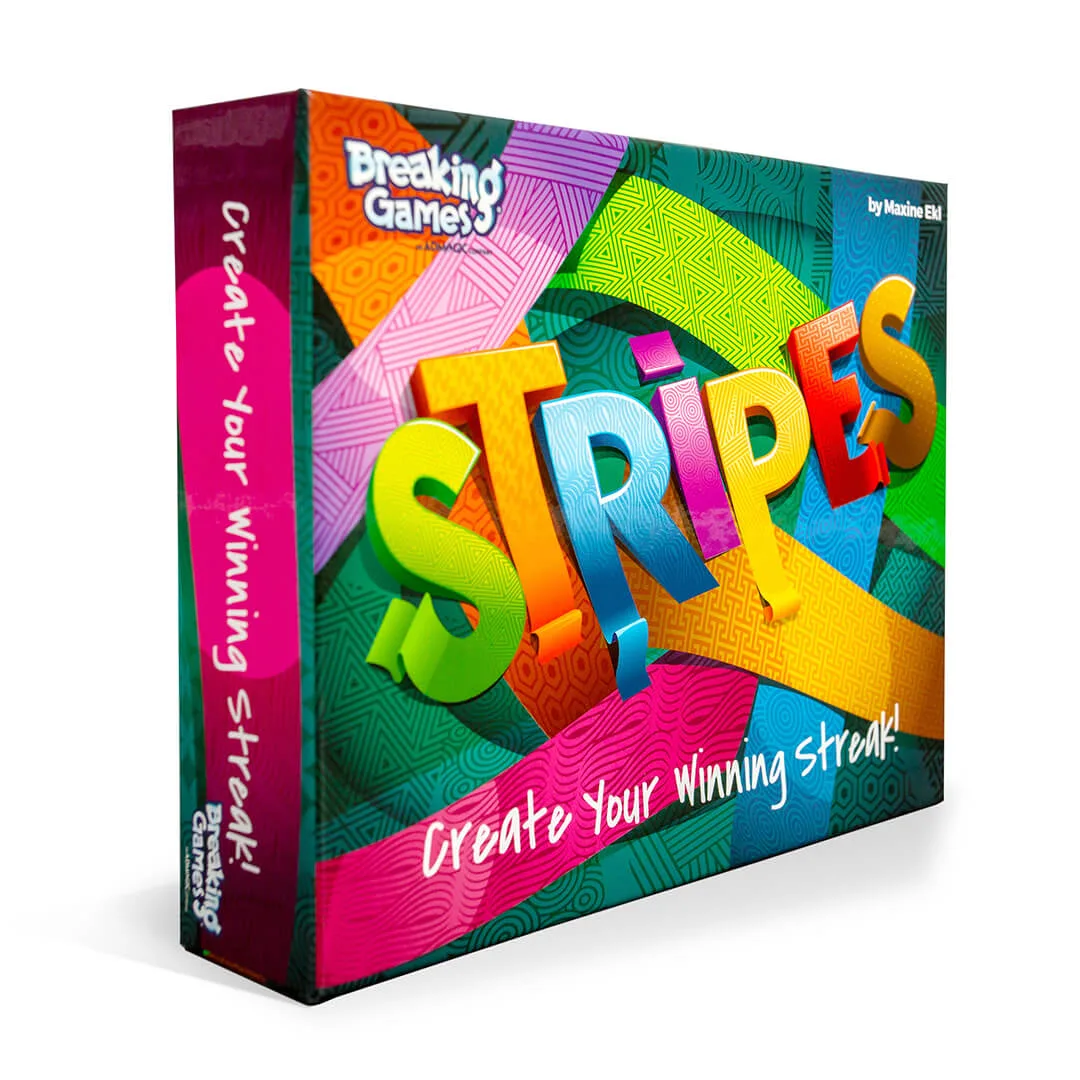
Stripes | Family-Friendly Pattern Recognition Card Games | 2-6 Players
-
Stripes | Family-Friendly Pattern Recognition Card Games | 2-6 Players: 2021 Mensa Select Winner This is a supplied recognition detail, not a promise that your group will love it; treat it as context, not a review score.
-
Stripes | Family-Friendly Pattern Recognition Card Games | 2-6 Players: Components include 60 Stripe cards, 12 Reference cards, 7 Action tiles, and 1 Starting Player token Knowing the component list helps you sort the deck before the first game and spot what each pile is for.
How to set up and start a game
The supplied product information lists the components but does not include a full setup procedure. Use the steps below as a practical starting point based on the listed pieces, and check the game rules download for exact dealing counts and tableau size before your first play.
- Sort the components: Separate the 60 Stripe cards, the 7 Action tiles, the 12 Reference cards, and the Starting Player token. Reference cards are there to be consulted, not shuffled into the main deck.
- Choose the starting player: The Starting Player token marks who begins. The supplied information does not specify how that player is chosen, so pick a method your table agrees on.
- Deal and build your tableau: Each player works toward a tableau of Stripe cards. The supplied description does not give a starting hand size, so confirm the deal from the official rules before you play.
- Keep Action tiles within reach: The 7 Action tiles are mixed in to advance your own line or disrupt others. Set them where everyone can see them.
How a turn moves the race forward
On your turn, you are working on your own line of stripes. The supplied description says players use the Stripe cards to create a tableau of stripes, then mix in Action tiles to advance further or disrupt the stripes of others. That gives you two kinds of decisions: which cards improve your line, and when an Action tile is worth spending to slow someone else down.
The race ends when one player creates a single line. Because the game is listed at about 15 minutes, turns should stay brisk. If your table is spending long stretches debating one card, you are probably overthinking a game that rewards quick pattern reading.
Pattern recognition tips that fit the supplied rules
These tips stay within what the product description supports: building a line, using Action tiles, and watching other tableaus.
- Read your line before you draw: Pattern recognition starts with knowing what your tableau already looks like. Scan your line each turn so you notice the gap you are trying to fill.
- Watch for a nearly finished line: Because the first player to create a single line wins, a tableau that is close to complete is a threat. Use Action tiles to disrupt that player rather than spreading disruption evenly.
- Spend Action tiles with a purpose: There are only 7 Action tiles in the box. Treat each one as a limited resource and ask whether it advances your line or meaningfully slows the leader.
- Keep the reference cards visible: The 12 Reference cards exist to answer rules questions at the table. Leaving them out keeps play moving and reduces rule debates.
What the supplied information does not cover
The supplied product record does not include the full rulebook text, so this guide does not invent dealing counts, exact Action tile effects, or a precise definition of a completed line. Those details matter for a correct first game. The product listing points to a game rules download, and that is the right place to confirm setup and turn specifics before you teach Stripes to a new group.
The record also does not list safety warnings or small-parts information beyond the 8+ age group. If you are buying for a household with younger children, treat the listed age as the guide and check the packaging for any additional warnings.