Quick answer
Most toddlers are ready for a stroller rider board around age 2, once they can stand steadily, follow a simple 'hold on' instruction, and weigh under the board's stated limit. Always check your stroller and board manuals for exact age, weight, and compatibility rules before attaching anything, and never let a child ride if the stroller becomes tippy or the board feels loose.
Check compatibility before you buy or attach
Not every rider board fits every stroller. The Mompush Stroller Rider Board, for example, is explicitly compatible with the Mompush Ultimate 2 and Ultimate 3 only. Clips are designed to click on and off in seconds, but only when the stroller frame matches. If you own a different Mompush model, do not force a board onto it; instead, check whether a model-specific attachment exists or contact the manufacturer. A board that does not seat fully into its clips can shift mid-ride, which is the most common cause of avoidable tip-overs.
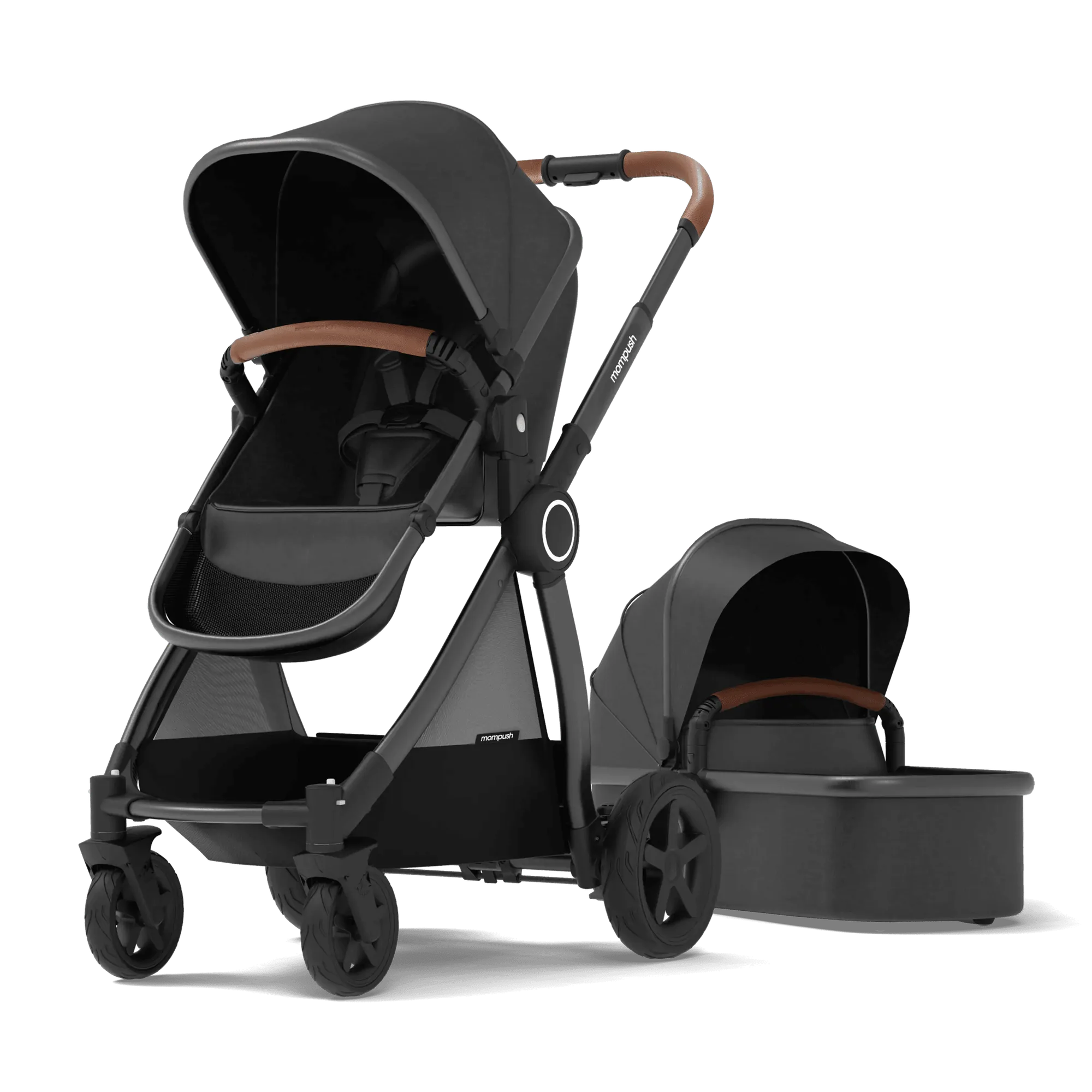
Mompush Ultimate 2
Match the board to your child's age and weight
Rider boards are generally intended for toddlers who can stand unaided and understand basic safety directions. A reasonable starting point is around age 2, but readiness matters more than a birthday. The board's weight limit is a hard ceiling, not a target. If your child is close to the limit, or if you often carry a diaper bag on the handlebar, the combined load can make the stroller rear-heavy. Use the board only for short, supervised rides and remove it when your child wants to walk.
Set up the board on a stable, flat surface
Attach the board indoors or on level ground, never on a slope or in a parking lot. Start with the stroller empty and the seat or bassinet in its normal position. Follow the board's instructions for aligning the clips, then press each side until you hear or feel a firm click. Give the board a gentle pull upward and side to side. A correctly seated board should not wobble, slide, or lift away from the frame. If it does, remove it and re-seat the clips before adding a child.
Teach the riding position before you walk
Let your toddler stand on the board while the stroller is parked. Show them where to put both feet on the non-skid surface and where to hold. The non-skid surface on the Mompush board is designed to reduce slipping, but it does not replace holding on. Practice a short stand-still session at home so your child learns the boundaries: stay on the board, keep both hands on the stroller, and sit down or get off when you say stop. This turns the first real walk into a familiar routine rather than a new game.
Adjust your pushing and turning habits
With a rider on the back, the stroller's center of gravity shifts rearward. Push with both hands and keep your speed to a normal walking pace. Make wider, slower turns, and avoid curb drops, stairs, and uneven pavement while your child is aboard. The Durable Smooth Glide wheels on the Mompush board are built to keep the push easy and the ride smooth, but they still need a steady hand. If you feel the front wheel lifting or the handlebar pulling up, stop and have your child step off.
Know when to remove the board
Take the board off before folding the stroller for travel or storage, and before letting your child walk alongside. Remove it if the stroller will be used on stairs, escalators, or rough trails. Also remove it when the board is wet, since water can reduce traction on the non-skid surface. A quick clip-off keeps the stroller lighter and prevents the board from catching on doors or car trunks. Store the board flat and check the clips for cracks or looseness before each reattachment.
Rider board setup steps
- Confirm your stroller model: Check that your stroller is a Mompush Ultimate 2 or Ultimate 3 before attaching the rider board. Common mistake: assuming a universal fit and forcing clips onto a different frame. If your model is not listed as compatible, do not use the board.
- Inspect the board and clips: Look for cracks, bent clips, or missing parts. Wipe the non-skid surface dry if it is wet. Common mistake: skipping this check after the board has been stored or bumped around. A damaged clip can release mid-ride, so replace or repair before use.
- Attach on flat ground with the stroller empty: Align the clips and press until each side clicks firmly into place. Common mistake: attaching the board while a child is already in the stroller seat or standing nearby. Pull up and side to side on the board; it should not move.
- Test the board without a rider: Push the empty stroller a few feet and make a gentle turn. Feel for wobble, rattling, or a front wheel that feels light. Common mistake: heading straight outdoors without a test push. If the stroller feels tippy, remove the board and re-check compatibility and clip seating.
- Do a parked practice stand: With the stroller parked, have your toddler step onto the board, hold on with both hands, and stand still for a few seconds. Common mistake: starting to walk before your child understands where to put their feet and hands. Only begin walking once your child can stand steady and follow a simple stop instruction.
- Ride with adjusted habits: Walk at a normal pace, keep both hands on the handlebar, take wide turns, and avoid curbs, stairs, and rough ground while your child is on the board. Common mistake: pushing one-handed or turning sharply as if no one is on the back. Stop immediately if the front wheel lifts or the handlebar pulls upward.
- Remove and store after each use: Clip the board off before folding the stroller or letting your child walk. Store it flat and dry. Common mistake: leaving the board attached during travel or storage, which can bend clips or catch on obstacles. A quick clip-off keeps the stroller lighter and the board ready for the next ride.
Product facts
- Stroller Rider Board: Compatible with Mompush Ultimate 2 and Ultimate 3 ONLY; clips on and off in seconds. If you own a different stroller model, this board will not attach safely, so verify your model before buying.
- Stroller Rider Board: Features Durable Smooth Glide wheels and a non-skid surface. Smooth wheels keep the push easy for you, while the non-skid surface helps your toddler keep their footing during the ride.