Quick Answer
To build stable bridges and skyscrapers with the Thames & Kosmos Structural Engineering kit, focus on precise alignment, balanced load distribution, and following the step-by-step instructions carefully—avoid rushing or improvising connections.
Why Precision Matters in Model Building
In structural engineering, small errors at the base can cause big problems at the top. The same applies to your model builds. If you skip aligning pieces or force connections, you'll end up with a wobbly structure that may collapse during testing.
The Thames & Kosmos Structural Engineering kit is designed to teach real-world principles, so the way you assemble parts matters as much as the final look. Taking time to ensure each joint is snug and each beam is straight will make your builds stronger and more reliable.
The Tradeoff Between Speed and Stability
It's tempting to race through the instructions, especially when you're excited to see the finished bridge or skyscraper. But rushing often leads to misaligned pieces and weak connections. The tradeoff is clear: a few extra minutes during assembly can save you from rebuilding the entire structure later.
Remember that the kit's models are not just toys—they're experiments. Each build is an opportunity to test how real structures handle forces. Patience during assembly pays off with a model that stands tall and performs as intended.
Diagnose and Fix Common Build Mistakes
- Symptom: Wobbly or leaning structure: If your bridge or skyscraper leans or wobbles, the likely cause is uneven base alignment or loose connections. Corrective action: disassemble the base and reassemble, ensuring every piece is flush and level before adding upper levels. Check the base alignment before proceeding to higher levels.
- Symptom: Pieces don't fit together: If pieces seem too tight or too loose, you may be using the wrong parts or forcing connections. Corrective action: review the instruction diagram to confirm part numbers and orientation. Gently adjust alignment rather than forcing. When a piece doesn't fit, stop and verify the part number and orientation.
- Symptom: Structure collapses during testing: A collapse often results from uneven load distribution or missing cross-bracing. Corrective action: add or adjust cross-braces to distribute weight evenly, and ensure the load is centered. If the structure fails repeatedly, consider redesigning the bracing pattern.
About the Kit
-
Structural Engineering: Bridges & Skyscrapers: The Structural Engineering: Bridges & Skyscrapers kit is designed to teach how bridges span huge distances and how skyscrapers stay standing using physics and structural engineering knowledge. Understanding these principles helps you build models that not only look right but also demonstrate real structural behavior, making your builds more rewarding and educational.
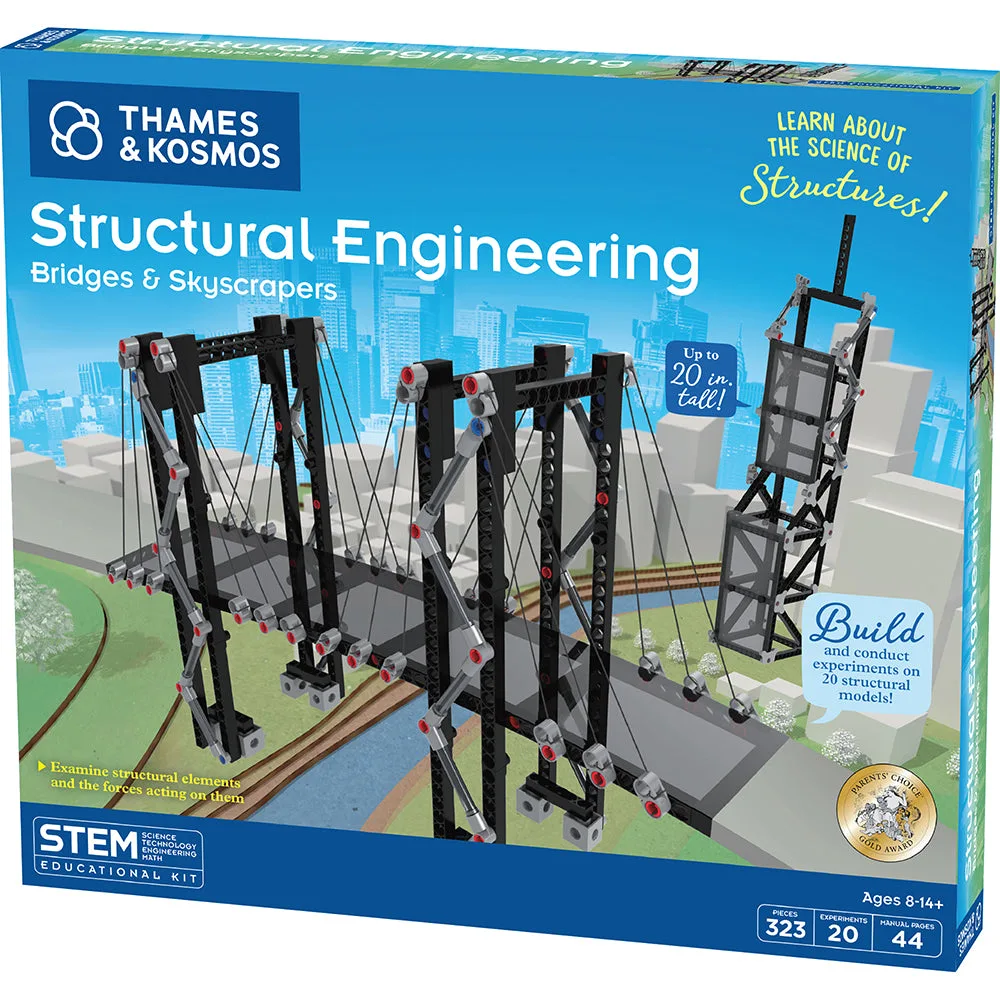
Structural Engineering: Bridges & Skyscrapers