What to Look for in a Magnetic Whiteboard for Early Learning
A magnetic whiteboard can be a simple, effective tool for introducing letters and numbers to young children. Unlike digital tablets or paper worksheets, a board lets a child physically move pieces around, which can make abstract concepts like spelling and counting feel more concrete.
When choosing a whiteboard for classroom or home use, the main factors are the size of the board, the quality of the magnets, and whether it comes with a complete set of letters and numbers. A board that is too small may frustrate a child who wants to build longer words, while a board that is too large may be hard to store. Look for a set that includes both uppercase and lowercase letters, as well as numbers, so the child can practise a range of skills.
What the Student Magnetic Whiteboard Offers
-
Student Magnetic Whiteboard with Letters and Numbers: The Student Magnetic Whiteboard comes with a full set of colourful magnetic letters and numbers, designed for early literacy and numeracy learning. Having both letters and numbers in one set means you don't need to buy separate kits. The colour-coding can also help children group or sort characters during play.
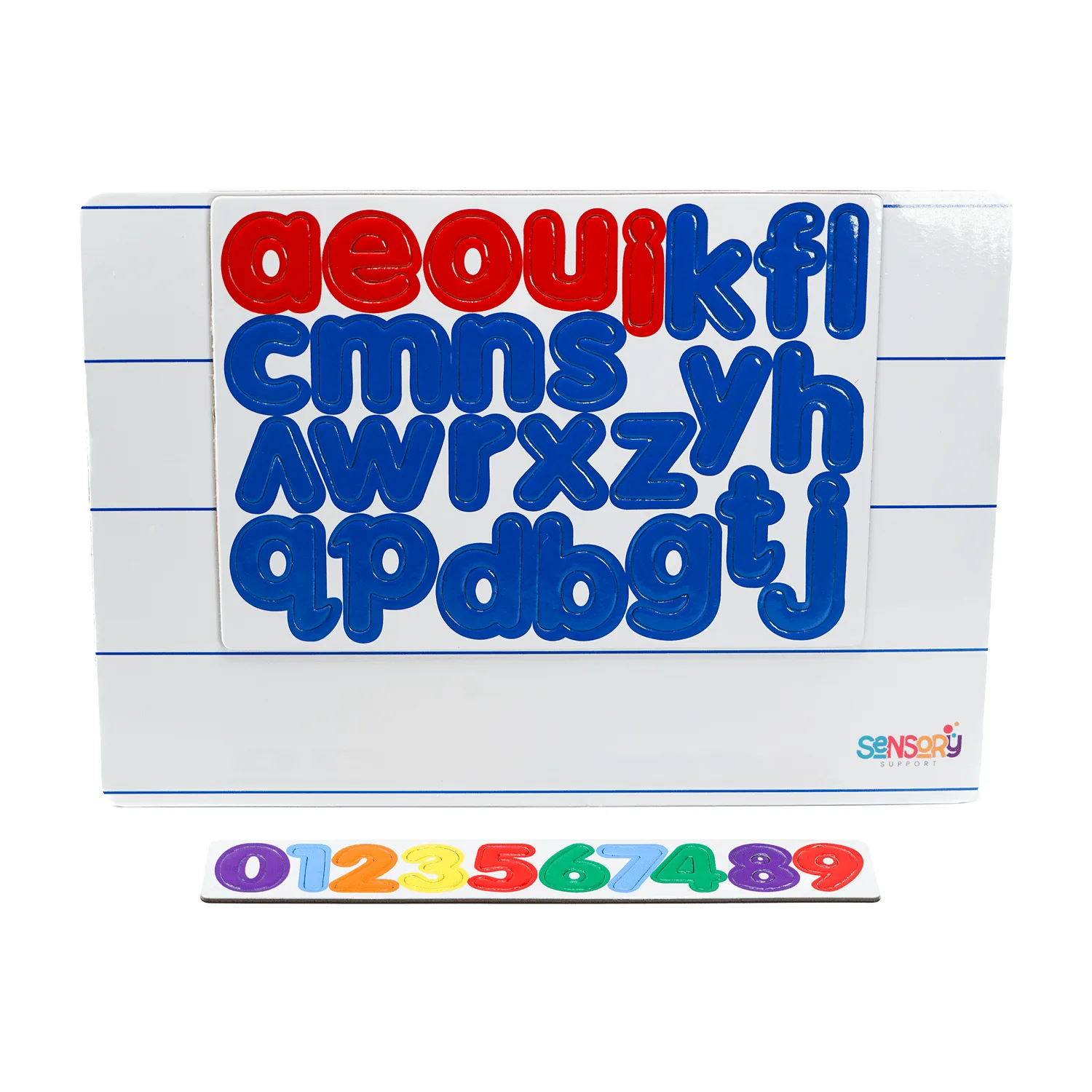
Student Magnetic Whiteboard with Letters and Numbers
-
Student Magnetic Whiteboard with Letters and Numbers: The board is intended to be used flat on a table or propped up like a mini easel, giving flexibility for different learning setups. This versatility makes it suitable for individual desk work or small-group activities. A teacher can place it on a table for a focused lesson or stand it up for a quick demonstration.
How the Board Supports Multi-Sensory Learning
Children learn best when they can see, touch, and move. The magnetic whiteboard encourages kids to build words and number patterns with their hands, which strengthens fine motor skills while reinforcing phonics and number awareness. This hands-on approach is especially helpful for students with dyslexia, ADHD, or other learning differences, as it provides a tactile way to engage with abstract symbols.
For example, a child can physically slide a letter 'b' next to an 'a' and a 't' to form 'bat', then swap the first letter to make 'cat'. This kind of manipulation makes the connection between sounds and letters more obvious than simply writing them on paper.
Practical Ways to Use the Whiteboard in a Classroom or Home
- Spelling names and sight words: Place the board flat and let the child arrange magnetic letters to spell their name or common sight words like 'the', 'and', 'is'.
- Practising number sequences: Use the magnetic numbers to count from 1 to 10, or create simple addition problems like '2 + 3 = ?' and let the child find the answer.
- Building CVC words: Consonant-vowel-consonant words (e.g., 'dog', 'sun') are a staple of early reading. The magnetic letters allow a child to try different combinations until they find a real word.
Care and Compatibility Considerations
The board wipes clean with a soft cloth after use, which makes it easy to maintain even with frequent handling. If you plan to use dry-erase markers on the board, test a small area first to ensure the surface cleans properly.
The set is designed for young children, but the supplied information does not list a specific age range or safety certifications. If you are purchasing for a very young child, check for small parts that could be a choking hazard and supervise play accordingly.
What the Supplied Information Does Not Cover
The product record does not include the exact dimensions of the board, the number of letters and numbers in the set, or the material of the magnets. These details may be available on the product packaging or the manufacturer's website. If precise size or quantity is critical for your setting, contact the seller before buying.