Start with the earring’s scale, not the hairstyle
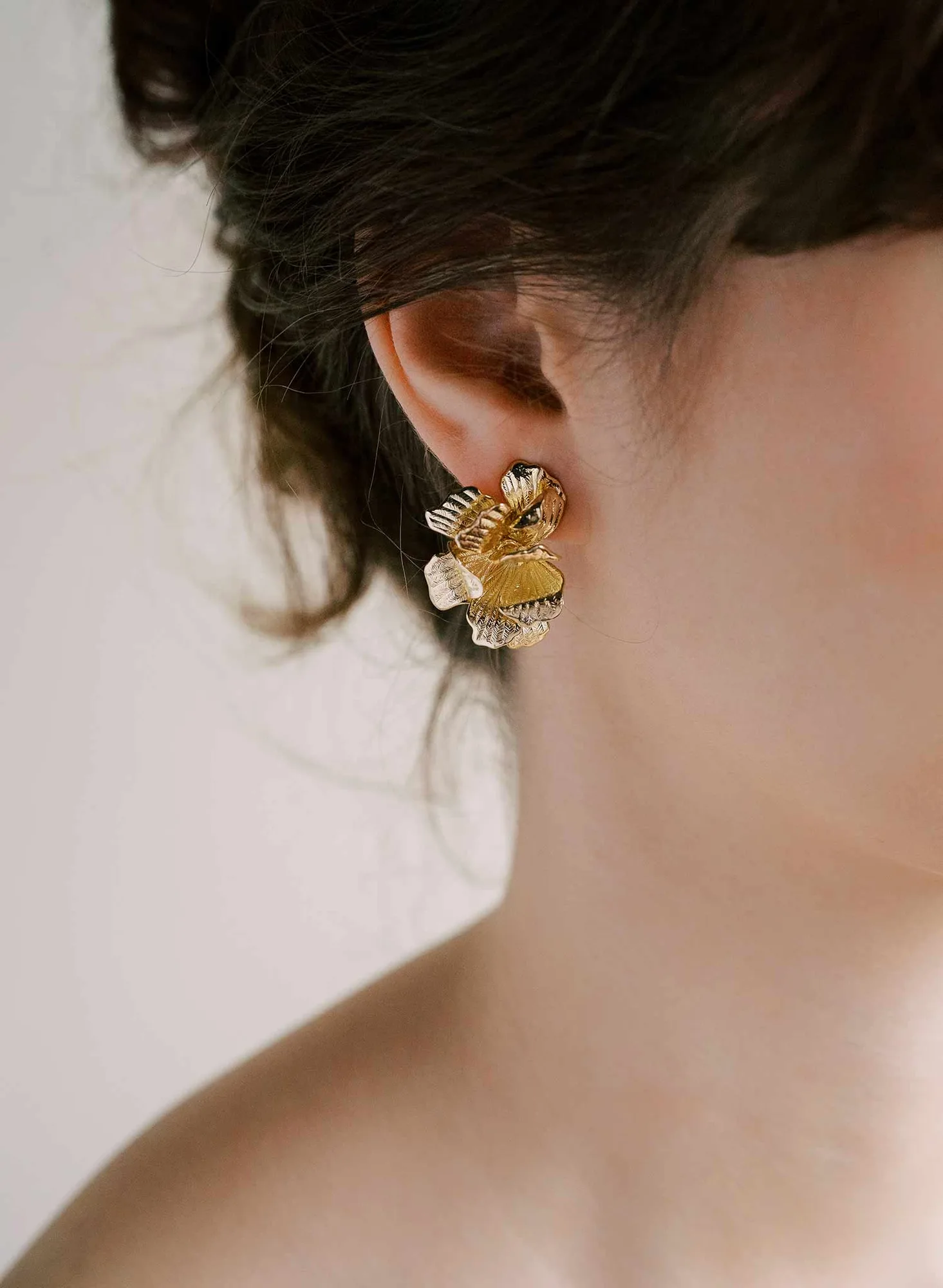
The Abstract Gilded Magnolia earrings measure about 1 1/2 inches long and 1 inch wide. That makes them a small bridal earring: present enough to catch light, compact enough to stay out of the way of a veil, updo, or high neckline. Before you plan the rest of your look, treat those dimensions as your anchor. A small earring gives you room to add detail elsewhere—a headpiece, a veil with trim, or a dress with a busy neckline—without the face feeling crowded.
Because the design is abstract and floral rather than a precise literal bloom, it reads as texture from a distance and as a gilded petal detail up close. That dual nature is useful: it works with romantic, modern, and minimalist wedding styles, provided you keep the surrounding elements from competing with it.
The numbers behind the styling
-
Abstract gilded magnolia bridal earrings, small - Style #2542: Earring measures approximately 1 1/2 inches long and 1 inch wide. These dimensions define the earring as a small style. Use them to judge whether your hairstyle, veil, and neckline leave enough visible space for the earring to register.
Abstract gilded magnolia bridal earrings, small - Style #2542
-
Abstract gilded magnolia bridal earrings, small - Style #2542: 14K gold plated brass, handmade in the studio, available in gold. The warm gold tone and handmade construction set the earring’s character. Match it with other warm-toned or neutral details rather than introducing a second strong metal color near the face.
A styling order that keeps the earring visible
Work from the earring outward. This sequence prevents you from falling in love with a hairstyle or veil that hides the detail you paid for.
- 1. Choose the hairstyle with the earring’s width in mind: An updo or half-up style keeps the ear and jawline clear, which suits a small earring. If you wear your hair down, keep the front sections tucked or pinned back so they do not brush against the 1-inch-wide floral face. The earring does not need a voluminous style to work; it needs a clear line of sight.
- 2. Set the veil or headpiece behind the earring: Place the veil or headpiece so its comb or anchor sits behind the ear rather than directly over it. A small earring can be swallowed by a low, wide veil placement. If your veil has a blusher, check that the blusher falls in front of the earring, not across it, when the blusher is forward.
- 3. Match the neckline to the earring’s scale: A small earring pairs naturally with open necklines—sweetheart, V-neck, portrait, or strapless—because the exposed skin gives the gold petal shape room to read. With a high or heavily embellished neckline, the earring can become a quiet accent rather than a focal point. That is a legitimate choice; just decide which effect you want before you commit.
- 4. Add one more gold detail, then stop: The earrings are described as a one-of-a-kind gold detail that brings sparkle and life to an ensemble. Let them be the gold moment near your face. A gold hairpin or a warm-toned headpiece can echo them, but a second large gold earring, a gold necklace, and a gold headpiece together will flatten the effect. Choose one echo, not three.
- 5. Do a final check in the mirror with the veil in place: Turn your head slowly left and right. The earring should stay visible from the front and three-quarter angles. If it disappears, adjust the hair or veil placement rather than swapping the earring immediately—small adjustments often solve the problem.
When the small size is the right call—and when to size up
The small magnolia earring is the right choice when you want a refined, romantic detail that does not compete with a veil, a statement headpiece, or an elaborate dress. It also suits brides who prefer jewelry they can wear again after the wedding: the abstract floral shape is not so formal that it only works on the day.
The catalog itself notes that if you want more drama, you can try style 2546 for a larger look. That is a useful honest trade-off. A larger version will read more strongly in photographs and can hold its own against a fuller veil or a more dramatic neckline. The small version will always be the more versatile, lower-risk choice. Neither is better; they solve different styling problems.
Quick styling checks before the wedding day
- Photograph the earring with your final hairstyle: Take a phone photo from the front and side in the same lighting you expect at the ceremony. Small earrings can look different in a photograph than in the mirror.
- Check the earring against your veil’s trim: If your veil has pearl, crystal, or lace trim near the ear, make sure the gold petals do not blend into a similarly busy texture. Contrast in shape helps both details.
- Decide on earring backs before the day: The supplied information does not confirm the back style or whether additional backings are included. Check your pair when it arrives and plan accordingly.
- Keep the gold tone consistent near your face: The earrings are gold. If you wear a headpiece or hairpins with a different metal tone, separate them enough that the mismatch looks intentional rather than accidental.