Quick answer
Style a brutalist dining chair by treating its hard, angular form as the anchor and adding warmth around it — not on it. Keep the chair itself bare, then soften the room with wood, linen, a rug and low warm light.
Why brutalist chairs feel cold — and what actually warms them
A brutalist chair reads cold because its surfaces are hard, its lines are geometric and its color is usually neutral or grey. Painting it or draping it in fabric fights that character. Warmth comes from contrast: matte stone or concrete tones next to natural wood grain, woven fibers and soft textiles in the same room.
The most common mistake is overcorrecting. A single bright cushion, a floral tablecloth and a patterned rug around one raw chair can make the chair look like an accident rather than a choice. Pick two warm materials — for example oak and undyed linen — and repeat them across the dining area.
Where a brutalist chair works best — and where it doesn't
This approach suits dining rooms with at least one natural texture already present: a wooden floor, a plaster wall, a woven pendant or a linen curtain. It also works in open-plan spaces where the chair can be seen from a living area, because the contrast reads across the room.
Skip the look if your dining room is already visually busy with dark heavy furniture and strong patterns. A raw concrete-look chair needs breathing room; in a crowded room it becomes another hard edge. In that case, choose a lighter table and clear the walls before adding the chair.
Step-by-step: warming up a brutalist dining chair
- 1. Measure the delivery route first: Before you style anything, confirm the chair fits through your entrance, stairwell and elevator, and that the dining spot has clearance for the chair to pull out. Large furniture can fail on doorway width even when the room itself is big enough. If the route is tight, resolve it before delivery — rearranging after the chair arrives is harder.
- 2. Choose a warm wood dining table: Pair the chair with a table in oak, ash or walnut rather than glass or black metal. The grain gives the eye something soft to rest on next to the chair's hard surface. Keep the table finish matte; high gloss adds another cold reflection.
- 3. Add one woven or linen textile at table height: Use a linen runner, woven placemats or a simple cotton tablecloth in oatmeal, clay or off-white. Keep it plain — pattern competes with the chair's geometry. Limit yourself to one textile family at the table so the chair stays the focal point.
- 4. Ground the chair with a flat-weave rug: Place a wool or jute flat-weave rug under the dining set in a warm neutral. A rug softens sound and visually connects the chair to the floor. Check that the rug is large enough for all chair legs to stay on it when pulled out.
- 5. Light the room low and warm: Use a pendant or wall light with a warm bulb (around 2700K) at dining height, and avoid cool white downlights directly above the chair. Warm light flatters grey and concrete tones instead of making them look clinical. Dim the light for evening meals; bright overhead light is what makes raw surfaces feel harsh.
- 6. Repeat one warm material elsewhere in the room: Echo the wood or linen in a shelf, curtain or frame so the chair looks intentional. Mixing brutalist furniture works when one material appears at least twice. If a warm element appears only once, it reads as a mistake rather than a choice.
Product note
-
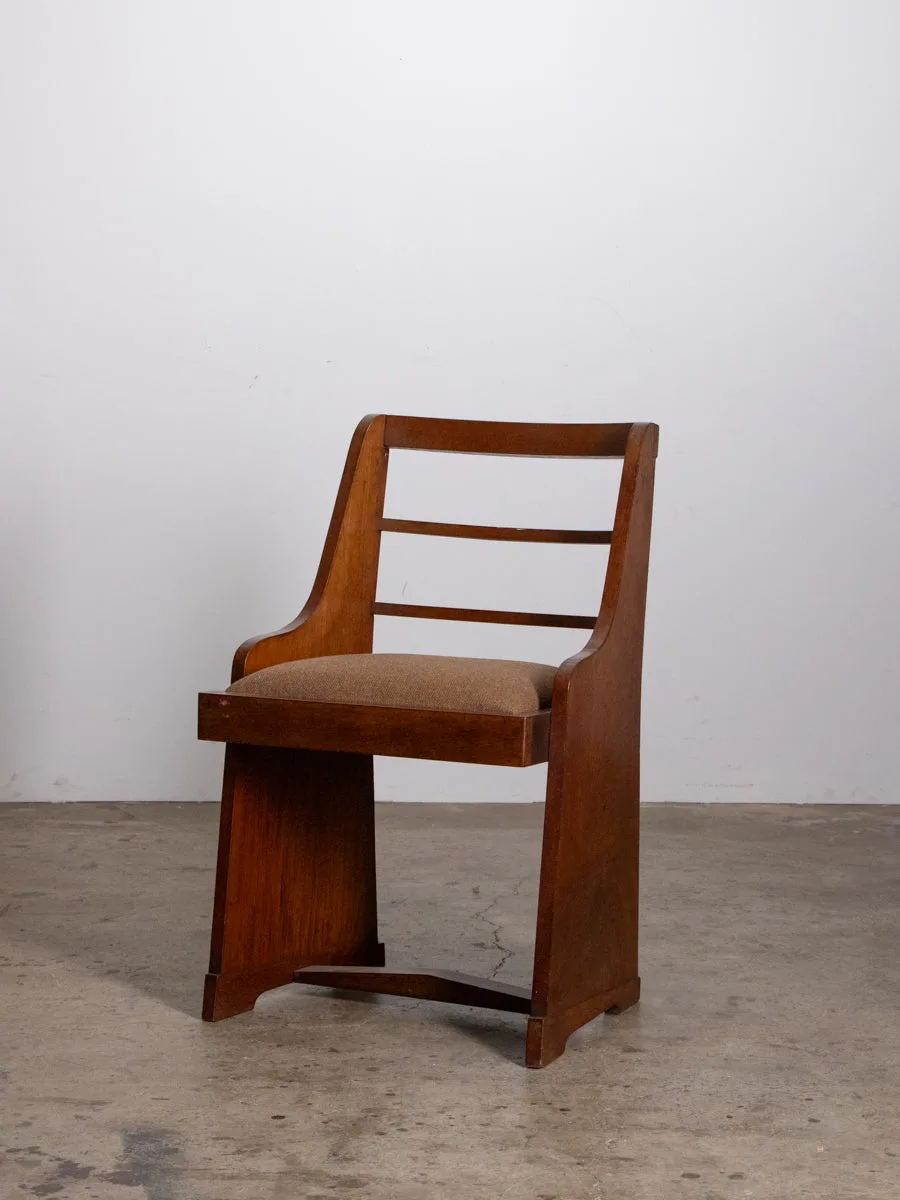
ブルータリズム ダイニングチェア: The ブルータリズム ダイニングチェア is delivered by two staff who unpack, install and remove the packing materials. You can plan the room around the chair's final position without handling a heavy piece yourself, so measure the route before delivery day.
ブルータリズム ダイニングチェア