Start with the two faces, not the room
The Plaid Double Jeu is a double-face throw: one side is Aubépine, the other is Écru. That single design fact should drive every styling choice. Instead of treating the throw as a fixed colour, decide which face you want to lead in the room, then use the other as a quiet contrast.
Because both sides are 100% wool, the throw brings the same soft handle whichever face you show. The change is visual, not textural. That makes it a practical piece for seasonal switching or for pairing with bedding and cushions you already own.
What the catalog confirms about the Plaid Double Jeu
-
Plaid Double Jeu - Aubépine/Ecru: Double face: Face A is Aubépine, Face B is Écru. You can flip the throw to change the colour balance without buying a second blanket.
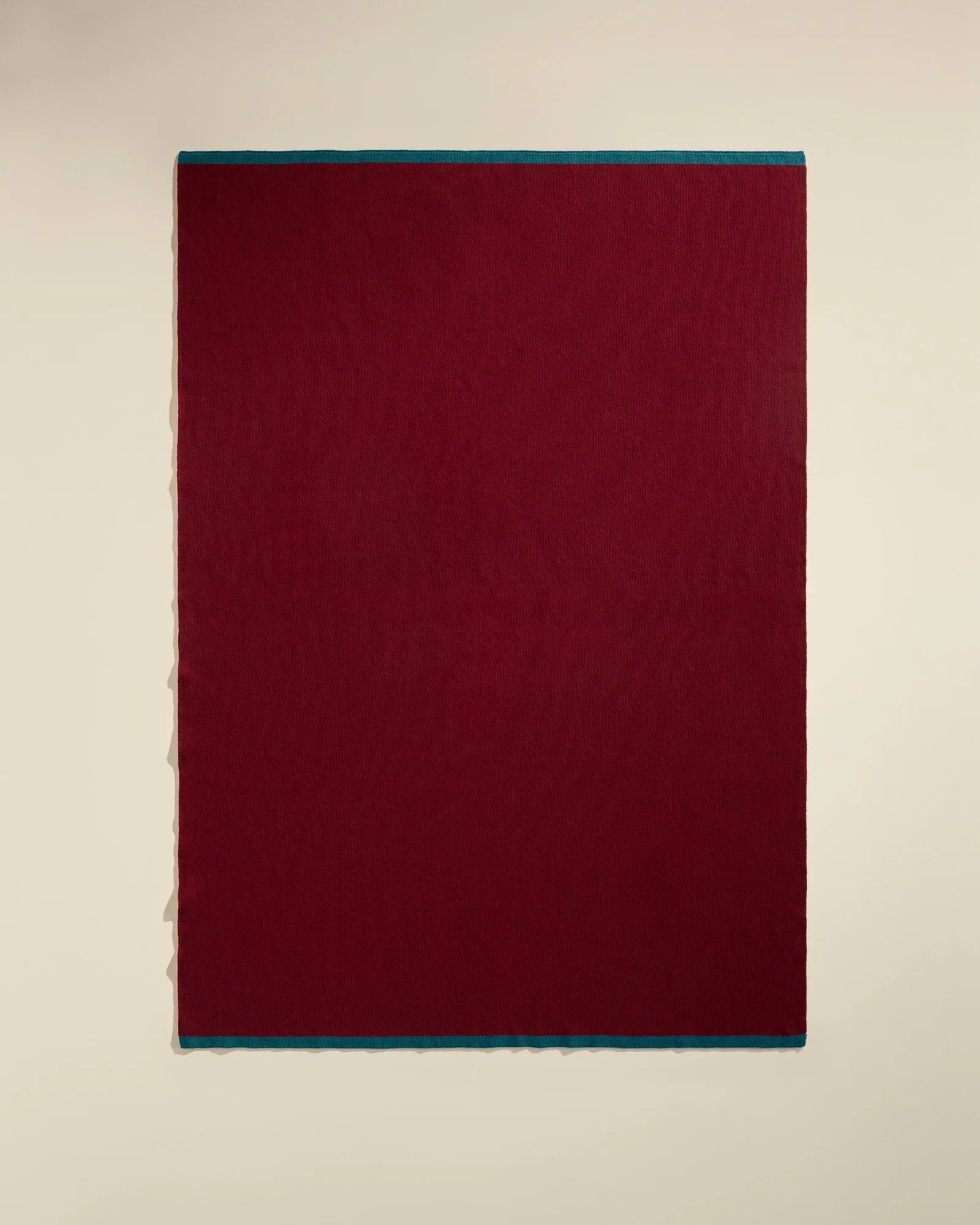
Plaid Double Jeu - Aubépine/Ecru
-
Plaid Double Jeu - Aubépine/Ecru: Both sides are 100% wool. The softness is consistent across both faces, so your choice is purely about colour and contrast.
-
Plaid Double Jeu - Aubépine/Ecru: Available size: 130x170 cm. This size works as a sofa throw or a folded layer on a bed; check it against your furniture before you plan the drape.
-
Plaid Double Jeu - Aubépine/Ecru: Made in Portugal. Useful context if origin matters to your purchase decision.
Draping the throw on a sofa
A sofa throw should look relaxed but intentional. Work with the 130x170 cm size rather than fighting it.
- Choose the face that suits the moment: Show Aubépine when you want a stronger colour note; show Écru when you want the throw to blend into a light sofa or neutral room.
- Drape over one arm or the back: Fold the throw in half lengthwise, then lay it over the sofa arm or back so both faces are visible at the fold. This is where the double-face design does its best work.
- Leave the ends uneven: A slight offset looks more casual than a perfectly centred throw. Let one end fall longer to avoid a stiff, showroom look.
- Keep the seat clear: The throw is for warmth and contrast, not for covering the entire sofa. Leave most of the seat free so the sofa still reads as a place to sit.
Layering the throw on a bed
On a bed, the throw works as a folded band of colour rather than a full cover. The 130x170 cm size is best used across the lower third or folded at the foot.
- Fold to the width you need: Fold the throw in thirds or halves so it reads as a structured layer. A narrow fold shows the Aubépine face; a wider fold lets more Écru show.
- Place it across the foot of the bed: This keeps the sleeping area clear and adds a colour accent where the eye lands. It also makes the throw easy to grab on a cold evening.
- Flip one corner for contrast: Turn back one corner so the opposite face appears. This is the simplest way to show both Aubépine and Écru at once without adding another textile.
- Match the face to your bedding: If your bedding is already light, lead with Aubépine for contrast. If the bed is darker or more saturated, show Écru to lighten the composition.
Choosing between Aubépine and Écru
The catalog gives no colour descriptions beyond the names, so judge the faces in person or against the product image. Use these practical prompts to decide which side to lead with.
- Show Aubépine when the room needs a defined accent: Aubépine is the named colour face. Lead with it if your sofa or bedding is pale and you want the throw to register as a deliberate layer.
- Show Écru when you want a softer, quieter layer: Écru is the lighter companion face. It suits rooms where the throw should blend rather than contrast, or where you want the wool texture to carry the interest.
- Use both faces in one arrangement: A fold or turned-back corner is enough. You do not need to split the throw into two separate pieces to get the double-face effect.
What to check before you commit to a placement
The supplied record confirms the 130x170 cm size but does not give care instructions, weight, or precise drape behaviour. Before you settle on a styling plan, measure the sofa arm or the foot of your bed to confirm the throw will sit as intended. If you need a specific cleaning method, check the label on the throw when it arrives rather than assuming a routine.
The record also does not confirm colour-fastness or how the wool will wear over time. Treat the two faces as a styling tool first, and keep care decisions guided by the product label.