What Makes Sumo in Blanket Different
Sumo in Blanket looks like a simple bedtime story turned into a puzzle. A sleepy sumo wrestler has only a tiny blanket to keep warm, and your job is to tuck him in completely. The puzzle consists of just two pieces: a 5-inch square bamboo board and a hand-sewn fabric bag made from vintage Japanese cloth.
Despite its minimal parts, this is a Level 4 Advanced puzzle. The goal sounds straightforward—cover the bamboo square entirely with the bag—but the supplied information confirms that looks can be deceiving. It's not easy, and discovering the proper method is part of the fun.
What You Get in the Box
-
Sumo in Blanket: Each puzzle includes a 5-inch square bamboo board and a hand-sewn blanket (bag) from vintage Japanese fabric of a random design. The random fabric design means every copy is unique, adding a collectible element. The bamboo board gives the puzzle a natural, tactile feel that differs from plastic or metal puzzles.
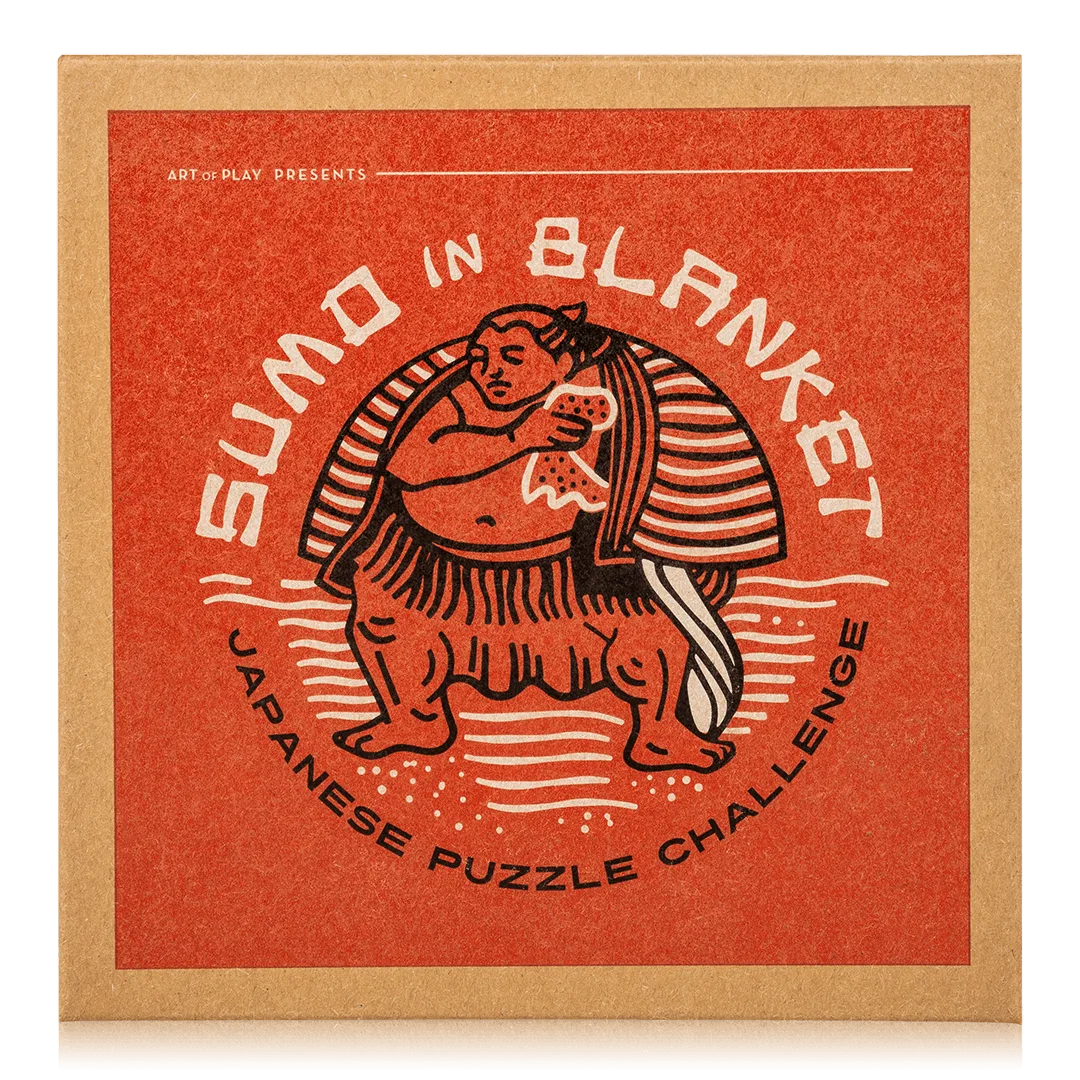
Sumo in Blanket
-
Sumo in Blanket: Created by Iwahiro (Hirokazu Iwasawa), the designer behind the award-winning 'Square in Bag' puzzle. This pedigree tells you the puzzle comes from a respected puzzle inventor known for clever, minimalist designs. It's a reimagining of a proven concept.
-
Sumo in Blanket: Puzzle difficulty rated Level 4, Advanced. The difficulty rating sets clear expectations. This is not a casual distraction; it's a deliberate challenge for puzzle enthusiasts who enjoy figuring out non-obvious solutions.
Who This Puzzle Suits Best
Sumo in Blanket is ideal for someone who enjoys a compact, portable brain teaser they can carry in a pocket or bag. The two-piece design makes it easy to pull out during a commute, at a coffee shop, or as a conversation starter at a gathering.
It also works well as a small gift for a puzzle lover, especially one who appreciates whimsical themes and natural materials. The vintage Japanese fabric adds a handmade, artistic touch that sets it apart from mass-produced puzzles.
However, if you prefer puzzles with many pieces or a clear step-by-step solution, this might frustrate you. The challenge comes from figuring out a method that isn't obvious, and the catalog does not include instructions beyond the goal.
Practical Trade-offs to Consider
The puzzle's biggest strength—its simplicity—is also its limitation. With only two pieces, the solving process is short once you discover the trick. You might solve it in minutes or spend hours, but it's not a multi-session project.
The random fabric design means you can't choose the pattern. If you're particular about aesthetics, this could be a minor disappointment. The catalog confirms the fabric is from vintage Japanese cloth, so each piece is unique.
At a catalog price of $12.78 (compared to $18.00), it's an affordable entry into designer puzzles. The price reflects the handcrafted nature and the reputation of the designer, not the number of pieces.