Quick answer
Choose Sumoku if you want a quiet, puzzle-like number game that works for solo play or a small group and rewards planning. Choose Slam Words if you want a loud, fast party game where players race to form words and the cup keeps moving. They solve different problems: Sumoku is a number tile game for focused play, while Slam Words is a word game for family gatherings and adults who want quick rounds.
How Sumoku plays
Sumoku is a crossword-style game with numbers. You roll a die to get a target number, then add tiles so each line adds up to a multiple of that number. Connect the tiles and you have a Sumoku. The box says it can be played five different ways and supports 1 to 6 players, so it scales from solo puzzling to a full table.
How Slam Words plays
Slam Words is a party game that fits in the palm of your hand. Shake the cup, slam it shut, and reveal three letters. Players race to find a word using those three letters, then pass the cup. If you cannot keep up, you are out, and the last player standing wins. It is built from sturdy plastic and flexible silicone, so the cup survives repeated slamming.
What the two games ask of players
Sumoku asks for arithmetic and spatial thinking: you scan for multiples, plan where tiles connect, and adjust when the die changes the target. Slam Words asks for vocabulary and speed under pressure: you scan three letters, shout a word, and pass the cup before you freeze. One rewards patience, the other rewards quick recall.
Player count and pace
Sumoku supports 1 to 6 players and moves at whatever pace the table sets. A solo player can work through a puzzle without waiting. Slam Words needs at least a few players to create the pass-the-cup tension, and rounds are short because elimination trims the group quickly. If you have a large party, Slam Words keeps everyone involved; if you have two or three focused players, Sumoku gives you more depth per turn.
Age and reading demands
Sumoku is number-based, so it does not require reading beyond the rules. Slam Words is word-based, so it depends on spelling and vocabulary. Match It! - Numbers is a separate option for younger children learning numerals and counting, but it is not a substitute for either game. If your group spans ages, Sumoku is easier to teach to mixed abilities because the math is visible on the tiles.
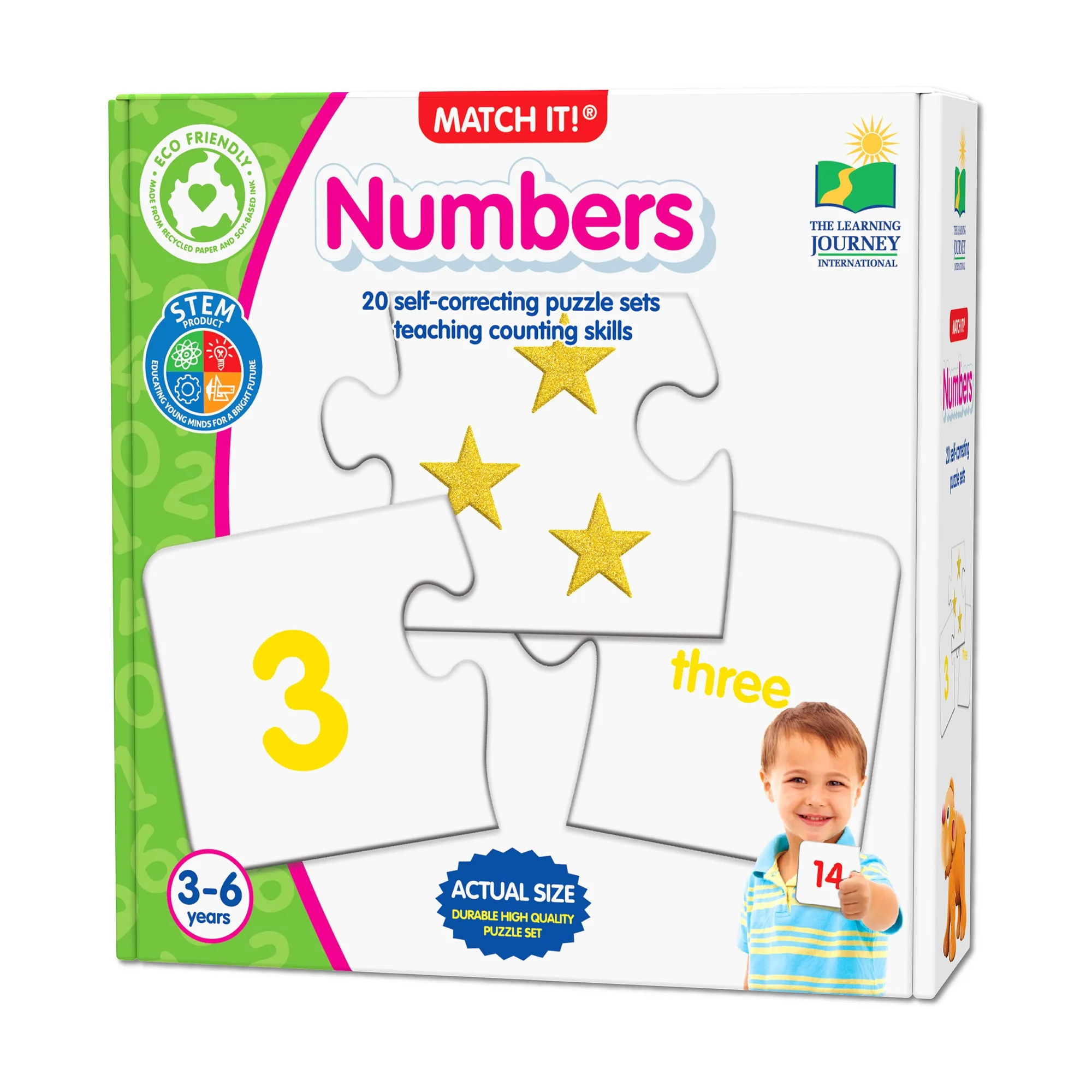
Match It! - Numbers
Trade-offs at a glance
- Depth vs. speed: Sumoku trades speed for planning: you think through multiples and connections before placing tiles. Slam Words trades depth for pace: you react to three letters and pass the cup immediately. Pick Sumoku for a slower, thoughtful table; pick Slam Words for a loud, fast room.
- Solo vs. group: Sumoku supports 1 to 6 players, so it works alone or with a small group. Slam Words needs multiple players to create the pass-the-cup tension and elimination rounds. If you often play alone, Sumoku is the safer buy.
- Numbers vs. words: Sumoku is arithmetic-based and needs no reading beyond the rules. Slam Words is vocabulary-based and rewards spelling and quick recall. Choose the game that matches your group's strongest skill.
Product facts
- Sumoku: Sumoku is a crossword-style game with numbers that can be played five different ways and supports 1 to 6 players. The five play styles and solo option make it a flexible pick for one person or a small group, while the number focus keeps it language-independent.
- Slam Words: Slam Words is a party game that fits in the palm of your hand; players shake the cup, slam it shut, reveal three letters, and race to find a word using those letters, passing the cup until someone is out. The small footprint and elimination format suit travel, parties, and quick rounds where speed matters more than planning.
Which should you buy?
Best for
- Solo players or small groups who enjoy number puzzles and planning
- Families who want a quiet, replayable tile game with multiple ways to play
- Adults who prefer strategy over speed
Not for
- Large parties that need a loud, fast icebreaker
- Groups who want a word game rather than a math game
- Players who dislike arithmetic or tile-laying