Quick answer
Most sunshade failures come down to three fixable mistakes: setting the canopy flat instead of angled into the sun, anchoring only the corners that are easy to reach, and leaving the shade up in wind it was never built for. Angle the canopy so the low edge faces the sun, stake or weight every corner, and take it down when gusts start lifting the fabric. If you are on open sand or rock with nothing to anchor into, choose a different shelter instead of fighting the site.
Symptom: You are still squinting in the shade
A canopy that sits level blocks the sun directly overhead but leaves the low-angle morning and late-afternoon sun streaming straight under the edge. That is why shade feels fine at noon and useless by 4 p.m.
The fix is to tilt the canopy so its lowest edge faces the sun and its highest edge faces away. This turns the shade into a wall against the light rather than a ceiling over your head. Reposition the whole shelter, not just your chair, as the sun moves; a shade that worked an hour ago is not the same shade now.
- Low edge toward the sun, high edge away.
- Rotate the shelter as the sun tracks across the sky.
- Move your seating into the shadow, not the shadow onto your seating.
Symptom: The shade lifts, leans, or walks across the sand
Wind does not need to be strong to move a lightweight canopy; it only needs an edge to catch. A shade that is anchored on two corners and left loose on the others will pivot around the fixed points and drag the rest of the frame with it.
Anchor every corner, and treat anchoring as a system rather than a single stake. On sand, use sand pockets or bury anchors deep and wet the sand down; on grass or dirt, drive stakes at an angle away from the shelter so the pull tightens them rather than loosening them. If the ground will not hold anything, weight the frame low to the ground with gear you already brought, and keep the canopy as low as you can tolerate.
- Anchor all corners, not just the windward two.
- Angle stakes away from the shelter so tension holds them in.
- Lower the canopy height when wind picks up; height is leverage.
Symptom: Setup takes twenty minutes and you are already overheated
A shade that requires a puzzle to assemble will get left in the car, which means no shade at all. Practice the setup once at home, in the yard, before you need it on a hot day. Time yourself, then aim to cut that time in half on the second attempt.
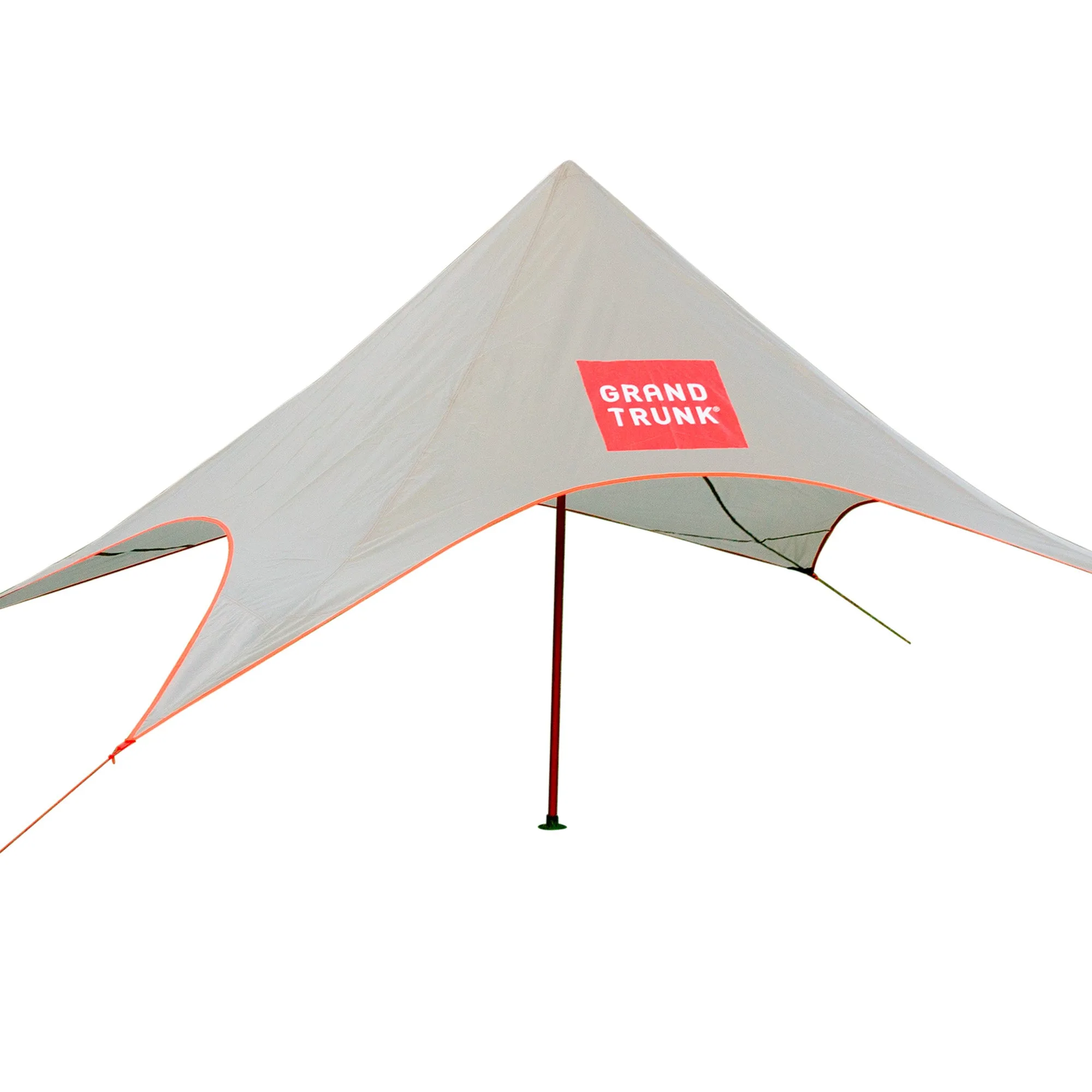
Pick a shelter whose packed size and setup match how you actually travel. If you are walking a quarter mile over dunes, a shelter that packs into its own bag and goes up in minutes is worth more than a larger one that needs two people. The ShadeCaster 2 Person Sunshade is built around that tradeoff: it packs down into its own bag and is designed to set up and come down in minutes, which matters more on a beach than on a lawn.
- Do one practice setup at home before the trip.
- Choose packed size based on how far you carry it, not how big it looks.
- Set up before you are hot, not after.
Symptom: Sand, grit, and damp ground ruin the spot under the shade
Shade without a clean surface underneath just moves the problem. A blanket that collects sand will be shaken out all afternoon, and a damp one will keep you off the ground entirely.
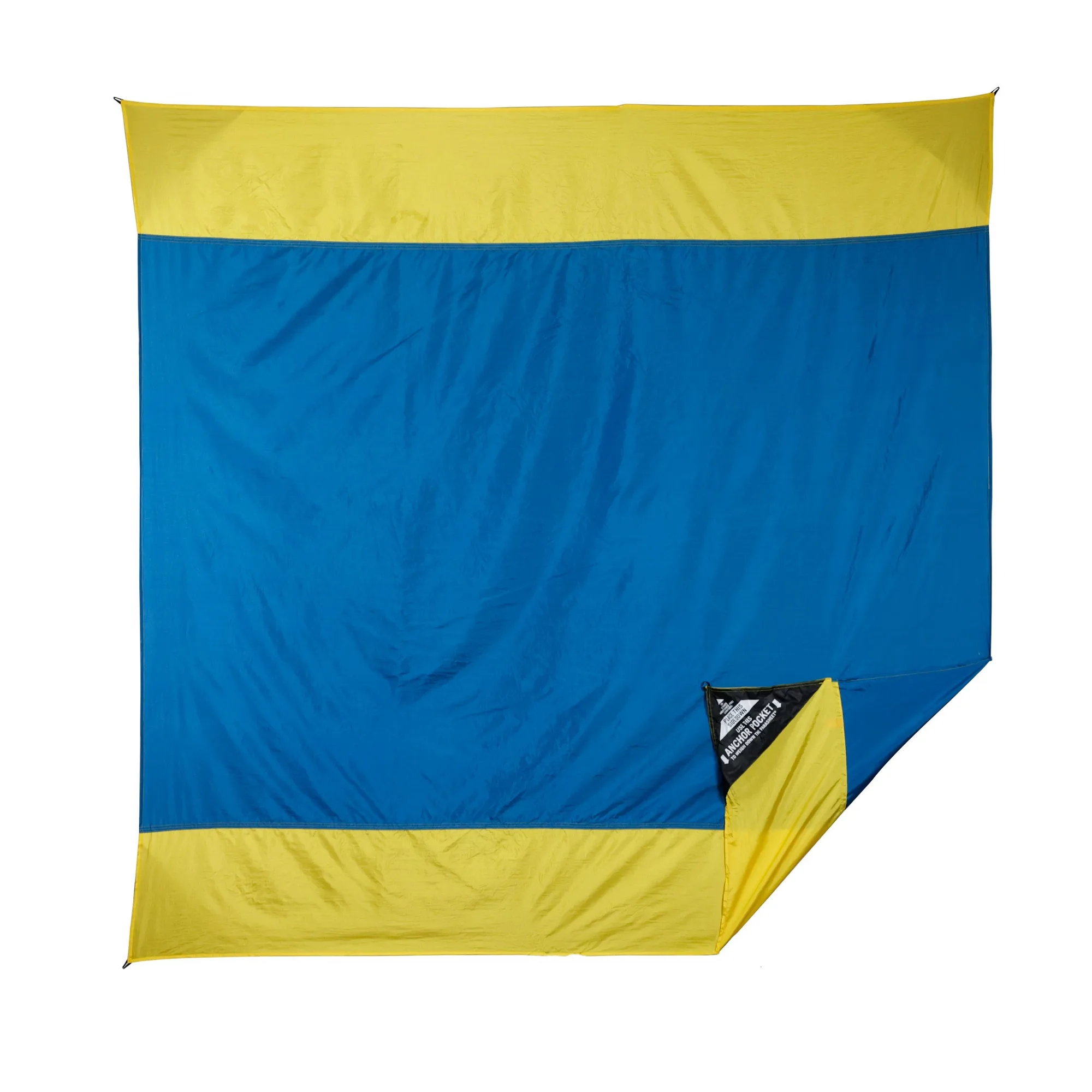
Look for a blanket with corner pockets you can fill with sand and stake loops at every corner, so the blanket stays flat instead of curling. The Parasheet Beach Blanket uses patented corner sand pockets and reinforced stake loops on all corners, and the fabric is designed so sand does not stick to it. That combination is what keeps a beach spot usable after the kids have run across it a dozen times.
- Fill corner pockets and stake all four corners.
- Shake out before folding, not after.
- Pick a surface that drains if rain is possible.
Diagnose your shade problem in 30 seconds
- Shade is there but you are still in the sun: The canopy is too level or facing the wrong way. Tilt the low edge toward the sun and rotate the shelter as the day moves. If repositioning does not help, the shelter is too small for the group; add a second shade or move to a fixed structure.
- The canopy lifts or shifts in wind: Not enough corners are anchored, or the anchors are pulling straight up. Anchor every corner and angle stakes away from the shelter. If gusts keep lifting the fabric after full anchoring, the wind is beyond what this shelter handles; take it down and use natural shade.
- Setup is slow and frustrating: You are learning the shelter in the sun instead of at home. Practice once in the yard, then choose a shelter that packs into its own bag for easier transport. If setup still takes more than a few minutes after practice, the shelter is mismatched to your trip; size down.
- The ground under the shade is unusable: You need a blanket with corner sand pockets and stake loops, not a loose throw. Fill the pockets, stake all corners, and shake out before folding. If the ground is rock or pavement, no blanket will fix it; bring chairs instead.
Products that solve these problems
- ShadeCaster 2 Person Sunshade: The ShadeCaster 2 Person Sunshade has an aerodynamic design built to stand up to strong winds and packs down into its own bag. A canopy shaped to shed wind reduces the lifting and walking problem, and a self-contained bag means you are more likely to bring it and less likely to leave pieces behind.
- Parasheet® Beach Blanket: The Parasheet Beach Blanket has patented corner sand pockets, reinforced stake loops on all corners, and a surface sand will not stick to. Corner anchoring keeps the blanket flat in wind, and the sand-shedding surface means the area under your shade stays comfortable instead of turning into a grit trap.