Quick Answer
To extend runtime from your SuperBase Satellite Battery, pair it correctly with a SuperBase V, manage your load, and keep the battery in an optimal temperature range.
Why Runtime Depends on Setup and Load
The SuperBase Satellite Battery is designed as an expandable capacity module for the SuperBase V system. Its runtime isn't fixed—it changes based on how many satellite batteries you connect and what devices you power. Understanding this relationship helps you plan for longer off-grid periods without over-investing in capacity you don't need.
Temperature and Efficiency Trade-offs
Like all lithium-based energy storage, the SuperBase Satellite Battery performs best between 50°F and 86°F (10°C–30°C). In colder conditions, the battery's usable capacity drops temporarily, reducing runtime. In very hot environments, the battery management system may throttle charging to protect the cells. Placing the battery in a shaded, ventilated spot during summer and insulating it (but not covering vents) in winter helps maintain consistent runtime.
Steps to Extend SuperBase Satellite Battery Runtime
- Pair with a SuperBase V correctly: Connect the SuperBase Satellite Battery to a SuperBase V using the plug-and-play cable. The system automatically recognizes the extra capacity. Do not connect the satellite battery to any other device or attempt to use it standalone—it only works as an expansion battery. Check that the connection clicks firmly; a loose cable can cause intermittent charging.
- Add up to four satellite batteries for maximum capacity: You can connect up to four SuperBase Satellite Batteries to a single SuperBase V, reaching a total capacity of 32 kWh or 23 kWh. This setup is ideal for extended off-grid stays or backup during multi-day outages. Each additional battery adds weight and requires physical space—plan your installation area before purchasing multiple units.
- Monitor and manage your connected load: Use the SuperBase V app to track real-time power consumption. Identify high-draw devices (like space heaters or power tools) and run them during peak solar production hours to reduce battery drain. Lowering the inverter output setting when powering sensitive electronics can also stretch runtime. Avoid running the battery below 10% charge regularly; shallow discharges prolong overall battery lifespan.
- Keep the battery within its optimal temperature range: Position the SuperBase Satellite Battery in a location that stays between 50°F and 86°F. Avoid direct sunlight, damp basements, or unheated garages in winter. If the battery feels hot to the touch during use, move it to a cooler area and allow it to rest before resuming charging. A battery that is too cold may not charge at full speed; a battery that is too hot may stop charging entirely until it cools down.
- Perform a full charge cycle every three months: If you store the satellite battery for long periods without use, charge it to 100% and then discharge it to about 50% before storing again. This prevents the cells from sitting at a low voltage, which can reduce usable capacity over time. Set a calendar reminder every quarter to cycle the battery—it takes only a few hours and helps maintain runtime consistency.
Product Facts
-
SuperBase Satellite Battery: Simply connect a SuperBase Satellite Battery to a SuperBase V to double your total capacity to 12.8 kWh or 9.2 kWh. Adding one satellite battery can significantly extend runtime without needing a second SuperBase V unit, making it a cost-effective upgrade.
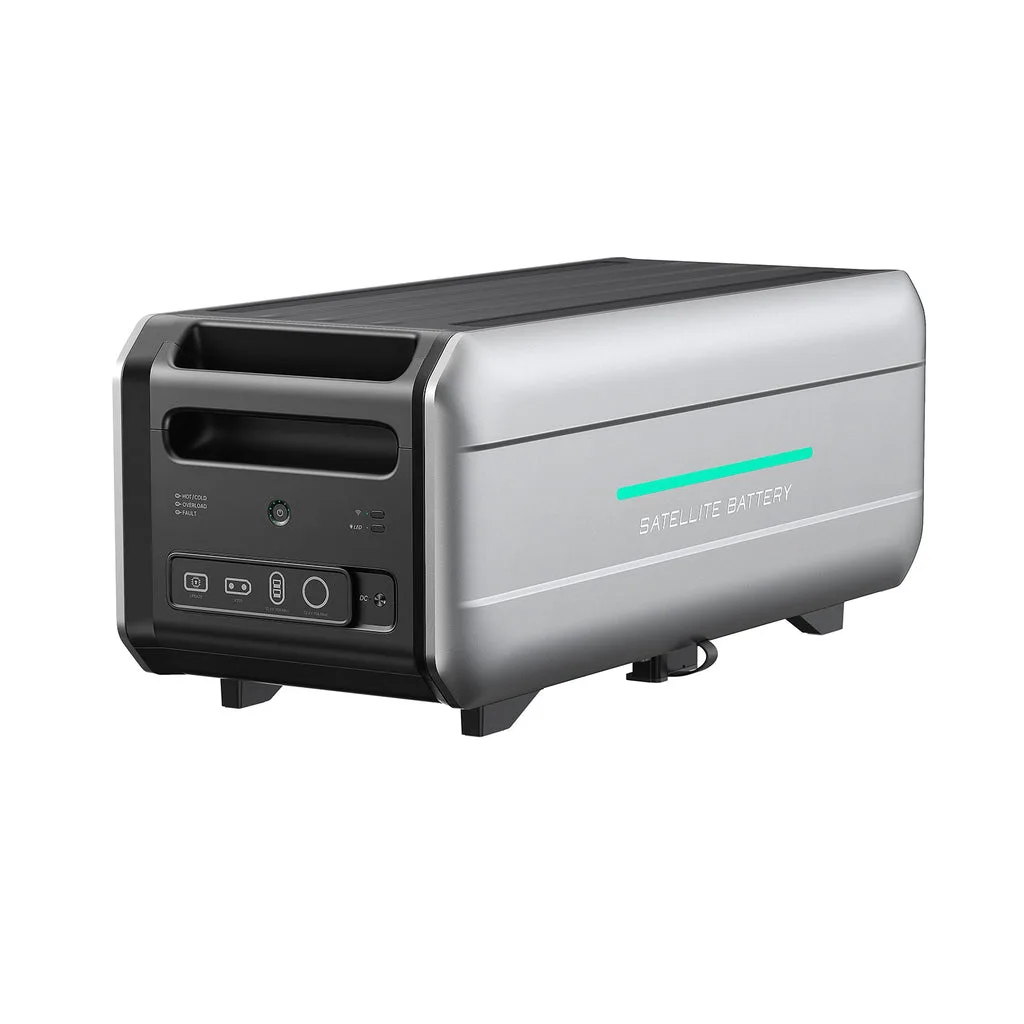
SuperBase Satellite Battery