Quick answer
Start with the Outdoor Discovery Survival Bracelet if your child tends to wander or explore near water or woods. Choose the Clip-On Compass first if they are learning map skills or following a trail.
Safety vs. navigation: what matters more depends on the outing
A survival bracelet offers an immediate physical safety net—a whistle and emergency cord—while a compass teaches direction and independence. Neither replaces adult supervision, but each fills a different gap in a child's outdoor experience.
For a short, supervised walk in a familiar park, the compass adds fun learning without much risk. For a longer hike or any trip near water, the survival bracelet’s whistle and rope address real hazards first.
Trade-offs at a glance
- Survival Bracelet first: Choose this when the outing involves water, dense woods, or any chance of separation. The whistle and 16-foot cord provide tools a child can use without reading a map. A survival bracelet is a passive safety tool that works even if the child does not know how to use it.
- Clip-On Compass first: Choose this when the goal is teaching direction, following a simple map, or building confidence on marked trails. The compass stays clipped on so it is always available. A compass requires adult guidance first; practice at home before the trail.
- Both together: For a child aged 7 or older who hikes regularly, combining both items covers safety and navigation. The bracelet stays on the wrist; the compass clips to the backpack strap. Each item weighs under an ounce, so carrying both does not slow a child down.
Product facts
-
Outdoor Discovery Survival Bracelet: 9-inch paracord bracelet with built-in safety whistle that unravels into 16 feet of cord for emergency use. The whistle helps a lost child signal their location, and the cord can be used for tying gear or creating a temporary line.
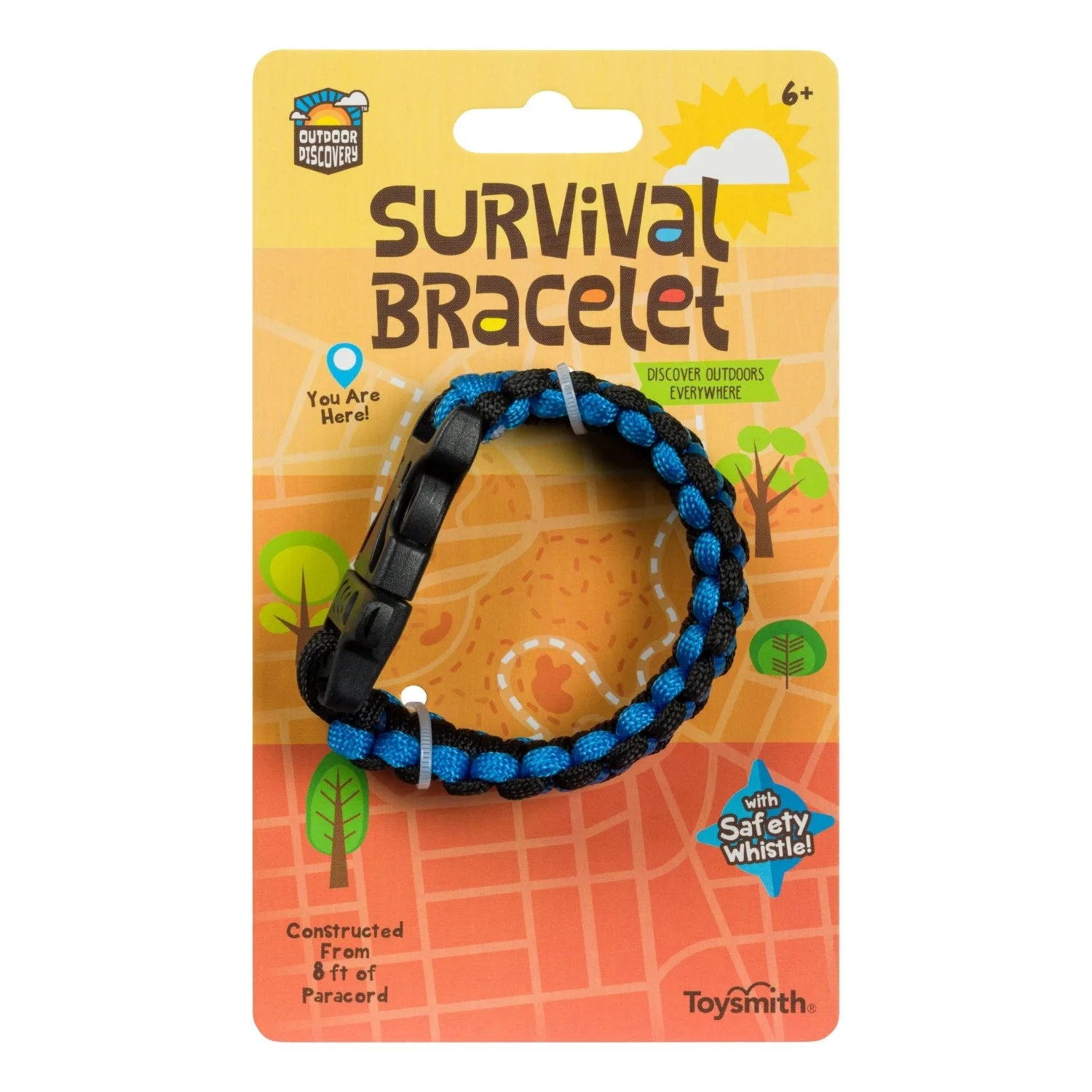
Outdoor Discovery Survival Bracelet
-
Outdoor Discovery Clip On Compass: Lightweight, portable compass that clips to a backpack, belt, or gear. Kids can learn basic navigation without holding it, keeping hands free for climbing or carrying snacks.
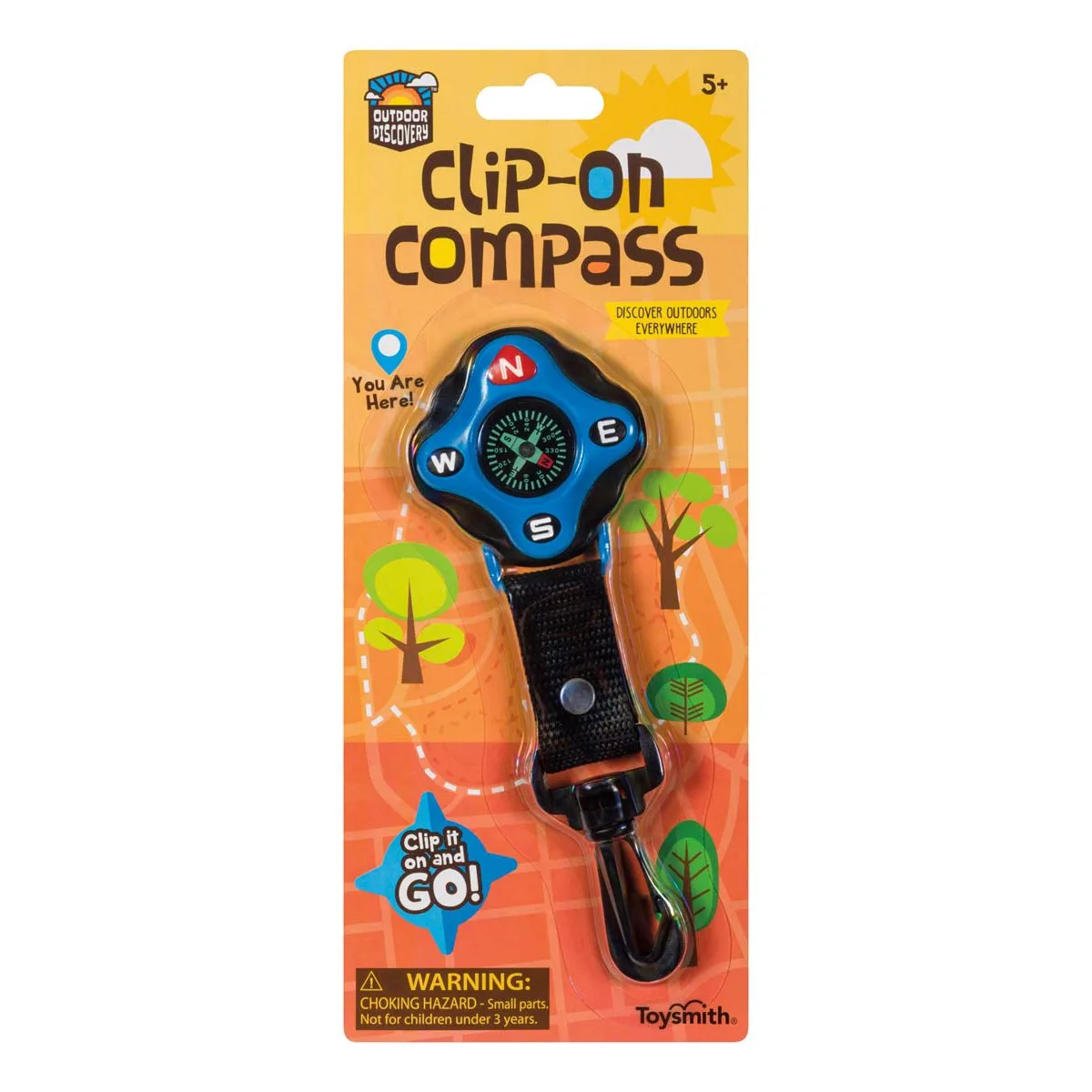
Outdoor Discovery Clip On Compass
Which one fits your child?
Best for
- Kids under 7 or those who wander off easily – start with the Survival Bracelet.
- Kids learning map skills or following a trail – start with the Clip-On Compass.
Not for
- A child who already carries a whistle and cord – the compass adds a new skill.
- A child who cannot yet follow simple directions – the compass will frustrate without practice.