Quick answer
For most newborns, choose a square swaddle blanket around 47x47 inches. That size gives you enough fabric to wrap snugly without burying your baby in excess layers, and it stays useful as a stroller cover, tummy time mat, or nursing cover once swaddling ends. If you are shopping for a toddler, skip the swaddle wrap and use the same large square blanket as a lightweight comfort layer instead.
Why square size matters more than age labels
Age ranges on swaddle packaging are rough guides, not rules. What actually determines fit is the diagonal length of the square fabric once it is folded into a triangle, because that diagonal is what wraps around your baby's shoulders and tucks under the body. A blanket that is too small will not stay tucked; one that is far too large adds bulk and makes a snug, safe wrap harder to achieve.
Measure your baby's shoulder-to-hip distance, then add roughly 12 to 16 inches of working fabric for the wrap and tuck. If you are between sizes, size up rather than down. Extra fabric can be folded back, but a short blanket cannot be stretched.
Swaddle blanket dimensions chart by stage
Use this as a starting point, then adjust for your baby's length and the thickness of the fabric. Muslin and other lightweight weaves fold flatter than fleece, so a thin blanket can be slightly larger without feeling bulky.
- Newborn (0-3 months): 40x40 to 47x47 inches. A 47x47 inch blanket gives a comfortable margin for a snug wrap.
- 3-6 months: 47x47 inches still works for most babies, especially if you switch to arms-out swaddling.
- 6-12 months: use the same 47x47 inch blanket as a sleep sack alternative or lightweight cover rather than a swaddle wrap.
- Toddler (12 months and up): 47x47 inches works as a comfort blanket, stroller cover, or travel layer, not as a swaddle.
What size swaddle blanket for newborn: the 47x47 inch standard
A 47x47 inch square is the most common newborn swaddle size because it balances wrapability and safety. It is large enough to create a secure tuck across the chest and under the arms, yet light enough that you can feel whether the wrap is snug without guessing.
If you are using a bamboo muslin blanket, expect it to feel soft and breathable while staying cool against the skin. That makes a 47x47 inch muslin square a practical first swaddle, and it remains useful long after the newborn stage.
Newborn swaddle sizing: how to check the fit
A correct swaddle fit allows two fingers to slide between the blanket and your baby's chest. The arms should be secured but not pinned so tightly that the shoulders cannot move. If the blanket gapes at the neck or slips loose after a few minutes, it is either too small or wrapped too loosely.
Always place your baby on their back for sleep, and stop swaddling as soon as your baby shows signs of rolling. At that point, switch to a sleep sack or an arms-out layer.
Swaddle blanket for toddler: when to change the job, not the size
Toddlers do not need a swaddle, but a large square blanket still earns its place. A 47x47 inch blanket becomes a lightweight stroller cover, a floor mat for play, or a familiar comfort object at daycare or travel. Because it is not a fitted sleep sack, it should not be used as the only sleep layer for a toddler in a crib.
If you want a blanket that grows with your child, choose a size that works for swaddling now and for covering later. That is more economical than buying a small newborn wrap and replacing it within months.
How big should a swaddle blanket be for different wrapping styles?
Arms-in swaddling needs more fabric than arms-out. If you plan to swaddle with arms in, a 47x47 inch square is the safer starting point. For arms-out or a loose chest wrap, a 40x40 inch blanket can be enough, but it leaves less room for error.
Fabric weight also changes the math. A thicker blanket takes up more space in each fold, so a 47x47 inch thick blanket can feel bulkier than a 47x47 inch muslin one. When in doubt, choose a lightweight weave in the larger size.
Decision rules for picking your swaddle size
- If your baby is 0-3 months: Start with a 47x47 inch square in a lightweight muslin weave. Wrap arms-in only until you see signs of rolling. Checkpoint: two fingers should fit between the blanket and the chest.
- If your baby is 3-6 months: Keep the 47x47 inch blanket but move to arms-out wrapping if your baby is trying to roll or escape the wrap. Verdict: do not size down; adjust the wrap style instead.
- If you are buying for a toddler: Skip swaddle-specific sizing and choose a 47x47 inch blanket as a comfort layer, stroller cover, or play mat. Next step: pair it with a pacifier clip so the comfort items stay together.
- If you are between two sizes: Choose the larger square. Extra fabric can be folded back, but a short blanket cannot be lengthened. Checkpoint: the wrap should stay tucked for at least a few minutes of gentle movement.
Ninni Co. options that match this size guide
- Swaddle Blanket - Brown: Swaddle Blanket - Brown is a 47x47 inch blanket made from 100% viscose bamboo muslin. The 47x47 inch square is the size this guide recommends for newborns and for later use as a stroller cover, tummy time mat, or nursing cover.
- Swaddle Blanket - Blue: Swaddle Blanket - Blue is made from 100% viscose bamboo muslin and is described as lightweight and breathable. A breathable muslin weave is easier to wrap snugly without overheating, which matters most in the first three months.
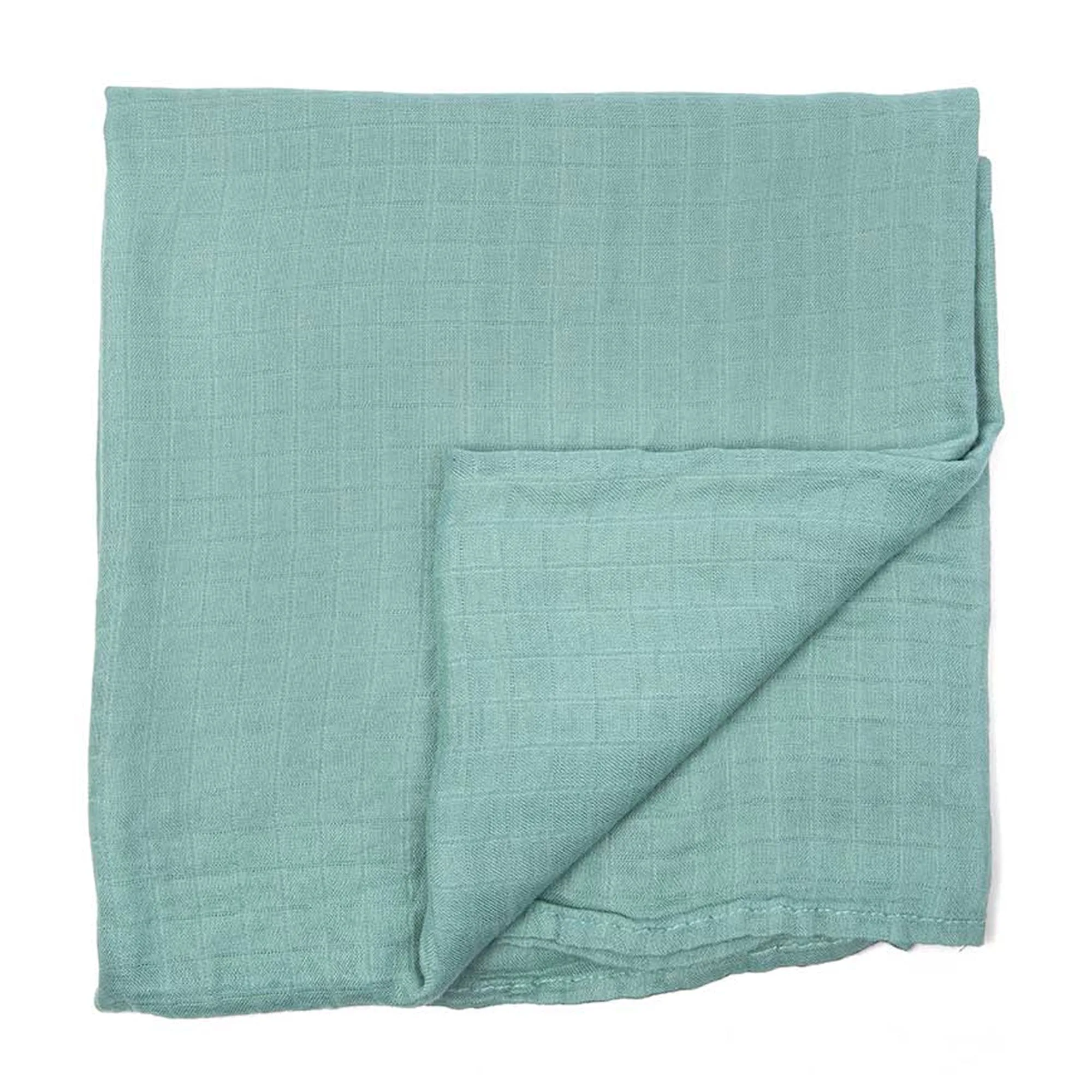
- Swaddle Blanket - Green: Swaddle Blanket - Green is a 47x47 inch blanket in 100% viscose bamboo muslin with a lightweight, breathable weave. Choosing the same size across colors keeps your swaddle routine consistent, so you are not relearning the wrap when you switch blankets.
Who this size works for
Best for
- Parents swaddling a newborn or young infant who want one blanket that also works as a stroller cover or nursing cover
- Caregivers who prefer a lightweight muslin square over a fitted swaddle pod
- Families buying a single blanket intended to last from the newborn stage into toddler comfort use
Not for
- Babies who have started rolling and need an arms-free sleep sack instead of a swaddle wrap
- Parents looking for a weighted or fitted swaddle with a fixed closure
- Toddlers who need a fitted crib sleep layer rather than a loose square blanket