What Are Swedging Pliers?
Swedging pliers are a specialist forming tool designed for compressing and shaping tubing, wire, and small metal components. They are best known in woodwind repair for reshaping keywork tubing, but their controlled, progressive action also makes them a valuable addition to a jeweller's bench. The defining feature is a set of four semi-circular cutouts across the jaws, allowing you to work a part down gradually rather than in a single crush, keeping the result round and true.
The parallel action mechanism is the working heart of the tool: a compound lever keeps the jaws aligned at any opening, so pressure lands squarely across all four forming positions. This even force distribution is critical for both musical instrument repair and metal forming, where uneven pressure can distort delicate parts.
Swedging Pliers at a Glance
-
Swedging for Woodwind Repair & Jewellery — Parallel Spring Action Pliers, 4-Hole Jaws: Four semi-circular cutouts across the jaws let you work a part down progressively rather than in a single crush, keeping the result round and true. This progressive forming is essential for woodwind keywork tubing and for jewellery wire or small metal components that need a consistent, undistorted shape.
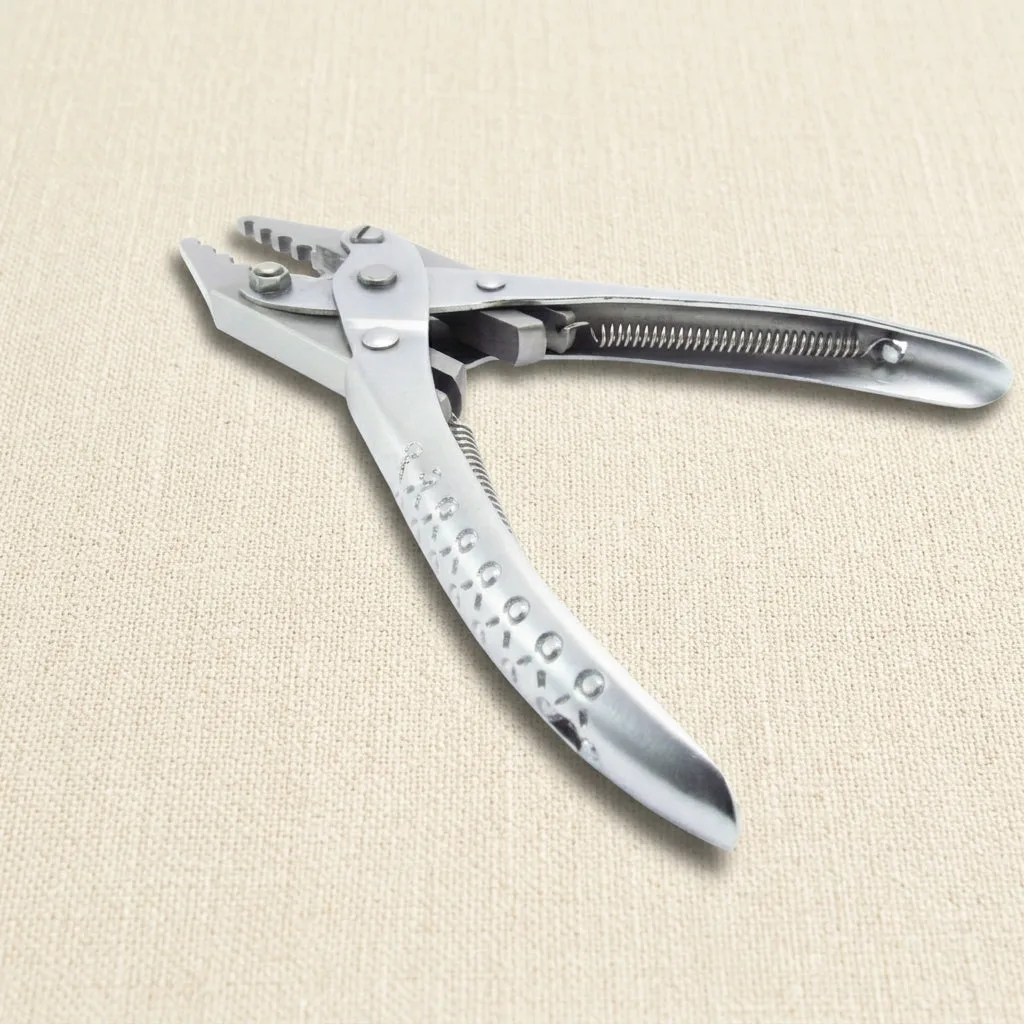
Swedging for Woodwind Repair & Jewellery — Parallel Spring Action Pliers, 4-Hole Jaws
-
Swedging for Woodwind Repair & Jewellery — Parallel Spring Action Pliers, 4-Hole Jaws: The parallel action uses a compound lever to keep the jaws aligned at any opening, so pressure lands squarely across all four forming positions. Parallel alignment ensures even force distribution, reducing the risk of marring or bending the workpiece unevenly—a key advantage over standard pliers.
-
Swedging for Woodwind Repair & Jewellery — Parallel Spring Action Pliers, 4-Hole Jaws: An external coil spring provides a consistent return action for repetitive tasks. The spring return speeds up repeated swedging operations, whether you are working on a row of instrument keys or a series of jewellery findings.
Who Benefits from Swedging Pliers?
These pliers are designed for two main groups: UK-based musical instrument repairers, especially those servicing woodwind keywork, and bench jewellers or craftspeople who shape wire, tubing, and small metal components. For woodwind repair, the tool excels at resizing and truing keywork tubing after wear or damage. For jewellers, the same progressive cutouts can form wire loops, create consistent bends in tubing, or shape small bezels and findings.
If your work involves repetitive forming tasks that require even, controlled pressure, these pliers offer a dedicated solution. They are less suited for cutting, gripping, or general-purpose tasks—those are better handled by other tools in your kit.
Key Features to Consider When Buying
When evaluating swedging pliers, the jaw design is the primary factor. The four-hole configuration provides a range of diameters for different tubing or wire sizes, so you can progress from a larger cutout to a smaller one without changing tools. The parallel action mechanism is non-negotiable for even pressure—avoid scissor-action pliers that can pinch or distort the workpiece.
Build quality matters for repetitive use. Look for all-metal construction with riveted and screwed pivot points, as seen in the Swedging for Woodwind Repair & Jewellery pliers. Polished steel handles with a dimpled texture improve grip during extended sessions, and an external coil spring reduces hand fatigue by returning the handles between squeezes.
Swedging Pliers vs Standard Pliers for Jewellery
- Jaw action: Swedging pliers use a parallel action that keeps jaws aligned at any opening. Standard pliers typically use a scissor action that can pinch or twist the workpiece.
- Forming capability: Four semi-circular cutouts allow progressive forming in a single tool. Standard pliers offer only one or two contact points, limiting their forming precision.
- Best use case: Swedging pliers excel at reshaping tubing and wire where roundness and consistency are critical. Standard pliers are better for gripping, bending, and general assembly.
What the Supplied Information Does Not Cover
The manufacturer does not specify maximum or minimum tubing diameters for the four cutouts, nor does it provide recommended operating speeds or cycle counts. For best results, test the tool on scrap material of the same type you plan to work, and inspect the formed part for any signs of distortion. Always follow any safety instructions that come with the tool—particularly regarding pinch points and repetitive use.